Things to Do in Tuscany, and What Each One Costs to Reach
Updated 23 September 2026 · Fares, times and service counts from Trenitalia’s own booking system
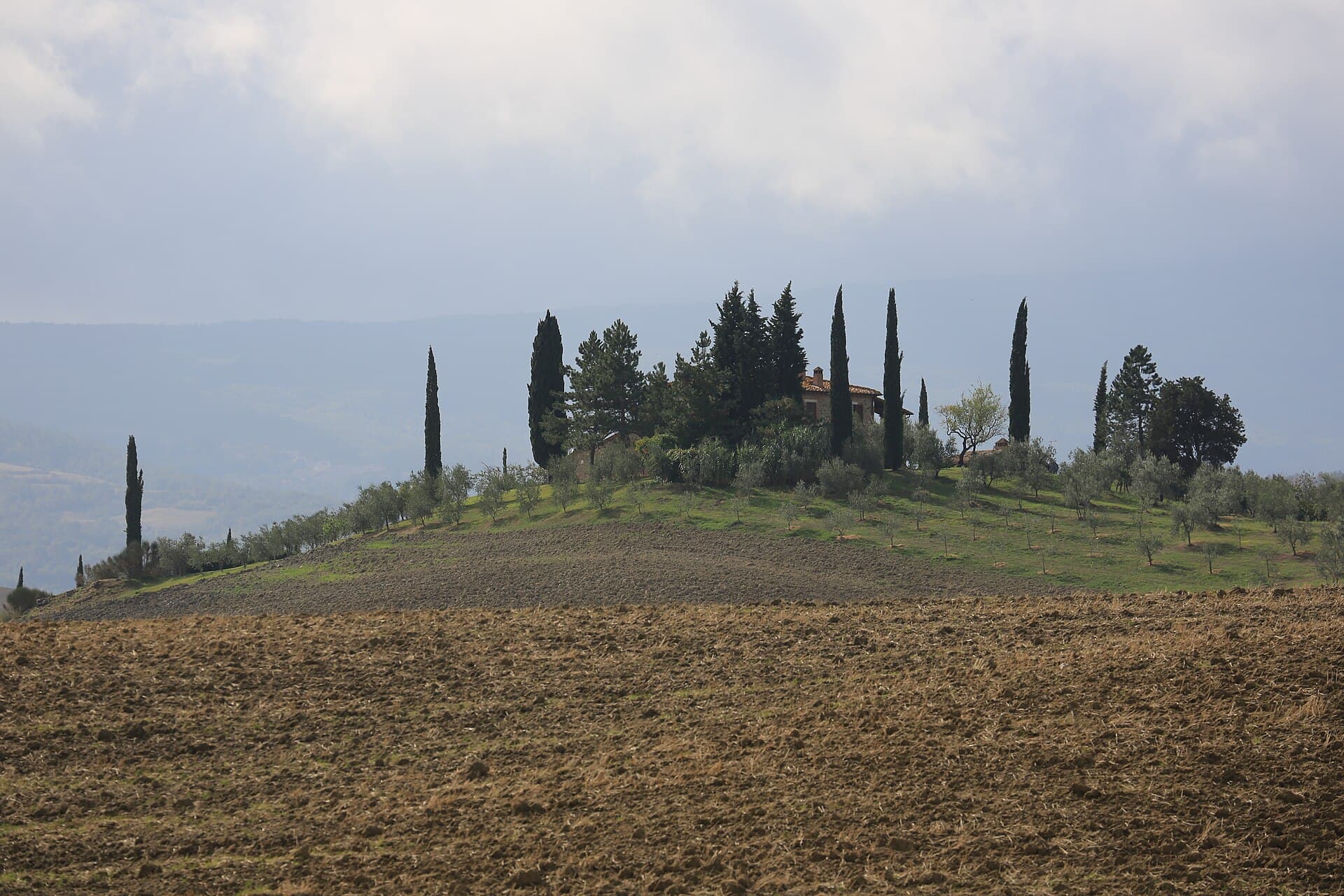
Every list of things to do in Tuscany is the same list. Florence, Siena, Pisa, Lucca, San Gimignano, the Val d’Orcia, Montalcino, Pienza, the thermal pools at Saturnia. Google’s own AI Overview for this search sorts them into major cities, hill towns and countryside, and relaxation and nature, and then ends by asking you how long you are staying and whether you are driving or taking public transport.
That question is the whole problem. The list mixes two completely different holidays and never says which is which. About half of it is a ten euro train ticket from Florence. The other half cannot be reached by train at all, and you only find that out after you have booked a hotel in the centre of Florence with no car.
So we measured it. On 23 September 2026 we ran every one of these places through Trenitalia’s own booking engine for a midweek day in October, sweeping the whole day rather than checking one departure, and recorded what came back. The results are below, and one of them was a genuine surprise.
The six that are just a train ticket
These are the places you can do from a hotel in Florence with no planning beyond turning up at Santa Maria Novella. Every fare below is a standard adult single in second class, bought on the day, with no railcard. The last column is the one nobody publishes and the one that decides whether a day trip works: a town with fifty-four direct trains is a different proposition from a town with fifteen, whatever the journey time says.
| Place | Station you book | Fastest direct | Cheapest fare | Direct/day |
|---|---|---|---|---|
| Arezzo | Arezzo | 31 min, on 3 Frecciarossa | 9.80 € | 46 of 51 |
| Pisa | Pisa Centrale | 51 min, on 17 Regionale Veloce | 9.80 € | 54 of 56 |
| San Gimignano | Poggibonsi-S. Gimignano | 1h 04, on 15 Regionale | 8.90 € | 15 of 29 |
| Montepulciano area | Chiusi-Chianciano Terme | 1h 17, on 1 Intercity | 11.90 € | 16 of 28 |
| Lucca | Lucca | 1h 20, on 26 Regionale | 8.90 € | 26 of 42 |
| Siena | Siena | 1h 35, on 15 Regionale | 10.80 € | 15 of 30 |
One line in that table is not where anybody expects it to be, and it is worth its own section, because it changes what a trip without a car can include.
San Gimignano is on the cheapest train out of Florence
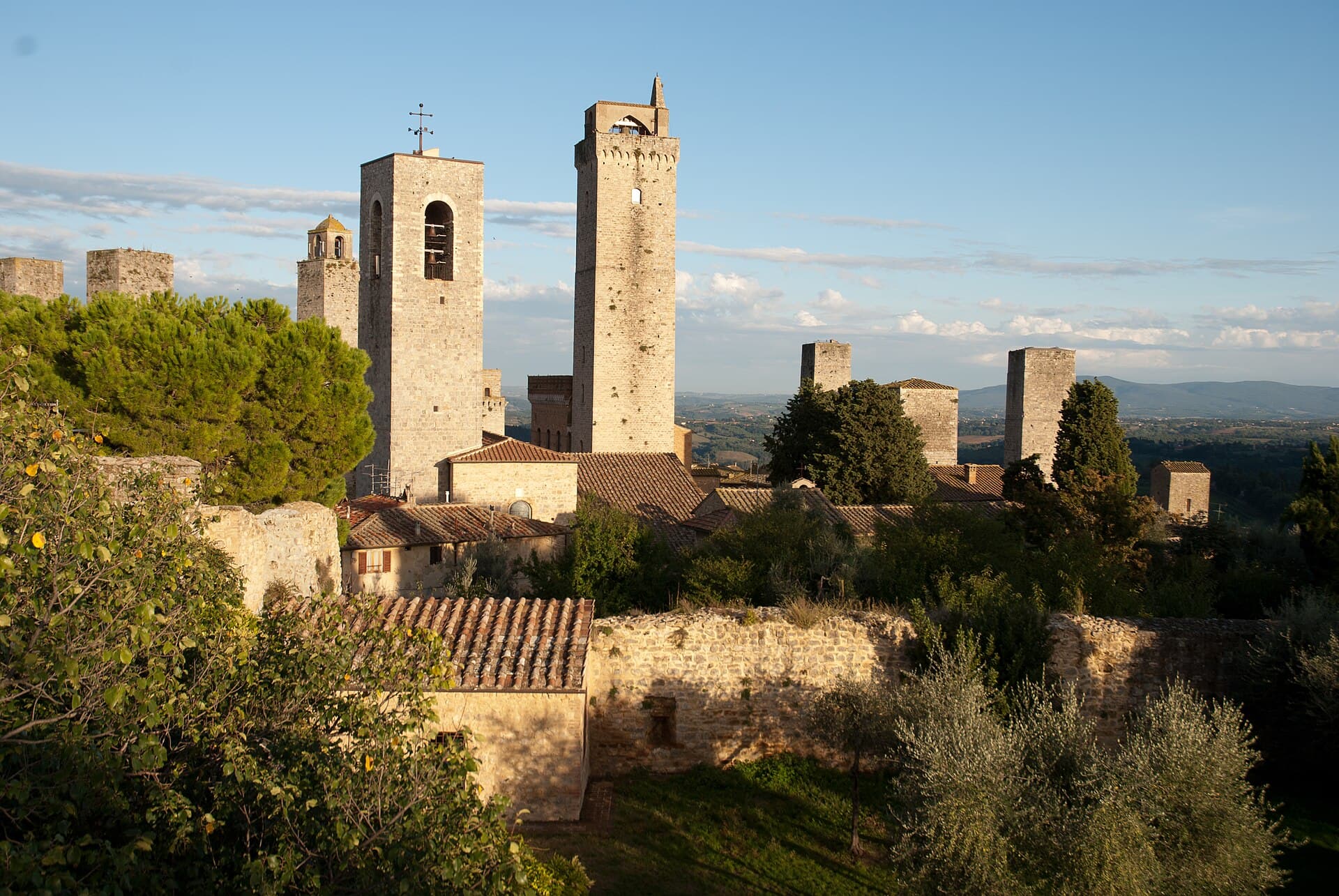
Search for how to reach San Gimignano and you will be told, correctly, that it has no railway station. What that answer leaves out is that Trenitalia sells a station called Poggibonsi-S. Gimignano, and it is remarkable: 8.90 euros, flat, every service, all day. Fifteen direct trains, the quickest of them 1 hour and 4 minutes. Twenty-nine services in total once you count the ones with a change, and they all cost the same 8.90 euros.
That is cheaper than Siena at 10.80 and cheaper than Pisa and Arezzo at 9.80. It ties with Lucca, and beats Lucca on journey time by sixteen minutes. The hill town everybody assumes needs a car is on the cheapest ticket on the board.
The honest caveat, and it matters: Poggibonsi is not San Gimignano. There is a bus leg between the two that we have not verified, so we quote no time and no fare for it, and we are not going to copy one from another guide. What we have measured is the rail half, and the rail half is the part that every answer gets wrong by omission. If you want the town itself, what the museums cost and which cellars take a single visitor, that is in our guide to San Gimignano.
The ones Trenitalia will not sell you a ticket to
This is the half of the list that the lists do not flag. Every one of these appears in Google’s own AI Overview for this search, under “hill towns and countryside” or “relaxation and nature”, with no mention that you cannot get to any of them on a train.
| Place | What Trenitalia’s own engine does | What that leaves you |
|---|---|---|
| Val d’Orcia | No station of that name exists in its index | Car, or a tour. Chiusi is the nearest rail head |
| Montalcino | Torrenieri-Montalcino is in the index. The booking engine returned an error, not a journey, on every attempt | Car, or a tour |
| Pienza | Listed, but among its bus stops rather than its stations. Same error | Car, or a tour |
| Greve in Chianti | Listed among bus stops. Same error | Car, or a tour |
| Radda in Chianti | Listed among bus stops. Same error | Car, or a tour |
| Saturnia | No entry of any kind. The search returns nothing | Car |
| Bagno Vignoni | No entry of any kind | Car |
The distinction in that caption is worth spelling out, because it is the difference between a fact and a guess. For Saturnia and Bagno Vignoni, the station search comes back empty: there is no entry of any kind, which is as close to proof as this method gets. For Montalcino, Pienza, Greve and Radda, the search does find an entry, but the booking engine then returns an error instead of a journey, every time. We are not going to turn a server error into a claim about train services. What we can say is that their entries sit in the block of identifiers Trenitalia uses for bus stops rather than the one it uses for stations.
Either way, the practical answer for a visitor is the same, and it is the answer the lists owe you up front: for these places you need a car or you need somebody else to drive.
Chianti has exactly one direct train a day
Chianti deserves its own line because it is the one people are most surprised by. It is the nearest wine region to Florence, it is on every list, and it is essentially a road.
There is one exception and we found it: a station called Castellina in Chianti-Monteriggioni. Twenty-three services in the day, of which exactly one is direct: 1 hour 17, 9.80 euros. The other twenty-two need a change and run from 1 hour 21 to 2 hours 49. One usable train a day is not a transport link, it is a coincidence.
Which is why the Chianti day out is sold as a tour rather than a timetable. What the cellars themselves charge, and which ones will take you without a group, is in our guide to Chianti wineries.
Car or tour, and the six-fold spread
Once you accept that half of this list needs a vehicle, there are two ways to solve it and they are priced completely differently.
Hiring a car is the flexible answer and the one whose advertised price you should not believe. The aggregators lead with 13 euros a day and then put their own average at 53 on the same page, and there is a 5 euro permit for driving into a historic centre that almost nobody buys and that is the difference between a normal day and a fine that reaches you a year later. All of that, with the figures, is in our guide to renting a car in Tuscany.
The other answer is to buy a day. And this is where it gets interesting, because the same day, to the same valley, from the same city, is sold at prices that differ by a factor of almost six. All three of the tours below run between ten and a half and eleven and a half hours and all three go to the Val d’Orcia. We checked every figure on Viator on 23 September 2026, in euros.

Medieval Tour in Monteriggioni and Val d’Orcia from Florence
Eleven hours for 38.70 euros, which is about 3.50 an hour and the lowest price we found for this itinerary by a wide margin. The reason it is not an automatic pick is the evidence behind the rating: 75 reviews is thin, and a 4.76 from 75 people tells you less than a 4.72 from 1,512. Worth it if the price is the constraint, with that caveat understood.

Full Day Tour to Val d’Orcia and Gladiator’s Fields with Wines
Eleven and a half hours for 92 euros, about 8 an hour. It sits in the middle on price and a long way ahead on evidence: 1,512 reviews against 75 and 409 for the other two. If you want the version of this day that the largest number of people have actually rated, this is it.
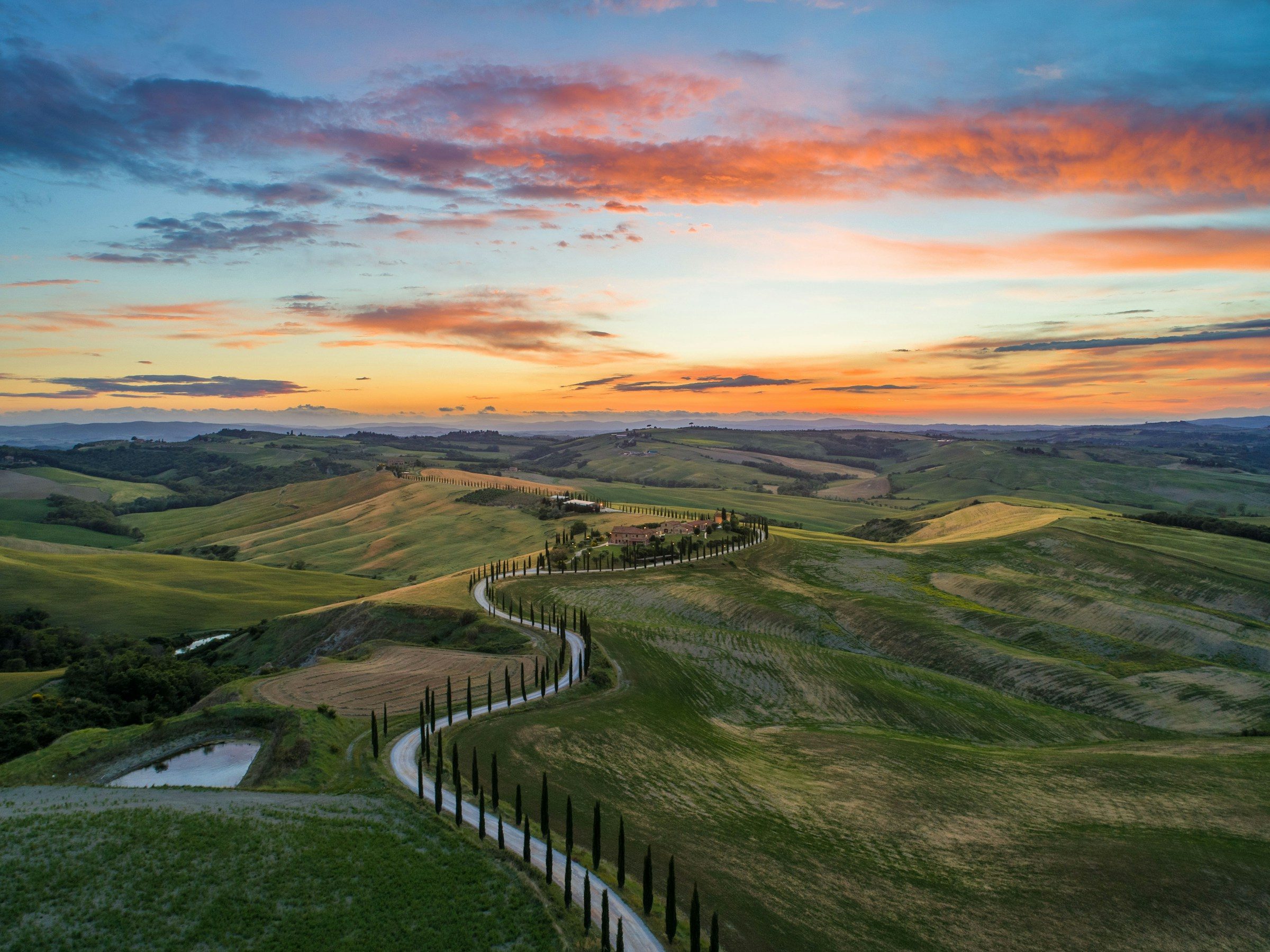
Val d’Orcia Brunello Wine Tour with Montalcino and Montepulciano
Ten and a half hours for 229 euros, close to 22 an hour and almost six times the cheapest option on this page. What the money buys is the two wine towns done properly rather than photographed from a car park. Whether that is worth 190 euros more than the first card is your call, and we would rather put the arithmetic in front of you than pretend the gap is not there.
The per-hour figures are our own arithmetic, not something the operators publish: 3.50, 8.00 and 21.80 euros an hour respectively. We do the sum because the durations are close enough that price per hour is a fair comparison here, which is not always the case.
And the comparison that the price alone hides: the cheapest of the three has the thinnest evidence behind it. A 4.76 average from 75 people is a weaker signal than a 4.72 from 1,512, and we would rather say that than let a decimal place do the arguing.
That is the answer for the half of the region with no railway. Back on the half that does have one, there are two details in the table further up that cost money if you get them wrong, and both of them are about which train you book.
Arezzo: the fast train costs ten cents more
Arezzo is the town on this list that most people skip, and it has the best train service of any of them: fifty-one departures, forty-six of them direct. The regional services take between 1 hour and 1 minute and 1 hour and 32 minutes, for 9.80 euros.
Three Frecciarossa a day also stop there. They do the same journey in 31 minutes, and on the day we checked, the cheapest of them was 9.90 euros. Ten cents more than the slow train, for half the journey.
This is the opposite of how Italian high-speed pricing normally works, and it is the opposite of the Rome to Florence route, where the fare swings by a factor of three depending on when you book and the cheapest seats are gone weeks out. We wrote up that booking curve in detail in our guide to getting from Rome to Florence. On this route there was no curve at all: the regional fare was the same on every one of the fifty-one services we saw.
The station with the town’s name on it is the wrong station
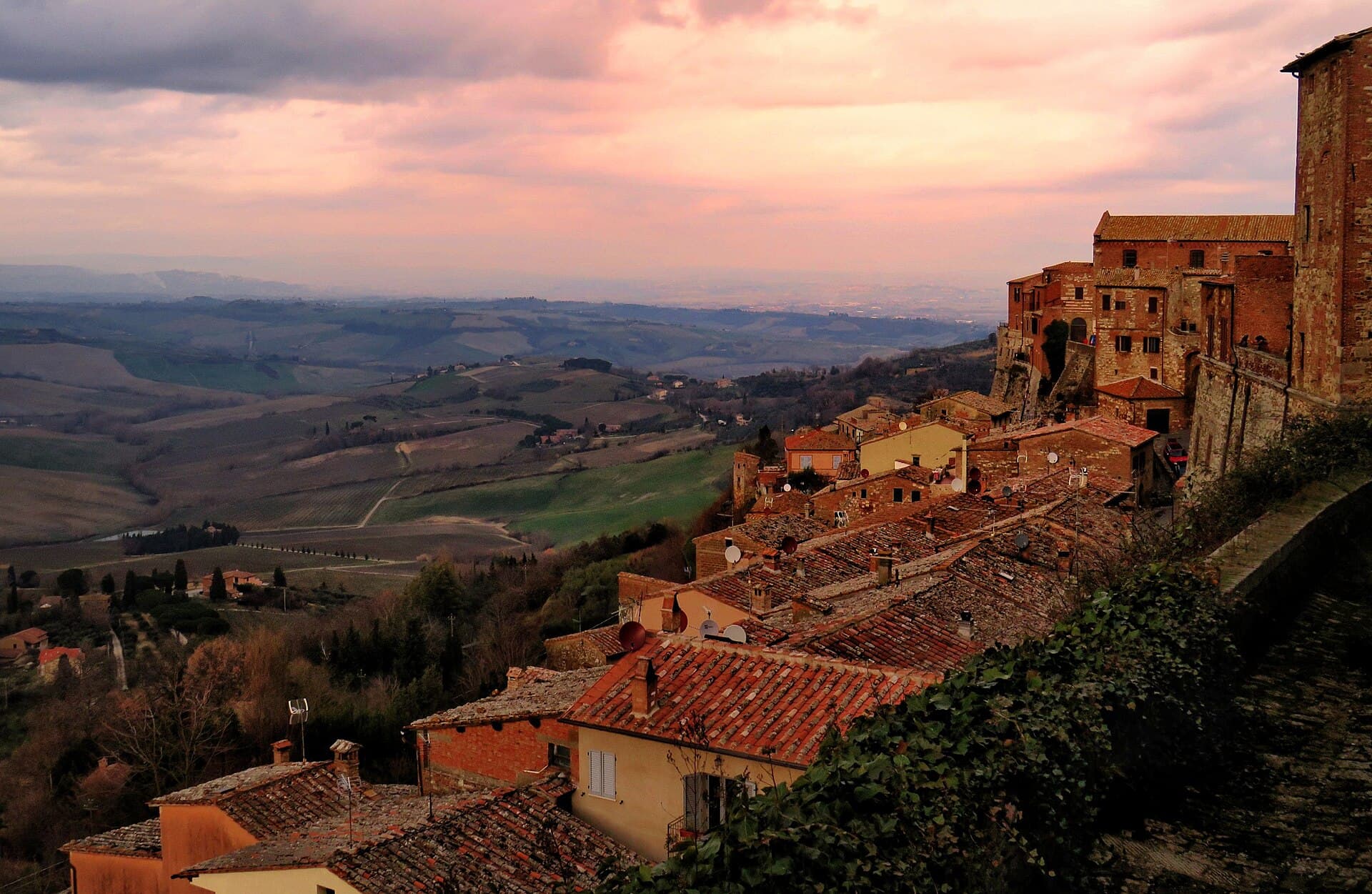
Type Montepulciano into Trenitalia and it offers you a station of that name. Book it and here is what you get: zero direct services out of twenty-seven found across the whole day. Every single one involves at least one change. The quickest was 1 hour and 41 minutes; most were between 2 hours 15 and 3 hours 24, and the common fare was 16.80 euros.
Now book Chiusi-Chianciano Terme instead, which is the rail head for this whole corner of the region. Twenty-eight services, sixteen of them direct. Ten Regionale Veloce at about 1 hour 44 for 15.90 euros, and one Intercity that does it in 1 hour 17 for 11.90, which was both the fastest and the cheapest service on the route on the day we looked.
So the station named after the town costs you at least one change and, typically, an extra hour, against the station that is not named after it. Trenitalia also lists a separate stop called Montepulciano Centro in the part of its index that holds bus stops rather than stations, which tells you what the station on the railway line is not.
What we did not measure: how far either station is from the town, or what the onward connection costs. We have not been able to source either from an official document, so we quote no distance and no fare. If you are going for the wine rather than the town, the cellars and what a tasting costs are in our guide to Montepulciano wineries.
What the cities themselves cost
Getting there is half of it. Here is what the headline sights on these lists actually charge, with each figure verified on the operator’s own site and linked to the page where we show our working.
- Florence. The Duomo complex, the Uffizi and the Accademia are the three things that need booking before you fly, and the pricing is genuinely confusing: there are three different Duomo passes and buying the Uffizi on the day is actually cheaper, if you are willing to gamble on availability. All of it is in our guide to Florence tickets, and the walking order is in things to do in Florence.
- Pisa. The tower is 20 euros on its own. The combination that adds five more monuments is the bit worth knowing, because adding them costs less than buying them. Prices in text, because the official site publishes them as images, in our Pisa guide.
- Lucca. The walls are free. The bike almost everybody hires to ride them is 5 to 6 euros an hour or 25 for the day. The city publishes a 29 euro three-day pass and, remarkably, not a single individual ticket price on any of its four official pages, which we checked. Our Lucca guide explains why that means nobody can honestly tell you whether the pass is worth it.
- San Gimignano. The museum ticket is 10 euros with the tower climb, or 15 for everything, both valid three calendar days, both with a 1 euro booking fee. There is a trap for over-65s on the combined pass, covered in our San Gimignano guide.
- Siena. The cathedral closes to visitors on Sunday mornings and catches a lot of day trippers out. What fits in the four hours a day trip really gives you is in our Siena guide, and the surprising bit about getting there, which is that the coach beats the train, is in Florence to Siena.
What is free
Four of the best-known things on these lists cost nothing, and they are rarely presented that way because there is no ticket to sell.
- The walls of Lucca. A complete circuit of Renaissance walls turned into a tree-lined promenade. Walking it costs nothing. Only the bike costs money.
- Florence’s cathedral itself. Entry to the nave is free. What you pay for is the dome climb, the baptistery, the bell tower and the museum, and those are the parts worth paying for. The detail is in our tickets guide.
- Pisa’s cathedral. Also free, with a catch that is easy to get wrong and is explained on our Pisa page.
- The landscape. Obvious, and worth stating anyway, because the expensive part of the Val d’Orcia is not admission. There is no admission. The expensive part is the vehicle.
What actually fits in three, five and seven days
Using the numbers above rather than a general feeling about pace.
Three days. Florence, plus one town on the train. That is it, and trying to add a second town is what makes people feel they rushed Tuscany. Pick the town by journey time: Arezzo at 31 minutes or Pisa at 51 leave you most of a day, Siena at 1 hour 35 each way leaves you about four hours on the ground.
Five days. Florence, two towns on the train, and one organised day into the car-only half. Five days is the point where buying a day out makes clear sense, because hiring a car for a single day of a five-day trip rarely pays.
Seven days. This is where a car changes the trip rather than just adding to it. At 53 euros a day, which is what the aggregators’ own average says rather than what their headline says, three days of car hire costs about 160 euros and opens the Val d’Orcia, Montalcino, Pienza and Chianti without booking a single tour. Below that, the tours win on price.
If your trip is mostly Florence with excursions rather than a tour of the region, the fare-by-fare comparison of every town on the train is in our guide to day trips from Florence.
What these lists get wrong
Three things, consistently, and all three are the same mistake in different clothes.
They present the region as one place. Florence to Saturnia is not a day trip in any sense a visitor would recognise, and Chianti, Montalcino, Montepulciano and Bolgheri are four separate wine regions with different grapes and hours of driving between them, not one wine region called Tuscany. Which one your trip actually has room for is the question our guide to Tuscan wine tries to answer.
They rank by beauty and never mention access. Pienza appears on more best-of lists than Arezzo, and Arezzo has forty-six direct trains a day while Pienza has an entry in a bus index and a booking engine that errors out.
They are old. Of the ten results Google returns for this search, four were last dated between 2019 and 2022. Fares, opening rules and ticket structures have all moved since. Every figure on this page has a date on it for exactly that reason, and when this one goes stale we would rather you could see that it has.
One last thing, and it works against us. We earn a commission if you book one of the three tours above. We would still say that if you are here for three days, you should skip all three of them, take a 9.80 euro train to Arezzo or Pisa, and spend the money you saved on lunch. The tours are the right answer for the car-only half of the region and the wrong answer for the half that is a train ticket.
Questions
What is Tuscany, Italy best known for?
Renaissance art in Florence, four separate wine regions, and a landscape of hill towns that photographs better than almost anywhere in Europe. The practical version of that answer is less romantic: the art is in three buildings you have to book, the wine is in four places that are a long way apart, and the landscape is the part that needs a car.
What is the prettiest town in Tuscany?
We are not going to rank towns on prettiness, because that is a matter of taste and nobody can source it. What we can say is which ones you can get to. San Gimignano, Siena, Lucca, Pisa and Arezzo are all on a train from Florence for between 8.90 and 10.80 euros one way. Pienza, Montalcino and Montepulciano, which appear on every prettiest-town list ever written, are not.
How many days do I need to spend in Tuscany?
Three days covers Florence and one town on the train. Five gets you Florence, two towns and a day in wine country. Seven is where a car starts paying for itself, because that is when the car-only half of the region becomes reachable without spending the whole week on day tours. If your question is really about Florence on its own, our guide to how many days you need in Florence does that arithmetic properly, including what arrival and departure times actually leave you.
What is the best month to visit Tuscany, Italy?
May, June and September, for weather and crowds. One thing our own checks can add: unlike the high-speed route from Rome, where the fare drops sharply if you book about two weeks out, the regional fares inside Tuscany do not move at all. Every one of the 29 services to Poggibonsi cost the same 8.90 euros, and every one of the 30 to Siena cost 10.80, whatever the time of day. There is no booking window to time on these routes.
Can you see Tuscany without a car?
You can see a great deal of it. Florence, Pisa, Lucca, Siena, Arezzo and San Gimignano are all a regional train ticket of about ten euros. What you cannot do without a car or an organised day is the Val d’Orcia, Montalcino, Pienza, Saturnia and most of Chianti. Trenitalia will not sell you a ticket to any of them, and that is the single fact these lists leave out.
Some links on this page are affiliate links. If you book through them we earn a commission at no extra cost to you. It does not change what we recommend: we rank on what you get for the money, and we say so when something is not worth booking. Full disclosure.