Florence in December: Do You Need a Winter Coat, and How Many Days Will Be Wet
Updated 19 October 2026 · Eleven Decembers of daily records from the ERA5 reanalysis · Daylight calculated for Florence in CET
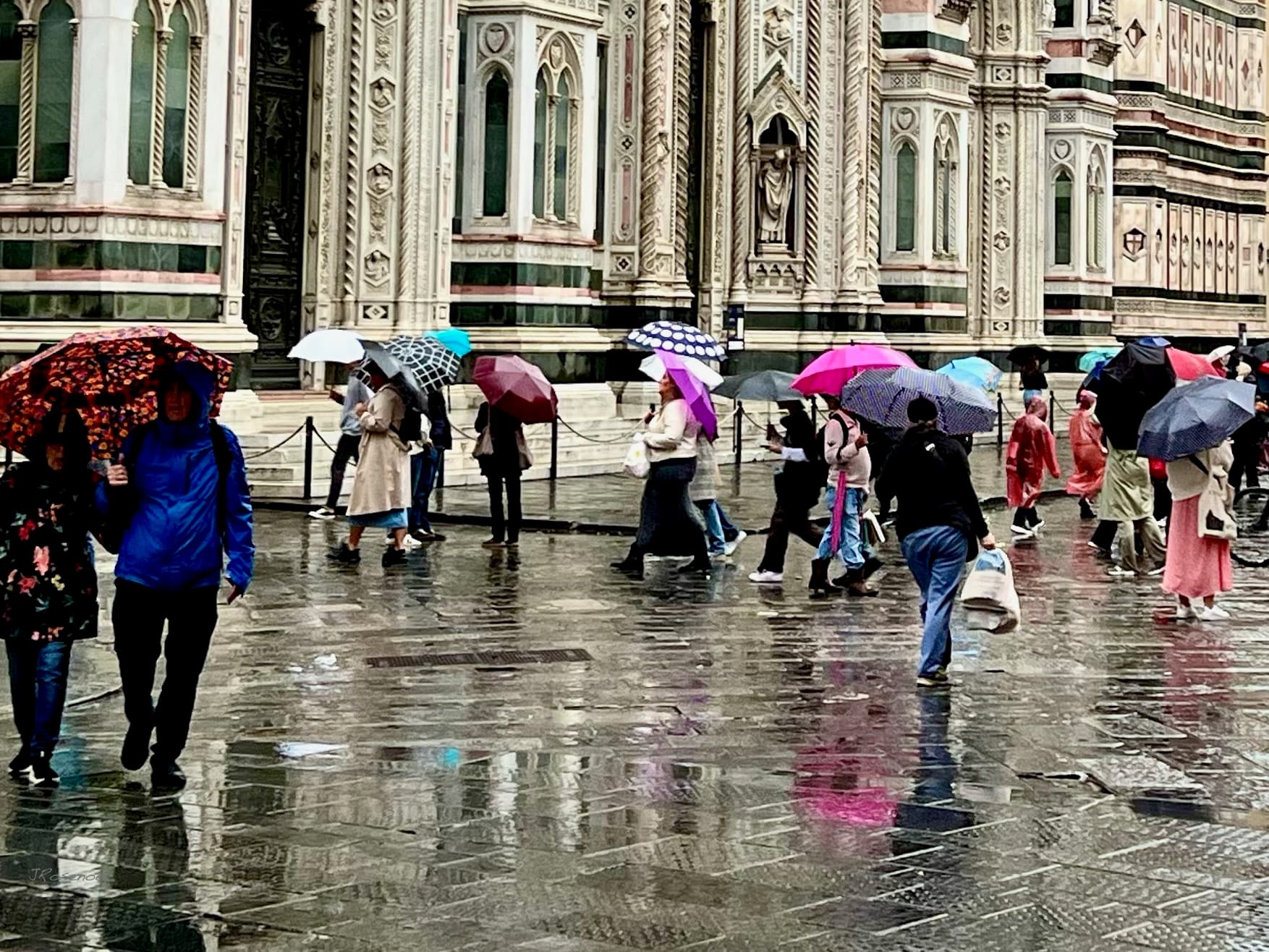
The question people actually ask before a December trip to Florence is not what the average temperature is. It is whether they can get away with a packable jacket instead of a bulky coat, and how many of their days are going to be rained on. A monthly average answers neither.
So we counted the days instead of averaging them. Eleven Decembers, 341 individual days, from the ERA5 reanalysis for the centre of Florence.
The average is the least useful number
Across those eleven Decembers the average high is 12.0 °C and the average low is 3.6 °C. Both are true and neither helps you pack, because an average of 3.6 at night is made up of nights at 8 and nights at minus 2, and you dress for the second kind.
The useful version is the spread. Here is every December day from 2015 to 2025, sorted by how much rain fell on it.
How many of your days will be wet
| How wet the day was | Days | Share | What it means on the ground |
|---|---|---|---|
| Dry, under 1 mm | 209 days | 61% | Three days in five. Umbrella stays in the bag |
| Spitting, 1 to 5 mm | 66 days | 19% | A jacket hood handles it |
| Properly raining, 5 to 15 mm | 45 days | 13% | You want the umbrella |
| Heavy, over 15 mm | 21 days | 6% | One day in sixteen. Plan something indoors |
Sixty-one per cent of December days are dry. Add the ones where it only spits and four days in five need nothing more than a hood.
For a trip, the arithmetic that matters is this one. On five days in Florence in December, the expected split is roughly three dry days, one with drizzle and one properly wet. That is a very different planning problem from “it rains in December”, and it means one indoor day is usually enough insurance. The Uffizi is the obvious place to spend it, and December is the month with the shortest queues.
The coat question, answered properly
| Figure | What it tells you | |
|---|---|---|
| Average daytime high | 12.0 °C | The figure everyone quotes |
| Average overnight low | 3.6 °C | The other figure everyone quotes |
| Nights at or below freezing | 21% | One night in five, which the average hides completely |
| Days that never reach 8 °C | 6% | Genuinely cold days are rare |
| Days reaching 14 °C or more | 20% | One day in five is mild enough for a jumper and nothing else |
| Warmest December day recorded | 20.3 °C | In the eleven years counted |
| Coldest December night recorded | −3.7 °C | In the same eleven years |
Two numbers decide this. Only 6% of December days never reach 8 °C, and 20% reach 14 °C or more. Daytime Florence in December is mild far more often than it is cold, and the warmest December day in the run hit 20.3.
But 21% of nights are at or below freezing, and the sun is down by twenty to five. You will be out in the cold half of the day whether you intended to be or not, because the day ends while you are still sightseeing.
Which makes the practical answer: layers, something genuinely windproof and waterproof over them, and a hat, rather than a heavy coat you carry around a gallery all afternoon. The wind off the Arno at night is what people remember, not the temperature.
It is dark by a quarter to five, and that barely changes
| Date | Sunrise | Sunset | Daylight |
|---|---|---|---|
| 1 December | 07:31 | 16:42 | 9 h 12 |
| 14 December | 07:44 | 16:41 | 9 h 00 |
| 21 December, the shortest day | 07:48 | 16:43 | 8 h 54 |
| 31 December | 07:51 | 16:49 | 9 h 00 |
Nine hours of daylight is the headline, and the shortest day is the 21st with 8 hours 54 minutes. But look at the sunset column rather than the daylight one.
The sun sets between 16:42 and 16:49 every single day of December. It does not keep getting earlier. What keeps getting later is the sunrise, which slides twenty minutes across the month. So the afternoons stop shortening around the middle of December while the mornings carry on.
For planning, that means your usable daylight is one block from about half eight to half four, and it is the same block on the 3rd as on the 30th. An early start buys you more than a late finish ever will. It also means the Christmas market is lit for most of the hours it is open, which is rather the point of it.
One December is nothing like another
| December of | Dry days | Total rainfall | |
|---|---|---|---|
| 2015 | 29 of 31 | 6 mm | The driest in the run |
| 2016 | 29 of 31 | 13 mm | |
| 2017 | 17 of 31 | 90 mm | |
| 2019 | 20 of 31 | 137 mm | |
| 2020 | 12 of 31 | 195 mm | |
| 2021 | 16 of 31 | 194 mm | |
| 2022 | 8 of 31 | 176 mm | The wettest in the run |
| 2024 | 20 of 31 | 91 mm | |
| 2025 | 22 of 31 | 67 mm | Last year |
This is the part that should temper everything above. Dry days range from 8 to 29 out of 31 depending on the year. December 2015 had six millimetres of rain in the entire month. December 2020 had 195.
So the three-in-five figure is a good planning assumption and a terrible guarantee. If your dates are fixed, pack for the wet version and enjoy being wrong. The one thing worth saying with confidence is that the second half of December is drier than the first in this run, 67% dry days against 55%, which is the opposite of what most people assume about the run-up to Christmas.
If you are choosing between months
People moving their dates around usually assume they are picking a drier month. They are not. The share of dry days barely moves between October and March.
| Month | Day / night °C | Dry days | Rain a month | Nights at 0 or below |
|---|---|---|---|---|
| October | 21.2 / 11.5 | 62% | 113 mm | 0% |
| November | 15.4 / 7.1 | 59% | 133 mm | 4% |
| December | 12.0 / 3.6 | 61% | 101 mm | 21% |
| January | 10.7 / 2.3 | 65% | 77 mm | 31% |
| February | 12.7 / 3.4 | 61% | 98 mm | 19% |
| March | 15.4 / 4.9 | 66% | 93 mm | 6% |
Two things fall out of that table. November is wetter than December, 133 millimetres against 101, and has slightly fewer dry days. Moving a trip from December back into November to catch better weather moves it into the wettest month of the six.
And January is the driest of the lot, at 77 millimetres and 65% dry days, while also being the coldest, with nearly a third of nights at or below freezing.
So the real trade is not rain. Between October and March you are choosing a temperature, not a probability of getting wet. Freezing nights go from none in October to 4% in November, 21% in December and 31% in January. That is the number that should move your dates, if anything does.
What we have not checked
- We have not been in Florence in December. Everything above is measurement, not experience, and we are not going to tell you how the city feels in the rain.
- Wind and humidity are not in these figures. They are the reason a damp 6 °C by the river feels worse than a dry 2 °C inland, and we have not quantified either, so treat the temperature table as temperature and nothing more.
- This is climate, not a forecast. Eleven years tells you what to pack two months out. It tells you nothing about your actual dates, and no amount of historical data ever will. Check a forecast in the week before you fly.
- Snow. We have not counted snowfall days, only temperature and precipitation, so we say only that the temperature pattern is not one that produces lying snow and leave it there.
Questions
Do I need a winter coat in Florence in December?
For the daytime, usually not. Across eleven Decembers of daily records, one day in five reached 14 degrees or more and only six per cent of days failed to reach 8, so a windproof jacket over layers covers most afternoons. The nights are the other story: one night in five drops to freezing or below, and it is dark by a quarter to five, so you will be out in the cold part of the day whether you planned to be or not. The honest answer is layers plus something genuinely windproof and waterproof, and a hat, rather than a heavy coat you then carry around all day.
How much does it rain in Florence in December?
Less often than the monthly rainfall totals suggest. Counting every December day from 2015 to 2025, 61 per cent were dry, meaning under a millimetre, and another 19 per cent had only light drizzle. Properly wet days, over 5 millimetres, were 19 per cent of the month. On a five-day trip the expected split is about three dry days, one damp one and one wet one. What the averages hide is how much that varies between years: December 2015 had 29 dry days out of 31 and December 2022 had eight.
What time does it get dark in Florence in December?
The sun sets between 16:42 and 16:49 all month, and that barely moves. The shortest day is 21 December with 8 hours 54 minutes of daylight. What does change is the morning: sunrise slides from 07:31 on 1 December to 07:51 on the 31st. So the evenings stop getting darker around the middle of the month while the mornings keep getting later. In practice you get one useful block of daylight from about half eight to half four, and everything after that is lit by shop windows.
Does it snow in Florence in December?
Not meaningfully. In the eleven Decembers we counted, the coldest night recorded was minus 3.7 degrees and daytime temperatures stayed above freezing throughout, which is not the pattern that produces lying snow in a river valley. Snow does reach Florence occasionally and it is remembered when it happens, which is a good sign of how rare it is. Plan for rain, not snow.
Is December a good time to visit Florence?
It is the cheapest and quietest month of the year to see the galleries, and the weather is milder than most people expect: three days in five are dry and the afternoons often sit around 12 degrees. What you are trading is daylight, because you get under nine hours of it, and the fact that the Christmas market closes on 20 December, so the festive part of the month and the Christmas part do not overlap.
Next: the Christmas market dates, which end before Christmas does or what to book before you arrive.