Day Trips from Florence: What Each One Really Costs
Updated August 2026 · Fares and journey times taken from Trenitalia’s own booking system, not from other guides
Pisa gets called “about an hour” and Lucca “easy by train”. The four best known ones are above. Between them they run to more than thirteen thousand words and cover about fifty destinations, and not one of them tells you the price of a single train ticket.
That is a strange gap, because the fare is the thing that decides whether you go. So we went and got them. Everything below comes out of Trenitalia’s own booking system, queried on 27 August 2026 for a midweek departure on Wednesday 16 September, one adult, no railcard, standard second class. We also counted how many direct trains a day each town actually gets, which turns out to matter more than the journey time.
Every fare in one table
Cheapest first. “Best time” is the quickest direct service we saw on the day we checked, and the fare is the lowest standard adult fare on that route. The column that gets ignored everywhere else is the third one: a town with twenty-nine direct trains is a completely different proposition from one with four, whatever the journey time says.
| Town | Fare | Best time | Direct/day | Verdict |
|---|---|---|---|---|
| Prato | 3.00 € | 18 min | 25 | Half a day, frescoes |
| Pistoia | 5.30 € | 33 min | 29 | Nobody goes |
| Empoli | 5.30 € | 21 min | 21 | A junction, not a stop |
| Lucca | 8.90 € | 1h 36 | 17 | Best all-rounder |
| Pisa | 9.80 € | 51 min | 18 | Half a day is enough |
| Arezzo | 9.80 € | 1h 01 | 14 | Piero della Francesca |
| Bologna | 9.90 € | 1h 17 | 20 | Not Tuscany, go anyway |
| Siena | 10.80 € | 1h 28 | 13 | Awkward station |
| Viareggio | 11.40 € | 1h 41 | 15 | A beach |
| La Spezia | 15.90 € | 2h 21 | 4 | For the Cinque Terre |
Two things jump out of that table. Prato is eighteen minutes and three euros, which is less than a taxi across Florence. And La Spezia, which is how most people reach the Cinque Terre, has four direct trains a day against Pistoia’s twenty-nine. That single number should shape the entire day.
The mistake that costs you an hour
This is the most useful thing on this page, and we have not seen it written anywhere else.
Trenitalia runs two kinds of regional service on the busy Tuscan lines. The Regionale stops at everything. The Regionale Veloce skips the small stations. They are sold at exactly the same price, because regional fares are set by distance and not by speed.
| Route | Regionale | Regionale Veloce | Price difference |
|---|---|---|---|
| Florence to Pisa | 1h 24 | 51 min | None. Both 9.80 € |
| Florence to Arezzo | 1h 29 | 1h 01 | None. Both 9.80 € |
| Florence to Empoli | 31 min | 21 min | None. Both 5.30 € |
Book the wrong one to Pisa and back and you have spent an extra hour of your day sitting still, for no saving whatsoever. The booking page shows the service type next to each departure. It takes four seconds to look and it is the single highest-value check on this page.
Why most of these fares never move
People apply airline logic to Italian trains and book weeks ahead to lock in a price. For regional trains that is wasted effort. The fare is fixed by the route, so the 9.80 euros to Pisa is 9.80 euros whether you buy it in June or four minutes before departure. Trenitalia sells the digital regional ticket up to five minutes before the scheduled departure.
The exception is anything that is not regional, and Bologna is the clean example:
| Route | Cheapest seen | Most expensive seen | Fixed? |
|---|---|---|---|
| Florence to Pisa (regional) | 9.80 € | 9.80 € | Yes |
| Florence to Arezzo (regional) | 9.80 € | 9.80 € | Yes |
| Florence to Siena (regional) | 10.80 € | 10.80 € | Yes |
| Florence to Bologna (Intercity and Frecce) | 9.90 € | 25.90 € | No |
| Florence to Orvieto (Intercity) | 12.90 € | 40.00 € | No |
So the rule is simple. If the town is in Tuscany and the train is regional, turn up and buy it. If you are going to Bologna or Orvieto, book ahead, because there the price genuinely climbs.
Under an hour
Prato, 3.00 euros, 18 minutes
The cheapest real day trip out of Florence and the one the guides forget. Twenty-five direct trains a day, so there is no planning to do at all. Prato has Filippo Lippi’s frescoes in the cathedral and a well-known contemporary art museum, and it is a working Italian city rather than a stage set, which is either the appeal or the problem depending on what you came for. Half a day, and you are back for lunch.
Pistoia, 5.30 euros, 33 minutes
Twenty-nine direct trains, the highest count on the whole list. Pistoia was Italian Capital of Culture in 2017 and still gets a fraction of the visitors of Lucca or Siena, which is the entire argument for going. If you have one spare morning and cannot face another queue, this is where to spend it.
Empoli, 5.30 euros, 21 minutes
Listed for honesty rather than as a recommendation. Empoli is where the Siena line branches off, so you will probably pass through it. It is not a day trip.
Pisa, 9.80 euros, 51 minutes
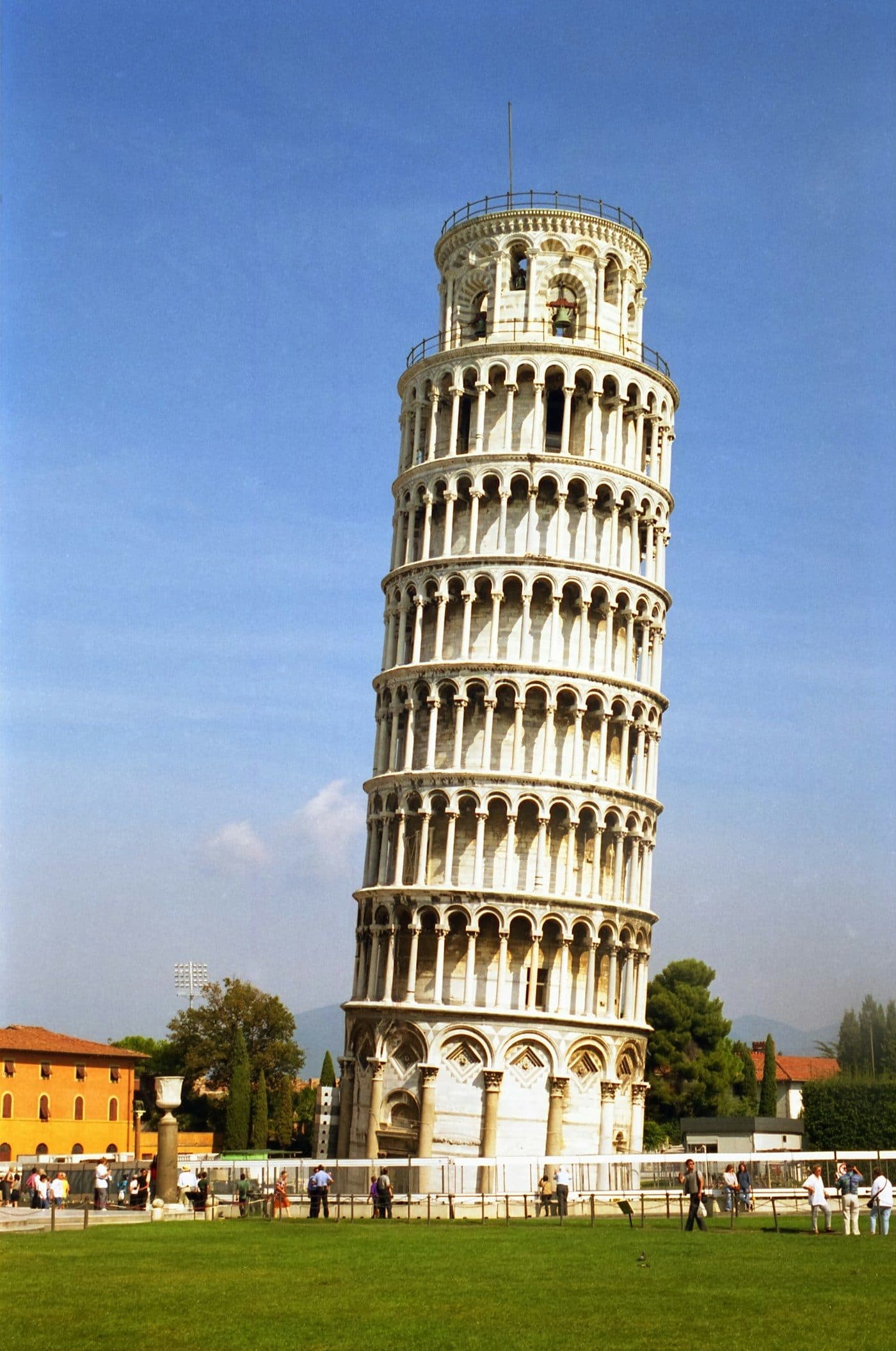
Everyone is slightly sniffy about Pisa and everyone goes anyway. The honest position is that the Piazza dei Miracoli is genuinely extraordinary and genuinely small, and that three hours covers it comfortably. At 9.80 euros each way with eighteen direct trains, you can decide on the morning of, go, and be back in Florence by mid afternoon with the rest of the day intact. Remember the Veloce.
One thing to sort before you go, because the official site publishes its prices as images and almost nobody quotes them: the tower is 20 euros, everything else in the square is 11, and both together are 27, so the upgrade costs 7 rather than 11. The cathedral is free. Full breakdown and the rules that catch people out in our guide to Pisa.
Arezzo, 9.80 euros, 1h 01
Piero della Francesca’s Legend of the True Cross is in the Basilica of San Francesco here, and the town gets a fraction of Siena’s crowds for the same money and less time on a train. Fourteen direct services. Same two-speed trap as Pisa, so check whether you are on the Veloce.
Around ninety minutes
Lucca, 8.90 euros, 1h 36
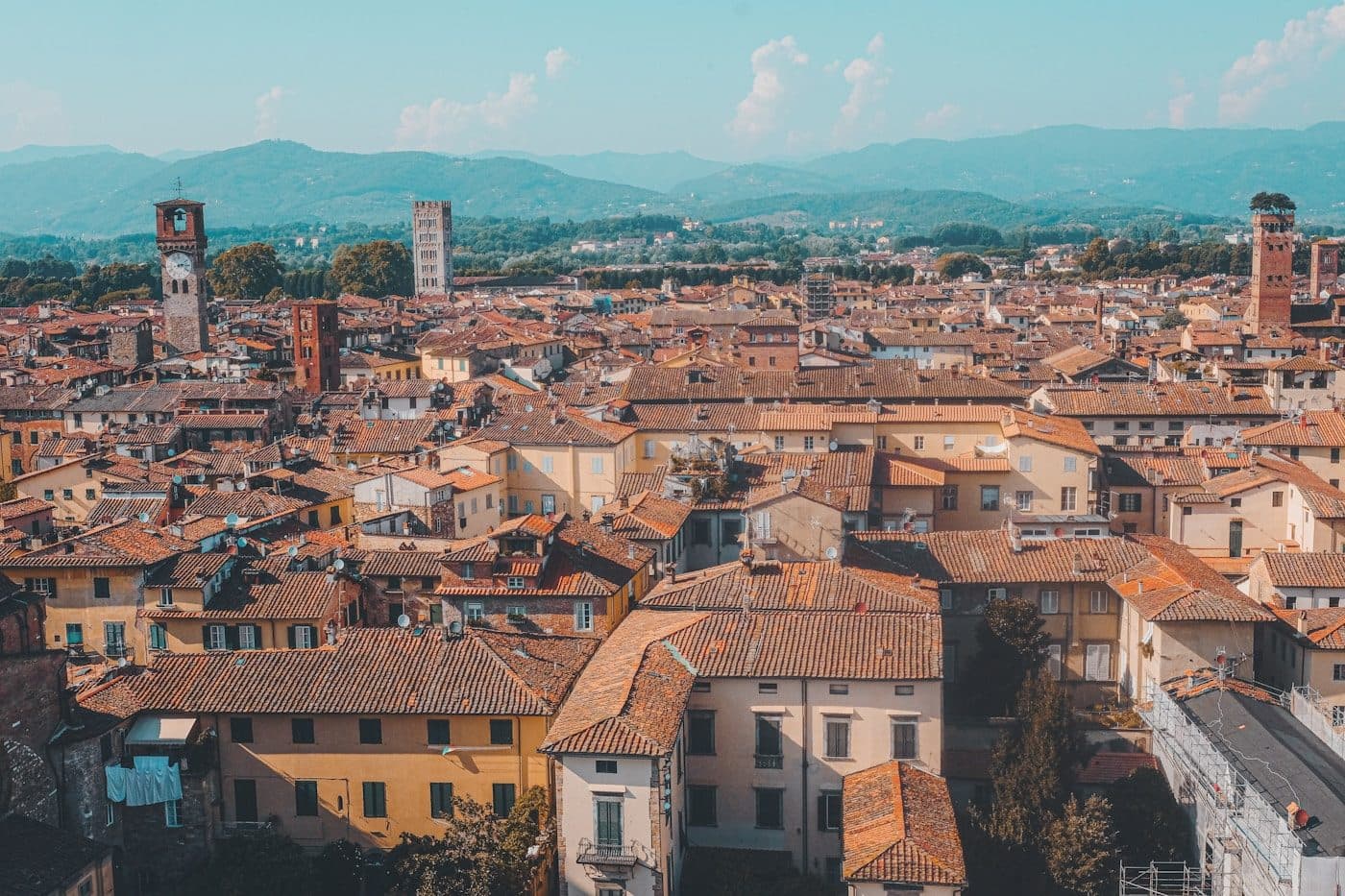
If you only do one of these, do this one. Lucca is cheaper than Pisa and Siena, has seventeen direct trains, and is the rare Italian town whose walls survived completely intact, wide enough on top to be a tree-lined park you can walk or cycle right around. Walking it costs nothing and the bike is about five euros an hour, which our guide to what Lucca costs breaks down, along with why the city refuses to publish the price of anything else. The station sits just outside the walls, so you are in the old town within a few minutes of getting off, which is exactly what Siena does not offer.
Siena, 10.80 euros, 1h 28
The most rewarding town on the list and the most awkward arrival. The train drops you outside the historic centre rather than in it, and the giveaway is in Trenitalia’s own system: it sells a separate arrival point at the Siena Gramsci bus stop, in the middle of town, reachable only by a train and bus combination that takes two hours against the direct train’s hour and a half. We have not timed the walk up from the station ourselves, so we are not going to print a figure for it, but plan for the transfer rather than assuming you step off into the Campo.
There is also a direct coach run by Autolinee Toscane that arrives in the centre, and we have since checked it against the operator’s own documents. Line 131 takes 55 to 65 minutes against the train’s 1h 28, costs about the same, and stops at Via Tozzi and Via Gramsci inside the town. If Siena is the main event of your day, take the coach: our guide to Florence to Siena has the fares, the stops and the six euro mistake people make at the door.
If you want more than an afternoon there, we have a full guide to Siena.
Bologna, 9.90 euros, 1h 17
Not Tuscany, and one of the best days out on this page anyway. Twenty direct services through the Apennine base tunnel. The catch is the one described above: this is the only route here where the price genuinely moves, from 9.90 euros up to 25.90 for the same journey. Book it in advance and it is one of the cheapest trips on the list. Book it on the platform on a Friday and it is one of the dearest.
Further out, and whether it is worth it
The Cinque Terre, via La Spezia, 15.90 euros, 2h 21
The number that should decide this is not the two hours twenty. It is that we found four direct regional trains to La Spezia across the whole day, against eighteen to Pisa. Everything else on this page tolerates a missed train. This one does not, and you still have to get from La Spezia into the villages after you arrive.
It is doable and plenty of people do it. Just go in knowing that a long lunch can cost you the return, and that the day is mostly the journey. If that sounds like a lot of logistics for one day, this is the case where an organised trip earns its money.
This one deserves its own arithmetic, because the park charges for its own train on top of the fare above and it changes the answer. We worked the whole day through in Florence to Cinque Terre by train, including the reason there is no direct service.
Viareggio, 11.40 euros, 1h 41
A proper Tyrrhenian beach town with fifteen direct trains, on the same line as Lucca. Worth knowing about in August, when Florence is unbearable and the sea is ninety minutes away.
Orvieto, 12.90 euros, 1h 38
Umbria rather than Tuscany, with one of the great Italian cathedral facades. Eight direct Intercity services, and the fare climbs to 40 euros, so this is a book-ahead trip. The town sits on a plateau above the station and there is a funicular up.
The ones with no train
Here is where the honest answer changes. Everything above is cheaper and more flexible under your own steam, and we would not book a tour for any of it. But several of the best-known destinations in Tuscany have no useful railway at all, and for those the coach is not a rip-off, it is the sensible option. San Gimignano, Monteriggioni, the Chianti estates and the Val d’Orcia are all in that category, and a one-day car hire plus fuel and parking generally costs more than a seat.
These are the trips we would consider. We have not taken them, and we say so plainly: the ratings and review counts are Viator’s own, shown so you can weigh them yourself.

Tuscany Day Trip: Siena, San Gimignano, Pisa and Winery Lunch
Three towns and a winery lunch in twelve hours, and by a distance the most reviewed thing in Tuscany. Note that you can do the Pisa and Siena legs yourself for about 21 euros in train fares. What you are buying is San Gimignano and the winery.

Siena, San Gimignano and Chianti Wines Day Tour from Florence
Thirty euros cheaper than the one above and it drops Pisa, which is the leg you can most easily do yourself for 9.80 euros. That makes this the more logical version if you are already train-minded.

Half-Day Chianti Wine Tasting from Florence with Two Wineries
Chianti has no railway worth using and the estates are spread across hills between Florence and Siena. Five and a half hours, two cellars, back for dinner. The most reviewed half-day format there is.
Val d'Orcia Tour with Montalcino, Pienza and Montepulciano
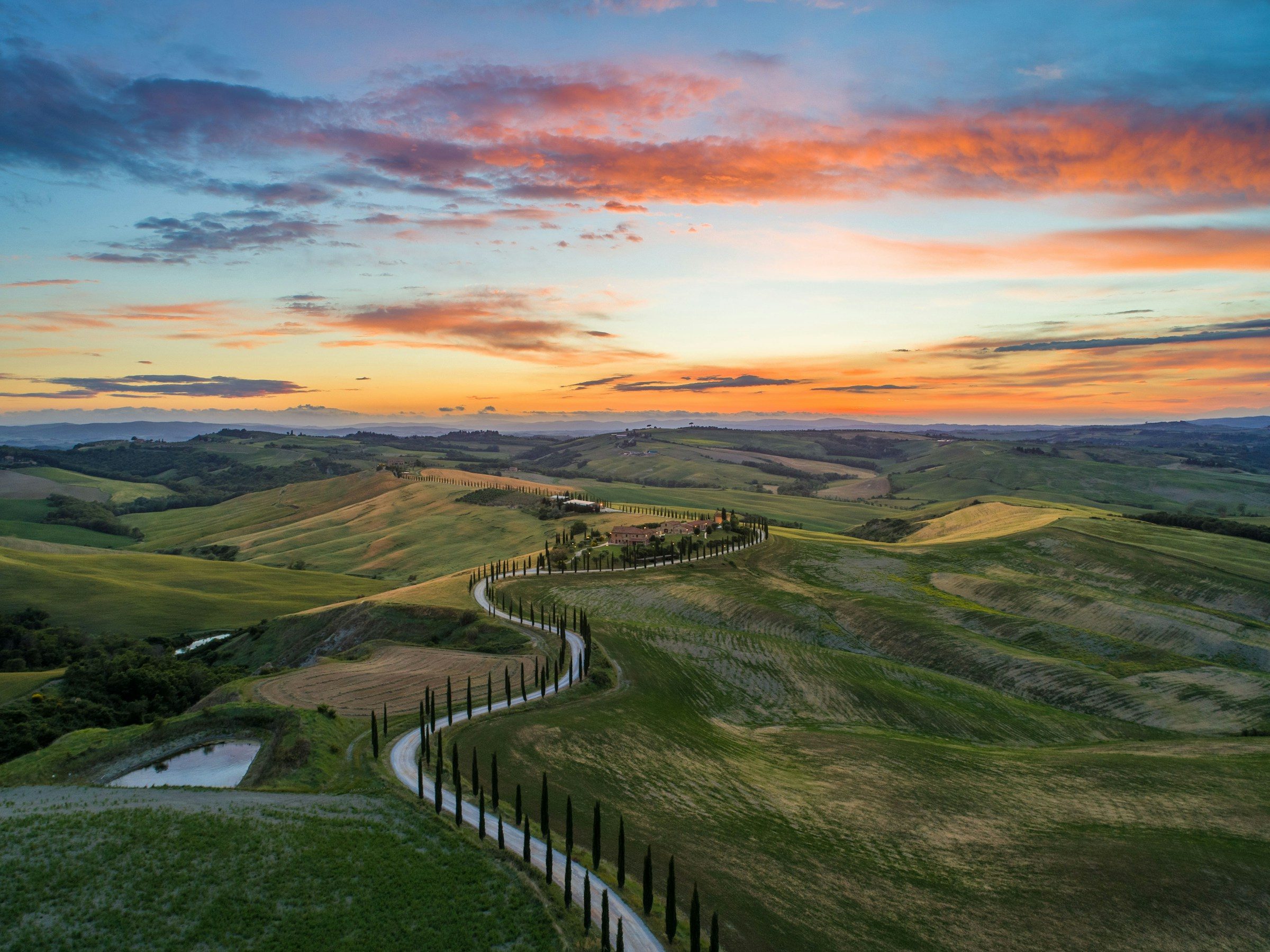
Ten and a half hours and three towns, so about ninety minutes in each. The Val d'Orcia is the postcard Tuscany and there is no train anywhere near it. Choose it for the landscape, not for time in the cellars.
If wine is the actual reason you are leaving Florence, the regions are not interchangeable and the choice matters more than the operator. We compare them in which Tuscan wine region to pick.
Which ticket to buy
Trenitalia sells three different things for regional trains and they behave differently. This is the part that catches people out, and it is all on Trenitalia’s own regional travel page.
| Ticket | Validation | Valid for | Changes |
|---|---|---|---|
| Digital (BDR) | Validates itself at the scheduled departure | The booked train, to its scheduled arrival | Unlimited date and time changes until 23:59 the day before, unlimited time changes on the day |
| Electronic (BER) | None needed | 4 hours from the booked departure, any train on the route | Limited, sold for groups, day tickets and combined services |
| Paper single | Must be stamped before boarding | 4 hours from stamping | None once used |
In practice, buy the digital ticket in the Trenitalia app and forget about validators entirely. It activates itself when your train is due to leave, and if the train runs late you can still finish the journey. The old advice about hunting for a little green machine on the platform applies only to paper tickets now.
Two useful details. If you have a paper ticket and there is no working validator, you can ask the on-board staff to sell or validate it with no surcharge, and the same applies if the station has no ticket office, no working machine and no authorised seller within 350 metres. And if you are caught without a valid ticket you pay the full fare plus a penalty, but we are not going to quote you an amount: Trenitalia does not publish one, because regions that have passed their own law set their own. Anyone giving you a precise figure for the whole country is guessing.
What it costs for a family
This is the calculation that decides the day for most people travelling with children, and none of the guides ranking above us runs it, because none of them has the fares.
Children are cheaper on regional trains than most visitors expect. Under fours travel free if they do not take a seat, and from four to twelve it is half price. Over twelve pays the adult fare. So for two adults and two children aged five and nine, a return trip works out like this:
| Trip | Two adults, return | Two children, return | Family total |
|---|---|---|---|
| Prato | 12.00 € | 6.00 € | 18.00 € |
| Pistoia | 21.20 € | 10.60 € | 31.80 € |
| Lucca | 35.60 € | 17.80 € | 53.40 € |
| Pisa | 39.20 € | 19.60 € | 58.80 € |
| Siena | 43.20 € | 21.60 € | 64.80 € |
Set that against a coach tour. The most booked Tuscany day trip out of Florence starts at 85.50 euros per adult, so two adults alone are 171 euros before the children are counted. A family of four can do Lucca on the train, all day, for less than a third of the price of two coach seats, and pick their own train home.
That is not an argument against tours. It is an argument for using them only where the train genuinely cannot go, which is the section further up this page.
Two things worth knowing before you buy
You can pay by tapping a bank card
Trenitalia runs a system called TAP&TAP that lets you buy a regional ticket by touching a contactless Visa, Mastercard or American Express card to a validator marked with the TAP&TAP symbol. No app, no queue, no machine. The limits are worth knowing before you rely on it: one standard adult second class ticket only, one passenger per card, no reduced fares such as the child rate, and Trenitalia states it is currently active only on some routes. If it works on your line it is the fastest way to travel, and if you are a family you still need the app or the ticket office for the children.
Bicycles are 3.50 euros, and folded ones are free
A bicycle supplement on regional trains costs 3.50 euros under tariff 29/b, and it is valid for unlimited journeys until 23:59 on the day printed, not for a single trip. A bike that is folded or dismantled into a bag travels free, and so do folded scooters, hoverboards and monowheels, provided they are switched off and stay within 80 by 120 by 45 centimetres.
This matters most for Lucca, where the thing everyone does is cycle the circuit on top of the walls. Most visitors hire a bike there, which is easy and sensible. But if you are travelling with a folding bike it costs nothing to bring, and the trains that take bicycles are marked with a symbol in the official timetable. If you are weighing that against a booked ride, our guide to what bike tours in Tuscany actually cost sets out the gap between hiring one yourself and paying for a guide.
One caveat we will state plainly: Trenitalia’s own home page was advertising a 20 per cent discount on regional tickets for members of its X-GO loyalty scheme aged under 30 or over 60 when we checked in August 2026, but the X-GO programme page itself describes only a points scheme, three euros off once you have banked 150 points. We could not reconcile the two, so we are not going to tell you the discount is there. Worth asking at the ticket office if you are in either age bracket.
If there is a strike
Italian rail strikes are frequent, announced in advance, and almost never mentioned in day trip guides. They matter here because a strike does not stop all trains, it stops the ones in the middle of the day, which is precisely when you were planning to come back.
Trenitalia guarantees minimum regional services in fixed windows:
| Day type | Protected morning window | Protected evening window |
|---|---|---|
| Working days | 06:00 to 09:00 | 18:00 to 21:00 |
| Public holidays | 07:00 to 10:00 | 18:00 to 21:00 |
So if a strike is called for the day you were going to Lucca, the trip is not necessarily dead. An early train out and an evening train back are the ones most likely to run. A leisurely eleven o’clock departure and a four o’clock return are the ones that will not.
Fitting these into a short stay
One seasonal note before the warning: if you are here between mid-November and Christmas, Arezzo changes from a town most people skip into the better of the two Christmas markets within reach of Florence, and the fast train gets you there in 31 minutes. One practical warning that applies to all of the above. Most people underestimate how much of Florence itself they still want to see, and end up spending a day on a train during a three-night trip. If you are still deciding, we worked through the arithmetic in how many days you need in Florence, and the short version is that day trips only make sense from the fourth day onwards unless you have been before.
If you do have the day, the decision reduces to one question, and it is not the one people usually ask. It is not whether a place is worth seeing. It is whether it has a station. Everything with a station you should do yourself, because the fare is fixed, the trains are frequent, and you keep the right to change your mind at four in the afternoon. Everything without one is where a booked seat stops being a tourist tax and becomes the cheapest way to get there.
And if you take one thing from this page, make it the smallest one: check whether the train you are booking to Pisa or Arezzo is the Veloce. It costs the same either way.
Questions
What is the best day trip from Florence, Italy?
For a first visit with one day to spare, Lucca. It is 8.90 euros each way, about ninety minutes, roughly seventeen direct trains a day, and the whole old town sits inside intact Renaissance walls you can walk or cycle around. If you have less than a full day, Pistoia is 5.30 euros and thirty-five minutes with a train roughly every half hour, and almost nobody goes.
What are some good day trips by train from Florence, Italy?
Nine towns are a direct regional train from Santa Maria Novella: Prato at 3.00 euros, Pistoia and Empoli at 5.30, Lucca at 8.90, Pisa and Arezzo at 9.80, Siena at 10.80, Viareggio at 11.40 and La Spezia at 15.90, which is the gateway to the Cinque Terre. Bologna is not regional but an Intercity gets there in an hour and seventeen minutes. Fares checked with Trenitalia in August 2026 for a midweek departure.
How much is the train from Florence to Pisa?
9.80 euros each way for a standard adult second class ticket, and that is a fixed regional fare, so it does not rise as the date approaches. The important part is that the same 9.80 euros buys either a Regionale taking about an hour and twenty or a Regionale Veloce taking fifty-one minutes. Check which one you are booking.
Do I need to validate my train ticket in Italy?
Only if it is paper. Trenitalia sells three kinds for regional trains. The Biglietto Digitale Regionale validates itself automatically at the scheduled departure time of the train you picked. The Biglietto Elettronico Regionale needs no validation and is valid for four hours from that departure. Only the paper single ticket has to be stamped in a platform validator before you board, and then you have four hours to finish the journey.
What cities are easy to get to from Florence?
Anything on the Florence to Pisa line and the Florence to Bologna line, because those carry the most trains. Prato, Pistoia, Empoli, Pisa, Lucca and Arezzo all have between fourteen and twenty-nine direct departures a day. Siena has around thirteen. The awkward one is La Spezia for the Cinque Terre, where we counted only four direct regional trains, so the return time dictates the whole day.
Is it cheaper to take the train or book a tour?
The train, every time, if the place has a station. Pisa is 9.80 euros each way against about 39 euros for a half day coach tour. What the tour buys you is the places the train does not reach: San Gimignano, Monteriggioni, the Chianti estates and the Val d’Orcia have no useful rail service, and hiring a car for one day usually costs more than the seat on the coach.
Can I take a bike on the regional train?
Yes. A bicycle supplement is 3.50 euros under tariff 29/b and is valid for unlimited journeys until 23:59 on the day shown. A folded bike inside a bag travels free, as do folded scooters, hoverboards and monowheels, provided they are switched off and stay within 80 by 120 by 45 centimetres.
What happens if there is a rail strike?
Trenitalia guarantees minimum regional services in fixed windows: 06:00 to 09:00 and 18:00 to 21:00 on working days, and 07:00 to 10:00 and 18:00 to 21:00 on public holidays. The protected trains are published individually by train number. If your day trip depends on a midday return, a strike is exactly when it breaks.
Some links on this page are affiliate links. If you book through them we earn a commission at no extra cost to you. It does not change what we recommend: we rank on what you get for the money, and we say so when something is not worth booking. Full disclosure.