2 Days in Florence: A Plan That Accounts for Mondays
Updated August 2026 · Opening days verified against official museum sources
Every two day Florence itinerary you will find assumes the same thing: that you have two complete days, and that they are interchangeable. Neither assumption survives contact with an actual trip. The plan below starts from the question the others skip, which is which two days you have got.
Two days is genuinely enough for a first visit, as long as you are choosing rather than trying to cover. What follows is one plan with three variations, because a Tuesday and a Wednesday are not the same trip as a Sunday and a Monday.
Before anything: which two days are they?
This is the step that decides everything else, and the guide that currently ranks first for this search does not mention it at all. Italy’s state museums close one day a week, and in Florence that day removes both of the galleries people come for.
| What you want to see | Open | Closed | Needs booking? |
|---|---|---|---|
| Uffizi Gallery | Tue to Sun, 8.15 to 18.30 | Every Monday | Yes, April to October especially |
| Galleria dell’Accademia | 8.15 to 18.50, last entry 18.20 | Every Monday | Yes, April to October especially |
| Brunelleschi’s dome | Timed slots through the day | Separate calendar | Yes, weeks ahead in high season |
| The cathedral itself | Free to enter | Separate calendar | No |
| Churches, markets, Oltrarno, viewpoints | Most days | Varies individually | No |
So before you read the plan: if neither of your days is a Monday, use the standard version below. If one of them is, skip to the Monday version, which is a different trip rather than the same one shuffled.
One more piece of arithmetic worth doing first. Two days on a booking confirmation is rarely two days on the ground: an afternoon arrival and a morning departure leaves you with roughly one working day. If you have not booked yet, the full breakdown of usable days versus nights is worth five minutes before you do.
Day 1: the Duomo and the centre
The first day is fixed regardless of which days you have, because none of it depends on the state museums.
| When | What | Why then |
|---|---|---|
| Early morning | Climb Brunelleschi’s dome on the first slot you can get | The one hard reservation of the trip, and the square only gets busier |
| Late morning | The rest of the Duomo complex: bell tower, Baptistery, Opera del Duomo Museum | All covered by the pass with no separate time slot, so they absorb delays |
| Lunch | Mercato Centrale, or a sandwich counter in the streets behind it | Ten minutes from the cathedral and not built for tourists alone |
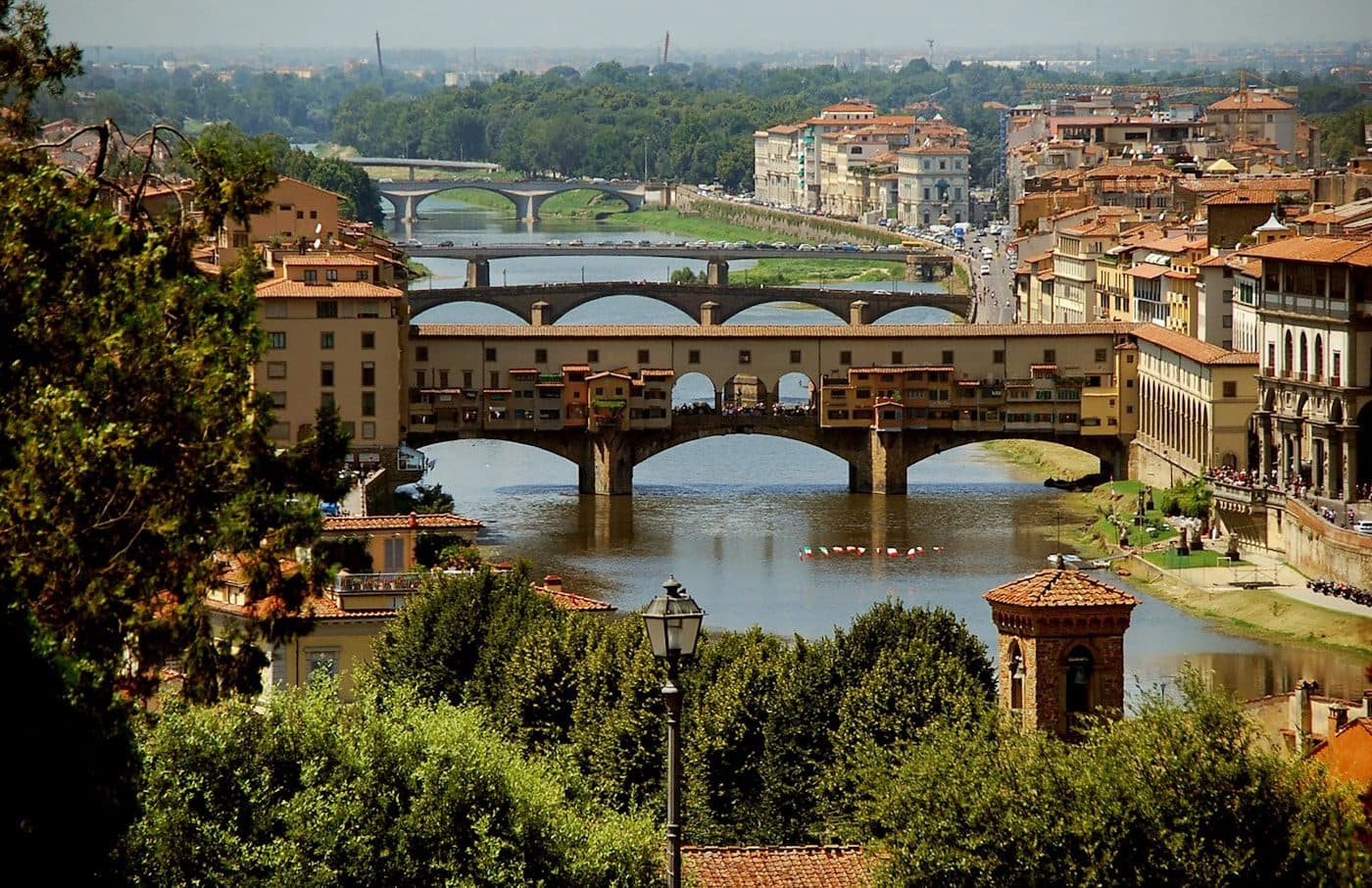
| Afternoon | Piazza della Signoria, the Loggia dei Lanzi, Ponte Vecchio | Open-air and free, so it survives a change of plan |
| Sunset | Piazzale Michelangelo, or San Miniato al Monte just above it | The view everyone comes for. San Miniato has the same view with fewer people |
The only part of that day with a hard constraint is the dome, and it is the part worth protecting. It has a fixed time slot, a five minute grace period, 463 steps and no lift, and it needs photo identification alongside the ticket. Bags go into the luggage store beforehand. If you turn up late or with a backpack you do not go up, and there is no second chance on a two day trip.
Which is the argument for locking that slot down before anything else on this itinerary.
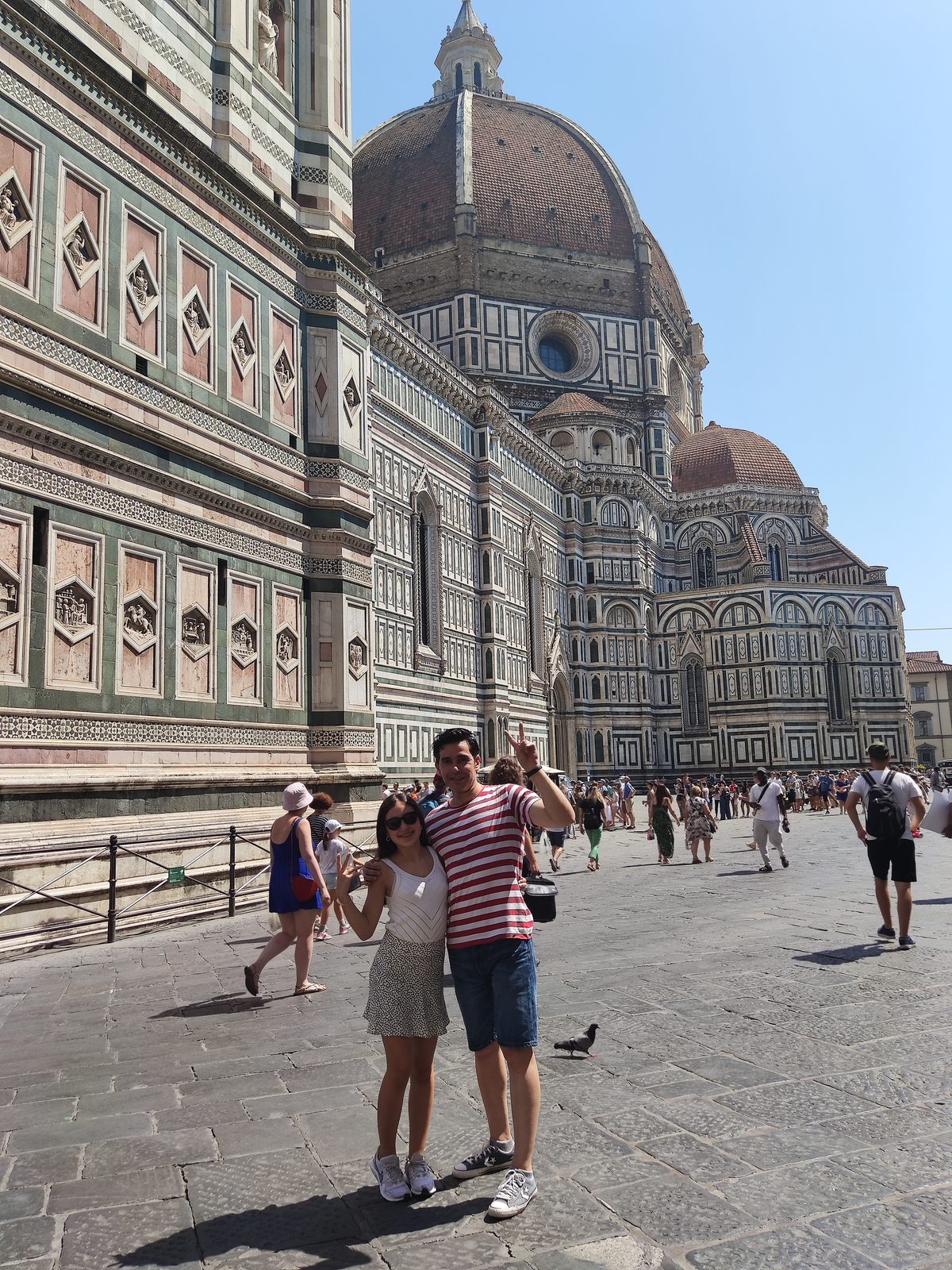
Florence Duomo with Dome Climb Tickets and Museum Tour
The climb comes with a fixed slot however you book it, so the question is only what comes attached. This bundles it with the museum and skips the ticket queue, which on a two day trip is the difference between the morning above going to plan and losing an hour of it.
Day 2: one gallery, then the Oltrarno
Book the gallery for the morning, as early as you can, and treat everything after it as unscheduled.
| When | What | Why then |
|---|---|---|
| Morning | The Uffizi, or the Accademia. One of them | Both need booked slots and mornings are when you have the patience for a gallery |
| Lunch | Cross the river and eat in the Oltrarno | Puts you on the right side for the rest of the day |
| Afternoon | Santo Spirito, the artisan workshops, San Frediano | The part of Florence that still looks like a working city |
| Early evening | Aperitivo, then dinner late by northern European standards | Florence eats at nine. Turning up at seven means eating with other visitors |
If your gallery slot is in the afternoon rather than the morning, invert the day: do the Oltrarno first and cross back. What does not work is booking the gallery for late afternoon, because the Uffizi ticket office closes an hour before the gallery does and a rushed final hour is a waste of the ticket.
If one of your days is a Monday
Both major galleries are shut. This is not a disaster, but pretending it is not happening is: the common failure is arriving at the Accademia on a Monday morning with a plan built around David.
Put the Duomo day on the Monday and rebuild the second day around what stays open:
- The Duomo complex in full. It runs on its own calendar, so this is the natural Monday anchor. Confirm the day on the official site before you commit.
- The churches. Santa Croce, Santa Maria Novella and San Miniato al Monte are three of the most rewarding interiors in the city and none of them is a state museum.
- The Oltrarno and the markets. Workshops, Santo Spirito, Mercato Centrale. This is a full and genuinely good afternoon.
- The views. Piazzale Michelangelo, San Miniato, or the bell tower if you did not climb it on day one.
A Monday in Florence spent outdoors and in churches is a better day than a Tuesday spent queuing for two galleries back to back. The mistake is only a mistake if you find out on the morning.
If you arrive in the afternoon
Two nights with an afternoon arrival and a morning departure is not two days, it is one day and two half days. Plan it as such and it works. Plan it as two days and you will spend the trip behind schedule.
- Arrival afternoon: drop the bags, walk the centre, cross the Ponte Vecchio, eat on the far side. Book nothing. This is the evening that makes people fall for the city, and it costs nothing to get right.
- The full day: the dome in the morning, the rest of the Duomo complex after it, the centre in the afternoon, sunset from above the river.
- Departure morning: one gallery only if your train or flight is late enough and you booked the first slot of the day. Otherwise, coffee, the market, and leave without the stress.
Leaving the gallery out entirely is a legitimate choice here. A rushed Uffizi with a suitcase in a locker and one eye on the clock is not the Uffizi.
Getting into the centre without losing half a day
On a two day trip the journey in is not a detail, it is a meaningful percentage of the trip. Where you land decides how much of your first day survives.
Florence airport sits on the edge of the city and is connected to the centre by tram, so an arrival here costs you very little. Pisa is the common budget alternative: direct trains run to Florence around 53 times a day, the fastest in about 49 minutes and the average just over an hour, plus the transfer from the terminal to Pisa Centrale and the wait. Bologna appears on long-haul routes and is further still.
None of that is a reason to pay more for a different flight. It is a reason to be honest about what the first day contains. Landing at Pisa at seven in the evening means your two day trip is really one day plus two evenings, and the plan to use is the afternoon arrival version rather than this one.
Once you are in Florence, you will not need transport again. The historic centre is walkable end to end in about half an hour, and everything in this itinerary is inside it. The only exceptions are the climbs to Piazzale Michelangelo and San Miniato, which are on foot too, just uphill.
Uffizi or Accademia: choosing one
On a two day trip this is the real decision, and it is worth making deliberately rather than by default. Both of the guides that rank best for this search tell you to skip the Accademia. That is defensible advice, and it is not the whole story.
| Uffizi | Accademia | |
|---|---|---|
| Door to door | 3 to 4 hours | 1.5 to 2 hours |
| What it is | The sweep of Renaissance painting, in the building the Medici built for it | One overwhelming sculpture, plus the unfinished Slaves around it |
| Pick it if | You want the art history, and have the stamina | You want the single object, and want your afternoon back |
| The argument against | It is long, and by hour three most people have stopped seeing anything | It is expensive per minute and largely about one statue |
Our view: on two days, the Accademia is the better use of the time for most first visits, precisely because it is short. It gives you the thing you have seen in photographs your whole life and hands you back three hours of daylight. Its tickets are their own problem, though, and not the one you would expect. Choose the Uffizi if Renaissance painting is a reason you came, rather than a box being ticked. Its fares, and the reason booking ahead costs more, are in our guide to it.
Buying the ticket, and whether to pay for a guide
Both museums sell timed entry on their own official sites, and that is the cheapest way in: the prices in the table above are what you pay direct. What a guided tour adds is a person explaining what you are looking at, and on a two day trip that has a second value, which is that somebody else has already decided what you are going to see in the time available.
It is not a small premium, so decide deliberately. A guided Uffizi visit starts around 68 € against 25 to 29 € for the ticket alone, and a guided Accademia visit starts around 37 € against 20 €. You are paying roughly double for the guide. Worth it in the Uffizi, which is enormous and rewards being edited down. Much less obviously worth it in the Accademia, where the building is small and the main object explains itself.
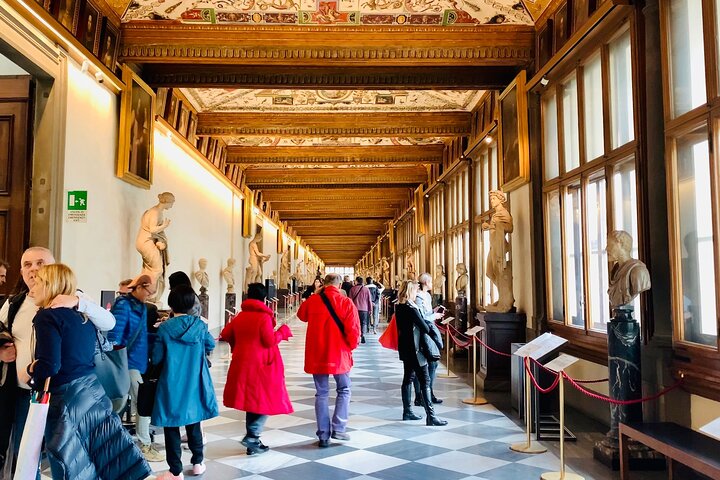
Uffizi Gallery Small Group Tour with Guide
Ninety minutes and entry included. On a two day trip the guide is doing you a second favour beyond the commentary: it caps the visit, so the Uffizi cannot eat the whole day the way it does when you go in alone.

Accademia Gallery Tour with Skip-the-Line Tickets
Sixty-five guided minutes and then you stay as long as you like. Honestly, this is the one where the guide is most optional: if the budget is tight, book the 20 € ticket direct and spend the difference on lunch.
Prices are the lowest advertised in August 2026 and move with the season. If you only want to walk in, skip both of these and book direct at uffizi.it and galleriaaccademiafirenze.it.
What not to try to fit in
| Tempting | Why it does not fit in two days | When it does fit |
|---|---|---|
| A day trip to Siena or Pisa | It costs you half of everything you have | From four days |
| Both major galleries | Five to six hours indoors before you have seen a street | Three days, on separate days |
| Pitti Palace and the Boboli Gardens | Two attractions sold as one, plus a hill. Three hours minimum | Three days or more |
| A Chianti wine tour | A full day, and it needs a car or a tour bus | Four days, or a separate countryside stay |
| Cooking classes and food tours | Half a day each, and they compete with the galleries | Three days, in place of a second gallery |
The temptation on a short trip is to compress rather than to cut, and Florence punishes that specifically: the queues and the timed entries mean the compression happens to your standing time, not to your looking time. Two well-chosen days beat two crowded ones.
If this is reading like you need a third day, you probably do. That decision is worked through in how many days you actually need in Florence, and the full ordering of the individual sights is in things to do in Florence.
Frequently asked questions
Is 2 days enough in Florence, Italy?
Two days is enough to see Florence properly if you accept that you are choosing rather than covering. It buys you the Duomo complex, the historic centre, one of the two major galleries and the Oltrarno. It does not buy you both galleries plus a day trip. The bigger risk to a two day trip is not the length, it is the calendar: if one of your days is a Monday, the Uffizi and the Accademia are both closed and the plan has to change completely.
What should you not miss in Florence in 2 days?
Four things, in this order of priority: the Duomo complex, including the climb if you can get a slot; the historic centre on foot between Piazza del Duomo and Piazza della Signoria; one major gallery, either the Uffizi or the Accademia; and an evening on the far side of the river in the Oltrarno. Everything else on a standard list is optional on a two day trip.
Can you do the Uffizi and the Accademia in the same day?
Physically yes, enjoyably no. The Uffizi realistically takes three to four hours door to door and the Accademia one and a half to two. Stacking them means five to six hours on stone floors before you have seen a street, and it is the most reliable way to finish a short trip saying Florence was exhausting. On two days, pick one and use the time you save on the city itself.
Are there any parts of Florence to avoid?
For a two day visit the practical answer is about where you sleep rather than where you walk. Florence is a safe city, but the blocks immediately around Santa Maria Novella station are the least appealing part of the centre after dark, and sleeping directly on Piazza del Duomo means paying the most for the most noise. We go through this properly in our guide to where to stay in Florence.
Do I need to book tickets in advance for a two day trip?
Yes, and on a two day trip it matters more than on a longer one, because you have no slack to absorb a sold-out slot. Book the dome climb and whichever gallery you choose before you fly, from April to October especially. The cathedral itself is free to enter and needs no booking, and the bell tower, Baptistery and Opera del Duomo Museum are covered by the Duomo pass without a separate time slot.
Should I take a day trip to Siena or Pisa on a two day visit?
No. A day trip costs you half of everything you have. Siena is a genuinely good day out from Florence, with direct trains taking about an hour and twenty minutes at their fastest, but taking one on a two day trip means seeing neither city properly. Day trips start making sense at four days.
Some links on this page are affiliate links. If you book through them we earn a commission at no extra cost to you. It does not change what we recommend: we rank on what you get for the money, and we say so when something is not worth booking. Full disclosure.
Next: which part of Florence to sleep in or how many days you need.