Tuscan Wine Tours from Florence: Which Region to Pick
Updated August 2026 · Regions and boundaries checked against the producers’ own consortia
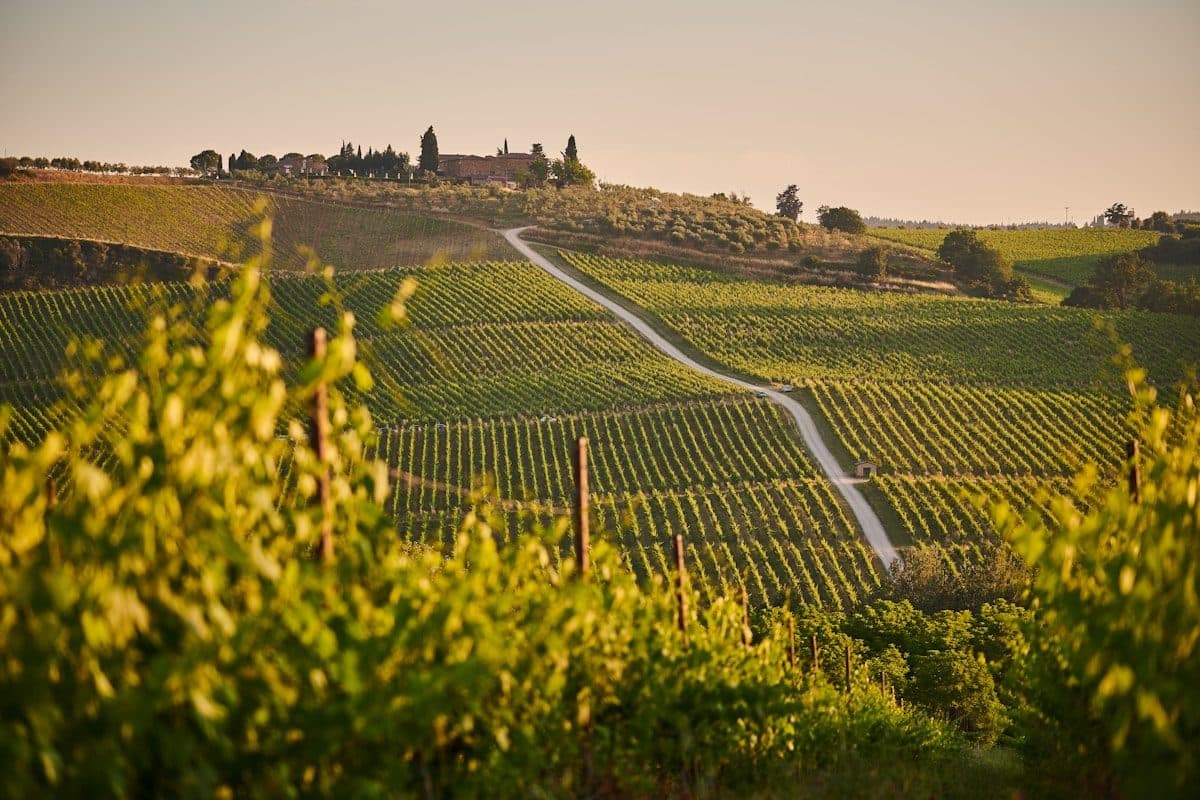
Almost every guide to Tuscan wine tours is a list of tours. The decision that actually matters comes before that, and nobody makes it for you: which of the three wine regions you are going to, whether you need a tour at all, and whether the thing you are imagining, driving between pretty estates and dropping in for a glass, is even possible here.
What follows compares the three regions on the things that decide a day out, explains what these tours actually include, and says plainly when a tour is the wrong choice and you should hire a car instead.
Can you just turn up at a winery?
Google gets asked this constantly and the guides that rank for these searches do not answer it, so here it is first: usually not.
This is the biggest single misunderstanding people carry into Tuscany, and it comes from California. In Napa or Sonoma, a tasting room is a retail business with opening hours and a bar. In Tuscany, most estates are working farms whose main job is making wine, not receiving visitors. Tastings are typically by appointment, often arranged days ahead, frequently with a fee or a minimum purchase, and at many small producers the person showing you round is also the person who would otherwise be in the cellar.
There are exceptions, and they are useful ones:
- Large, visitor-oriented estates. The bigger names in Chianti Classico run proper visitor operations and can often take you at short notice.
- Wine shops and enoteche in the hill towns. Greve, Radda, Castellina, Montepulciano and Montalcino all have shops pouring by the glass with no appointment at all. This is the easiest way to taste widely in an afternoon.
- Anything already inside a tour. Which is precisely what you are paying the operator to have arranged.
So if the plan is to drive yourself and improvise, the workable version is to book two appointments in advance and let anything else be a bonus. Turning up at a gate on a Sunday afternoon expecting a tasting is how people end up drinking in a car park.
The three regions, and which to pick
Tuscany is not one wine region. The three that matter for a visit are quite far apart, and choosing between them is really choosing how much of your day goes on a road.
| Region | The wine | From Florence | Pick it if |
|---|---|---|---|
| Chianti Classico | The Tuscan red most visitors have heard of. Sangiovese, from the hills between Florence and Siena | Closest. Under an hour to the northern edge | You have one day, you are based in Florence, and you want the classic Tuscan landscape |
| Montalcino | Brunello di Montalcino. The most serious and most expensive of the three | Well over an hour and a half each way | Brunello is specifically why you came, and you have a full day or a night nearby |
| Montepulciano | Vino Nobile di Montepulciano. Less famous abroad, excellent, and better value | Comparable to Montalcino, further than Chianti | You want a hill town and a wine region in one, with fewer coaches than Chianti |
The practical conclusion for most people reading this: go to Chianti. Not because it is the best wine of the three, which is arguable and probably not true, but because it is the one that fits a day out of Florence without the day becoming a coach journey. Montalcino and Montepulciano reward being stayed near, not visited from an hour and a half away.
What a wine tour actually includes
The listings are vague on this in a way that matters, because the gap between two tours at a similar price is usually here rather than in the wine.
| What you are checking | Why it matters | What good looks like |
|---|---|---|
| How many wineries | Two is the standard. One is a long drive for a short visit | Two estates, with a proper cellar visit at one of them |
| Whether food is included | The single biggest difference in value between similar prices | A real lunch on full days. Cheese and salumi on half days |
| Group size | Decides whether you get to ask questions or watch someone else ask them | Small group, or the word "minivan" rather than "coach" |
| Pickup point | Many depart from a meeting point in Florence, not from your hotel | A named square or office, with a time you can walk to |
| How many wines | Three at each estate is normal. Fewer is a taste, not a tasting | Three or more per winery, with something to eat alongside |
Half day or full day
Half day, around five hours. Two wineries in Chianti, tastings, back in Florence for dinner. This is the right choice for most people and especially on a short trip, because it costs you an afternoon rather than a day. Afternoon departures also put you in the vineyards in the best light.

Half-Day Chianti Wine Tasting from Florence with Two Wineries
Five and a half hours, two estates, back for dinner in Florence. The most reviewed half day Chianti tour there is, which for a format this commoditised is the most useful signal available.
Full day, nine to eleven hours. Usually Chianti plus Siena, San Gimignano or both. You see more of Tuscany and less of each thing in it. Worth it if this is your only day outside Florence and you want the hill towns as well as the wine, but understand that you are buying a tour of Tuscany with wine in it rather than a wine tour.

Siena, San Gimignano and Chianti Wines Day Tour
Ten and a half hours covering Siena, San Gimignano and a Chianti tasting. This is a tour of Tuscany with wine in it rather than a wine tour, and it is the right call if this is your only day outside the city.
If you only have two days in the city, neither fits: a wine day costs you half of everything you have. That arithmetic is in the two day itinerary.
What actually happens on a winery visit
Worth setting expectations, because the photography on the booking sites shows a table on a terrace at golden hour and the reality is usually more interesting than that and less staged.
A standard visit runs about ninety minutes and has three parts. First the vineyard and the cellar, which is where you find out whether the estate ages in large Slavonian barrels or French barriques, and whether that matters to you. Then the tasting itself, normally three or four wines poured in ascending order, with bread, oil, pecorino and cured meat alongside, less as a meal than to stop you tasting on an empty stomach. Then, invariably, the shop.
Two things people are not told and then feel awkward about:
- You are not obliged to buy. The tasting fee, or the tour price, is the transaction. Buying is normal and welcome, and nobody minds if you do not.
- Wine at the estate is not dramatically cheaper than in a good shop in Florence, and it is heavier than you think in hand luggage. Buy what you cannot get at home rather than what looks like a bargain, and check your airline’s limits before you commit to a case.
If somebody in the group is not drinking, say so when you book. Estates are used to it and will usually pour juice or water and adjust the price, but it is much easier arranged in advance than at the table.
The Chianti hill towns, and which one to aim for
Chianti Classico is not only vineyards. The denomination takes in the entire territory of four small towns, and a good day usually includes one of them for lunch or a wander rather than driving between estates all afternoon.
| Town | What it is good for | Worth a stop if |
|---|---|---|
| Greve in Chianti | The main market town of the zone, with an arcaded triangular square | You want somewhere with shops, cafés and a bus connection to Florence |
| Radda in Chianti | Small, high and quiet, with views over the whole valley | You want the version with fewest coaches |
| Castellina in Chianti | A walled centre with a covered medieval walkway running under the ramparts | You like a town with something specific to see rather than just a view |
| Gaiole in Chianti | The most scattered of the four, surrounded by castles and estates | You are driving yourself and want the back roads |
Most half day tours from Florence work the northern end of this, around Greve, simply because it is closest. Full day tours push further south and usually swap a Chianti town for Siena or San Gimignano, which are bigger and better known but are not in the wine region.
Reading a Tuscan wine label
Five minutes of this makes a tasting considerably more interesting, and it is the difference between nodding along and knowing what you are being poured.
Chianti and Chianti Classico are not the same thing. This is the single most useful distinction on the list. Chianti is a large denomination covering much of central Tuscany. Chianti Classico is the smaller, older zone between Florence and Siena, with its own rules and its own consortium. When people say they are going to Chianti, they almost always mean Chianti Classico.
The black rooster, the Gallo Nero, is the trademark of Chianti Classico and the quickest way to tell the two apart on a shelf. It comes with a genuinely good legend about a medieval boundary dispute settled by a rooster crowing early, which any guide will tell you better than we can here.
There are three tiers of Chianti Classico: Annata, the standard release; Riserva, aged longer; and Gran Selezione, the top category, which the consortium positions as the fullest expression of a single estate’s territory. Exact ageing requirements are set by the denomination regulations rather than published on the consortium’s public pages, so ask at the estate, where they will be pleased you did.
Super Tuscan is not a legal category at all. It is the name given to wines that broke the old rules by blending international grapes such as Cabernet Sauvignon and Merlot, and which were sold as humble table wine while costing more than almost everything around them. Many are made in and around the same hills.
Getting there without a tour
Worth saying clearly, because a page that only sells tours would not: if you have a car and you are willing to book your own appointments, doing this yourself is cheaper, better paced and lets you stay for dinner in a hill town instead of being driven back at six.
The reasons people still book a tour are specific and mostly good ones:
- Somebody has to drive. Italian drink-driving limits are lower than the UK and much lower than most of the US, and the roads through Chianti are narrow, winding and dark at night. A tasting is not one glass.
- Public transport does not go there. The Chianti hills have no useful train service, and the buses exist for residents rather than visitors. This is not a region you can improvise into by rail.
- The appointments are the hard part. An operator has standing relationships with the estates. You are partly paying for the phone calls.
- Driving in Florence is its own problem. Picking up a hire car in the city means dealing with the limited traffic zone, which is enforced by camera and fines automatically. If you are renting, collect it on the day you leave. More on that in where to stay in Florence.
There is a version of this that removes the driving problem entirely, and it is the one people on longer trips end up choosing: sleep in the wine country rather than commuting out to it. That means an agriturismo or a villa, which is cheaper per head in a group and comes with a set of costs a hotel does not have. We broke down what a villa really costs once heating, linen and tourist tax are added, and why the cancellation terms deserve reading twice.
When to go
May, June, September and October are the months to aim for. The consortium puts the Chianti Classico harvest between the first half of September and the second half of October, and visiting during it is genuinely more interesting because the estate is working rather than performing. The trade-off is that it is busier and the people showing you round have other things to do.
July and August are hot enough that the middle of the day in an unshaded vineyard is not fun, and a number of family producers close for part of August. Winter is quiet and cheap, and many of the smaller estates open only by arrangement, so it is the season that most rewards booking ahead.
The tours we would book
Three formats rather than three versions of the same thing, chosen on review volume rather than on what pays best. Prices are the lowest advertised in August 2026 and move with the season.
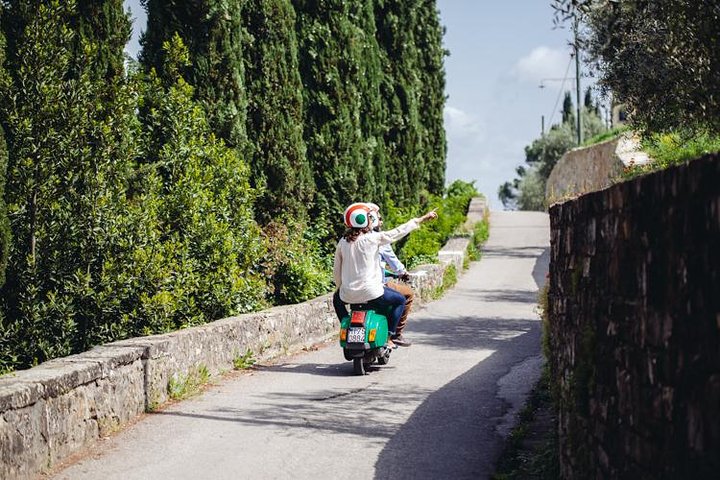
Florence Vespa Tour: Tuscan Hills, Food and Chianti Wine
The highest rated of anything we looked at with this many reviews, and the most expensive here. You are buying the day rather than the wine: six hours riding through the hills with food and a tasting.

From Florence: Chianti Wine Experience with Tastings and Views
Half a day taking in the walled village of Monteriggioni with a tasting, and the least you can pay for this sort of outing. Say it plainly: it also carries the lowest rating and the fewest reviews of the four here. That is the trade.
Ratings and prices checked in August 2026. If you have a car and a couple of afternoons, booking two estates directly will be cheaper than any of these and better paced.
Frequently asked questions
Can you just walk into wineries in Tuscany?
Usually not, and this is the single biggest difference between Tuscany and somewhere like Napa. Most Tuscan estates are working farms rather than visitor centres, and tastings are by appointment, often booked days ahead and frequently with a minimum spend or a set fee. A few larger producers and the wine shops in the hill towns do take walk-ins. If you want to drive yourself and improvise, book two visits in advance and treat anything else you find as a bonus.
Is it worth doing a wine tour in Tuscany?
It is worth it if you want to drink, because the alternative is one person in the group staying sober on roads that are narrow, winding and unlit at night. It is also worth it if you have one day and no car, since the Chianti hills have no useful train service and the buses are built for residents rather than visitors. It is not worth it if you already have a car, are staying in the countryside and are happy to book your own appointments, which will be cheaper and better paced.
What is the best Tuscan wine tour from Florence?
For most first visits, a half day in Chianti with two wineries. It is the closest region to Florence, it gets you back in time for dinner in the city, and Chianti Classico is the wine most people came to try. Go for a full day only if you want to add hill towns like Siena or San Gimignano, and go to Montalcino or Montepulciano instead only if Brunello or Vino Nobile is specifically what you are after, because both are considerably further.
What are the best months to visit Tuscan wineries?
May, June, September and October. September and the first half of October are harvest, which means the estates are working and the visit is more interesting, though also busier and the staff more stretched. July and August are hot enough that the middle of the day is unpleasant, and many family producers close for part of August. Winter is quiet and cheap but a lot of the smaller estates only open by arrangement.
How much does a wine tour from Florence cost?
Half day tours with two wineries generally start around 35 to 55 € per person, full days that add Siena or San Gimignano around 65 €, and small group or specialised formats such as Vespa tours run well over 100 €. What separates the cheap end from the expensive end is usually group size and whether a proper meal is included, not the quality of the wine.
Do wine tours from Florence include lunch?
Some do and many do not, and the listings are not always clear about it. Half day afternoon tours often include cheese and cured meats alongside the tastings, which is enough to soak up the wine but is not a meal. Full day tours more often include a proper lunch. Check the inclusions before booking, because the difference in what you get for the money is bigger than the difference in the sticker price.
Some links on this page are affiliate links. If you book through them we earn a commission at no extra cost to you. It does not change what we recommend: we rank on what you get for the money, and we say so when something is not worth booking. Full disclosure.
Next: the wider Tuscan wine guide or what to do in Florence itself.