How Many Days in Florence? An Honest Answer
Updated August 2026 · Opening days verified against official museum sources
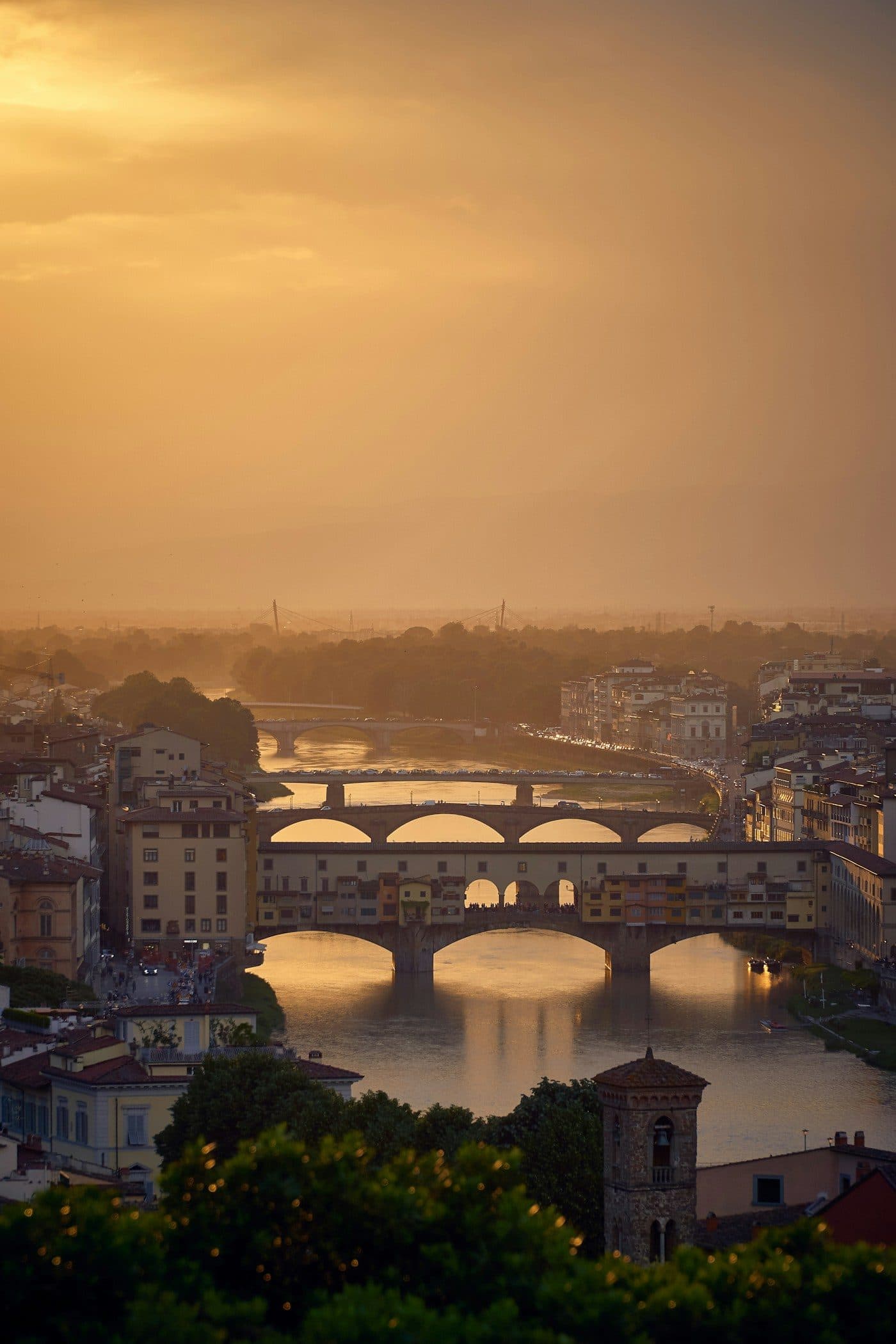
Almost every answer to this question gives you a number and moves on. Three days, says most of the internet. One well-organised day, says Rick Steves. The problem is that the number is the least useful part of the answer, because two people who both book “three nights in Florence” can end up with wildly different trips depending on what time their flights land and which days of the week they picked.
This page answers the duration question and then gives you the three day plan, because those are the same question asked twice. What it will not do is pad the itinerary to fill the days. If two days is genuinely enough for the trip you are taking, it says so.
The number that actually matters
Hotel nights and sightseeing days are different units, and confusing them is the most common planning error we see. A flight that lands at three in the afternoon does not give you a day. It gives you a hotel check-in, a walk and a dinner. A flight home at eleven in the morning does not give you a day either, it gives you a coffee and a taxi.
So before you decide whether three nights is enough, work out what three nights actually contains for your specific flights.
| What you booked | Arrival and departure | Usable days | Realistic plan |
|---|---|---|---|
| 2 nights | Land morning, leave evening | Close to 2 full | The centre plus one big museum |
| 2 nights | Land afternoon, leave morning | About 1 | Dome, centre, sunset. Skip the galleries |
| 3 nights | Land morning, leave evening | Close to 3 full | Both galleries properly, plus the Oltrarno |
| 3 nights | Land afternoon, leave morning | About 2 | Choose one gallery, not both |
| 4 nights | Land afternoon, leave morning | About 3 | City in full, or two days plus a day trip |
The practical consequence is simple. If your flights are awkward, the fix is usually to add the night rather than compress the sightseeing. A fourth night in Florence is cheaper than the museum tickets you will waste rushing through three.
Which airport you land at changes the arithmetic too
Florence has its own airport, Amerigo Vespucci, on the edge of the city and connected to the centre by tram. But cheap flights often land at Pisa, and long-haul routes frequently land at Bologna, and neither of those is in Florence.
Pisa is the easier of the two: direct trains run to Florence roughly 53 times a day, the fastest taking about 49 minutes and the average just over an hour. Add the transfer from the terminal to Pisa Centrale and the wait for the train, and a Pisa arrival costs you a good half morning or half evening that a Florence arrival does not.
None of this is a reason to avoid the cheaper flight. It is a reason to count it. If you land at Pisa at seven in the evening, you are not seeing anything that day, and the three nights you booked have quietly become two usable days.
The Monday problem
This is the detail that decides more Florence trips than any itinerary, and most guides bury it in a logistics paragraph at the bottom. Italy’s state museums close one day a week, and in Florence that day takes out both of the sights people came for.
| Sight | Closed | Standard ticket | Worth knowing |
|---|---|---|---|
| Uffizi Gallery | Every Monday, 1 Jan, 25 Dec | 25 € on the day, 29 € in advance | Open Tue to Sun 8.15 to 18.30. Ticket office shuts at 17.30, an hour before the gallery |
| Galleria dell’Accademia | Every Monday, 1 Jan, 25 Dec | 20 € | Open 8.15 to 18.50, last admission 18.20. EU citizens aged 18 to 25 pay 2 € |
| Duomo complex | Separate calendar | Sold as three passes | Run by the Opera di Santa Maria del Fiore, not the state museum system. Check the day on duomo.firenze.it |
| Churches, markets, Oltrarno | Varies, mostly open | Mostly free | This is what a Monday in Florence is for |
Read that table against your own dates before you book anything. A Saturday to Monday weekend in Florence is not a two day trip with two galleries in it. It is a one day museum trip with a bonus walking day, and it is far better to know that in advance and plan the Monday as a deliberately museum-free day than to arrive and discover it.
There is a second trap in the same place. Both museums are free on the first Sunday of every month, and the Accademia lists a handful of additional free days across the year. Free sounds like a gift. In practice booking is switched off on those days, so the only way in is to queue, and everyone else has read the same page.
What the big sights really cost you in hours
The reason Florence needs more days than its size suggests is that the headline sights are not thirty minute stops. Below is what each one genuinely takes, counted door to door: the queue or security check, the visit itself at a pace that is not a jog, and the walk to whatever is next.
| Sight | Inside | Realistic door to door | What eats the time |
|---|---|---|---|
| Uffizi Gallery | 2 to 3 h | 3 to 4 h | Security, cloakroom, and a building designed as a corridor |
| Accademia (David) | 45 to 90 min | 1.5 to 2 h | One famous object, a small building, a permanent queue |
| Brunelleschi’s dome | 1 h | 1.5 to 2 h | 463 steps, no lift, a fixed slot and a bag drop beforehand |
| Rest of the Duomo complex | 2 to 3 h | Spread over the pass | Bell tower, Baptistery and museum need no time slot |
| Pitti Palace and Boboli | 2 to 3 h | 3 h and a hill | Two attractions sold as one. The garden is a climb |
Put the Uffizi and the Accademia on the same day and you have spent five to six hours standing on stone floors looking at art, before you have seen a street. People do it, and it is the single most reliable way to end a Florence trip saying the city was exhausting.
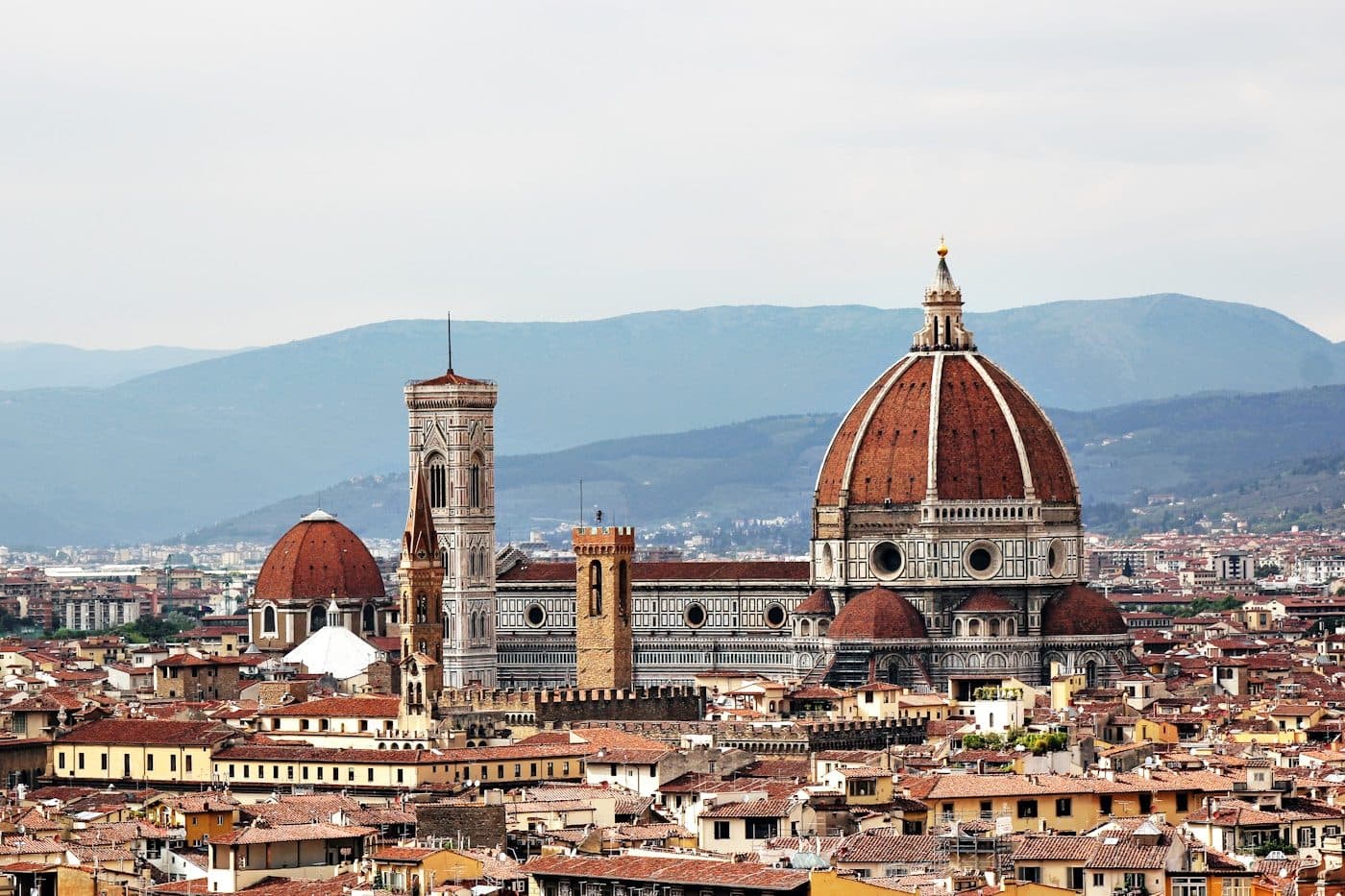
Because it is the one fixed slot, the dome is also the thing most likely to dictate the shape of a day. Booking it with the rest of the complex attached is the simplest way to stop it eating more hours than the table says.
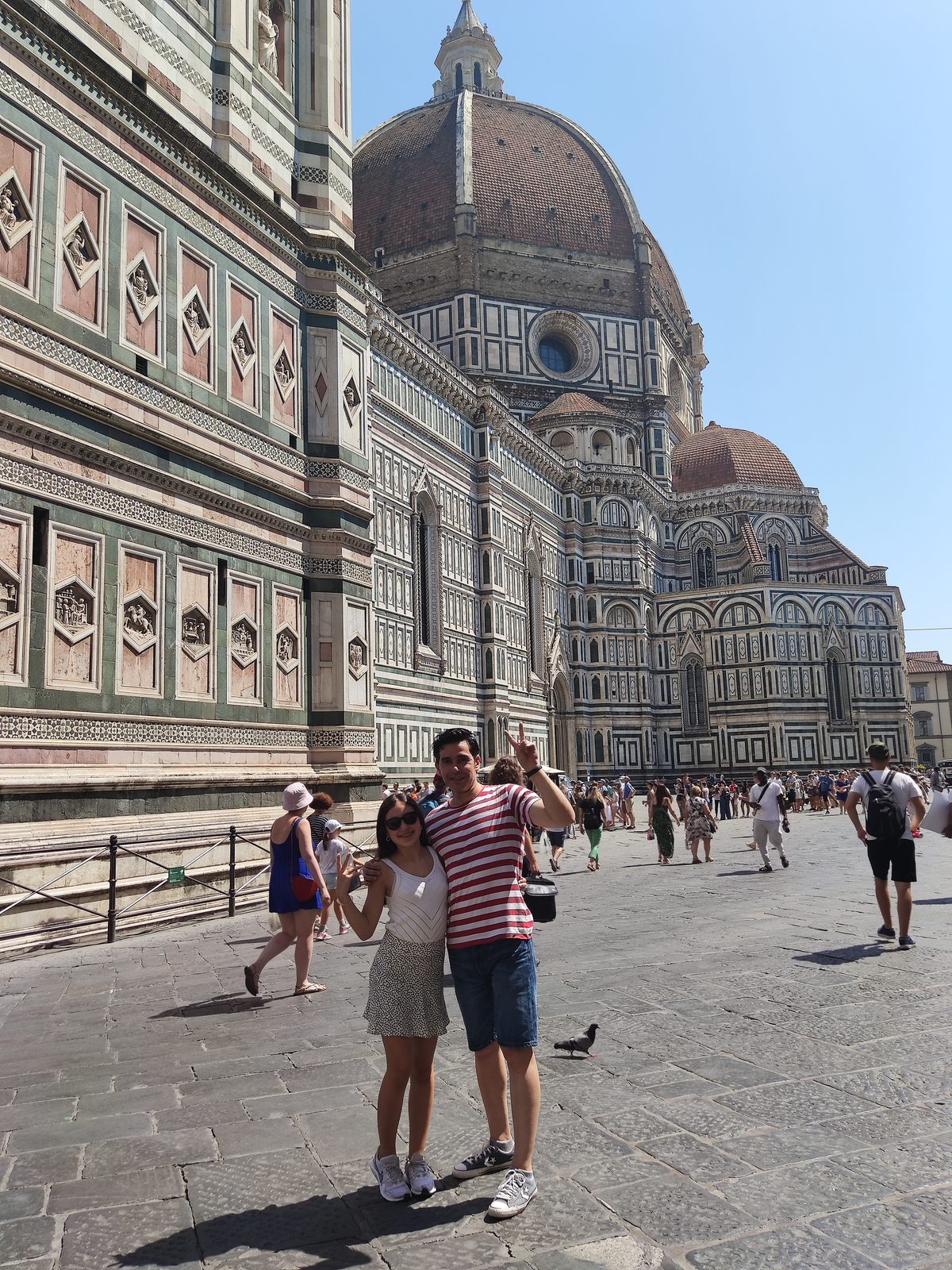
Florence Duomo with Dome Climb Tickets and Museum Tour
The dome climb comes with a fixed time slot whether you book it alone or not, so the practical question is only what else comes with it. This bundles the climb with the museum and skips the ticket queue, which is the part that turns a two hour visit into a four hour one.
What each length of stay gets you
| Usable days | What it covers | What you give up | Who it suits |
|---|---|---|---|
| 1 day | Dome climb, centre on foot, Oltrarno, sunset | Both major galleries | Florence as a stop on a wider Italy trip |
| 2 days | The above plus one gallery, properly | The second gallery, or any day trip | A weekend, if the weekend is not a Monday |
| 3 days | Both galleries on separate days, the Oltrarno, a viewpoint | Very little in the city itself | Most first visits |
| 4 days | All of the above plus Siena, Pisa or Chianti | Nothing that matters | First visits that want a taste of Tuscany |
| 5 or more | Second-tier museums, Fiesole, slow mornings | Nothing | Repeat visitors, or anyone using Florence as a base |
Three days is the honest recommendation for a first visit, and the reason is not that Florence has three days of sights in it. It is that three days is the point where you stop stacking timed entries and start having some slack, which is when a city becomes enjoyable rather than administrable.
One day and two days, planned properly
Not everyone has three days, and a short stay is not automatically a bad one. What ruins short stays is trying to run the three day plan at speed. These are built the other way round, by deciding in advance what is not happening.
One day in Florence
Book one thing: the dome climb, on the earliest slot available. Climb it, then take the rest of the Duomo complex at your own pace, since the bell tower, Baptistery and museum need no separate time slot. Walk down through Piazza della Signoria to the Ponte Vecchio, eat lunch on the far side of the river in the Oltrarno, and spend the late afternoon there rather than doubling back.
Finish above the city, at Piazzale Michelangelo or the quieter San Miniato al Monte just above it. That is a complete day, and it deliberately contains no gallery. Adding the Uffizi to a single day in Florence means spending a third of your day inside one building and arriving everywhere else tired.
Two days in Florence
Day one exactly as above. On day two, pick one gallery, not both, and pick it honestly: the Uffizi if you want the sweep of Renaissance painting, the Accademia if what you actually came for is David. Go on a booked morning slot, then give the afternoon to whatever the first day did not reach.
The one arrangement to avoid is a Sunday to Monday weekend, because on the Monday both galleries are shut and the choice makes itself for you. The full version of this, including a plan built for the Monday case and one for an afternoon arrival, is in the two day Florence itinerary.
A three day plan that survives contact with reality
Since the three day itinerary is what most people are really after, here it is. It is built so that a single closure or a sold-out slot does not collapse the whole thing.
Day one: the centre and the climb
Start at the Duomo complex, and start early. Climb the dome on the first slot you can get, because the queue for everything in that square grows through the morning and the climb is the one thing with a hard reservation. Afterwards the bell tower, the Baptistery and the Opera del Duomo Museum are all covered by the same pass with no separate time slot, so you can take them at whatever pace suits.
Spend the afternoon walking: Piazza della Signoria, the Ponte Vecchio, and across the river into the Oltrarno. Finish at Piazzale Michelangelo or, if you prefer the same view with a fraction of the crowd, keep climbing to San Miniato al Monte above it.
Day two: one gallery, then the other side of the river
The Uffizi in the morning, on a booked slot. It is three to four hours door to door and it is worth the whole morning. Lunch afterwards at Mercato Centrale or in the Oltrarno, then an afternoon that is deliberately unbooked: the artisan workshops south of the river, Santo Spirito, and the streets that still look like a working city rather than a monument.
Day three: David, and then your choice
The Accademia takes ninety minutes to two hours and holds one object almost everyone has come to see. Book it, go early, and do not build the rest of the day around it.
What fills the afternoon depends on what kind of traveller you are. The Bargello has the best sculpture collection in the city and a fraction of the visitors. The Medici Chapels give you Michelangelo’s architecture and sculpture working as one thing. Or you skip all of it, take the train to Fiesole, and look back down at the city you have spent three days inside.
Detailed ordering of the individual sights, including what to book and what to skip entirely, is in the full guide to things to do in Florence.
Why Rick Steves says one day and every blog says three
If you have been researching this for a while you will have noticed the contradiction. Rick Steves opens with the line that Florence deserves at least one well-organised day. Almost every travel blog on the first page of Google says three days minimum. They are not disagreeing about Florence. They are answering different questions.
Steves writes for people doing Italy: Rome, Florence, Venice and the countryside in two weeks, where every extra night in one city is a night removed from another. In that context one intense, well-sequenced day in Florence is a defensible trade, and he lays it out hour by hour to make it work.
The blogs write for people whose trip is Florence, often with a Tuscany extension. In that context there is no competing city to protect, and three days is comfortable rather than heroic.
So the honest version of the answer depends on one thing nobody asks you: is Florence the destination, or a stop? If it is a stop, one full day is legitimate. If it is the destination, three is the number.
When you genuinely need four or more
Four days or more earns its keep in four specific situations, and not much else:
- You want a day trip without sacrificing the city. Siena, Pisa, Lucca or a Chianti wine day all need most of a day. On a three day trip that day comes out of Florence.
- You are travelling in July or August. Heat changes the arithmetic. Afternoons become unusable for anything strenuous, so a summer day is effectively a morning and an evening, and you need more of them.
- It is your second visit. Once the headline sights are done, Florence opens up: the Bargello, Santa Maria Novella, San Marco, the Vasari Corridor, Fiesole. None of those survive a three day first trip.
- You are using Florence as a base. Which, for Tuscany, is usually the wrong call. See below.
When you go changes how many days you need
The same three days do not buy the same trip in February and in August, and this is the part of the question that gets left out of every “how many days” answer.
| Season | Booking pressure | Effect on your days | Days we would plan for |
|---|---|---|---|
| November to March | Low. Same-day tickets often possible | Short daylight, but nothing queues. Museums priced lower | 2 to 3 |
| April to June | High. Book weeks ahead | The best balance. Long days, tolerable heat | 3 |
| July and August | High, and the city is full | Afternoons are too hot for anything strenuous. A day becomes a morning and an evening | 3 to 4 |
| September and October | High through September | Second-best window. Harvest season in the wine country | 3 |
The summer point is the one worth internalising. In July and August the middle of the day in Florence is not usable for walking around a city with very little shade, so the practical day splits into an early morning and a late afternoon with a long gap in the middle. If you are going in high summer, plan the same content across four days rather than three, or plan indoor sights for the hours you would otherwise waste.
Day trips: what fits and what does not
Once people have their Florence days settled, the next question is what to bolt on. The useful filter is total travel time. Anything under two hours each way works as a day trip. Anything over three hours each way is a destination pretending to be one. That rules out Lake Como, which is around three hours each way with no direct train, so six to eight hours of travelling for an afternoon by the water. Give it its own nights.
Within the two hour radius there is more than people expect, and it is cheaper than people expect: nine towns are a direct regional train from Santa Maria Novella, with fares from 3.00 to 15.90 euros. We have put every fare, journey time and direct-train count in one place in our guide to day trips from Florence, including the two routes where the fast and slow trains cost exactly the same and one takes half an hour longer.
The short version for planning purposes: Siena, Pisa, Lucca and Arezzo you can do yourself on a train ticket for around ten euros, and a coach to any of them is money spent on not having to read a timetable. The trips actually worth paying for are the ones with no station, which means Chianti and the Val d’Orcia, and Cinque Terre, where five villages and a ferry have to be coordinated inside a day that is already too long.

Cinque Terre Day Trip from Florence, with Optional Hiking
If you are doing Cinque Terre in a day despite everything above, this is the format that makes it survivable: the connections are somebody else's problem. Thirteen hours. We still think it deserves a night.
Prices and ratings checked August 2026. Everything else we recommend is on the tours page.
One structural point about Tuscany that the day trip framing hides. If you want both the city and the countryside, the better trip is usually not five nights in Florence with three day trips. It is three nights in Florence and then two or three somewhere in the hills, where the evenings belong to the place rather than to a return train. Tuscany rewards being stayed in.
Frequently asked questions
Is 3 days in Florence too long?
No. Three days is the length most first visits should aim for. Florence is small enough to walk across in half an hour, so people assume it is a weekend city, but the constraint here is not distance. It is timed entry, queues and the fact that the two biggest museums both close on Mondays. Three days lets you take the Uffizi and the Accademia on separate days instead of stacking them, which is the single change that stops a Florence trip feeling like a forced march.
Are 2 days in Florence enough?
Two days works if you book everything in advance and accept that you are choosing rather than covering. Day one: the Duomo complex and the centre. Day two: one of the two big museums, the Oltrarno and sunset from Piazzale Michelangelo. What two days does not allow is doing the Uffizi and the Accademia properly and also taking a day trip. If your two days happen to be a Sunday and a Monday, drop the museums from the plan entirely, because both will be shut on the second day.
How many days do you need in Florence and Tuscany together?
Five to seven nights, split. Three nights in Florence covers the city, and the remainder is better spent based somewhere in the countryside rather than commuting out of the city each morning. Tuscany rewards staying in it. If you only have five nights total, three in Florence and two in a hill town or a villa near Siena is a better trip than five nights in Florence with three long day trips bolted on.
Is Lake Como a day trip from Florence?
No, and it is the most common bad idea in Italian trip planning. Trains from Florence to Como take about 3 hours 47 minutes on average, with the fastest services around 2 hours 54 minutes, and there are no direct trains, so you always change at least once. That is between six and eight hours of travel for a few hours at the lake. Lake Como is a destination that deserves its own nights, not a day out of a Florence trip. Siena, Pisa, Lucca and the Chianti hills are the day trips that actually work.
Is one day in Florence worth it?
Yes, if you treat it as one thing done well rather than a checklist. One day is enough to climb Brunelleschi’s dome, walk the historic centre, cross to the Oltrarno and watch the sun set over the city. It is not enough to add either of the big galleries without the day turning into queuing. If Florence is a stop on a wider Italian trip rather than the destination, one full day is a legitimate choice, not a failure.
Does it matter which days of the week I choose?
More than the number of nights does. The Uffizi and the Galleria dell’Accademia are both closed every Monday, along with 1 January and 25 December. State museums are free on the first Sunday of every month, which sounds like a gift and behaves like a warning: no booking is possible on those days and the queues are what you would expect. If you can shift your dates by a day to avoid a Monday-heavy stay, do it.
Some links on this page are affiliate links. If you book through them we earn a commission at no extra cost to you. It does not change what we recommend: we rank on what you get for the money, and we say so when something is not worth booking. Full disclosure.
Next: what is actually worth your time in Florence or the wider Tuscany guide.