Tuscany Villa Rentals: What They Really Cost
Updated August 2026 · Booking terms quoted from the agencies’ own published contracts · Tax rules from the Ministero del Turismo and the comuni
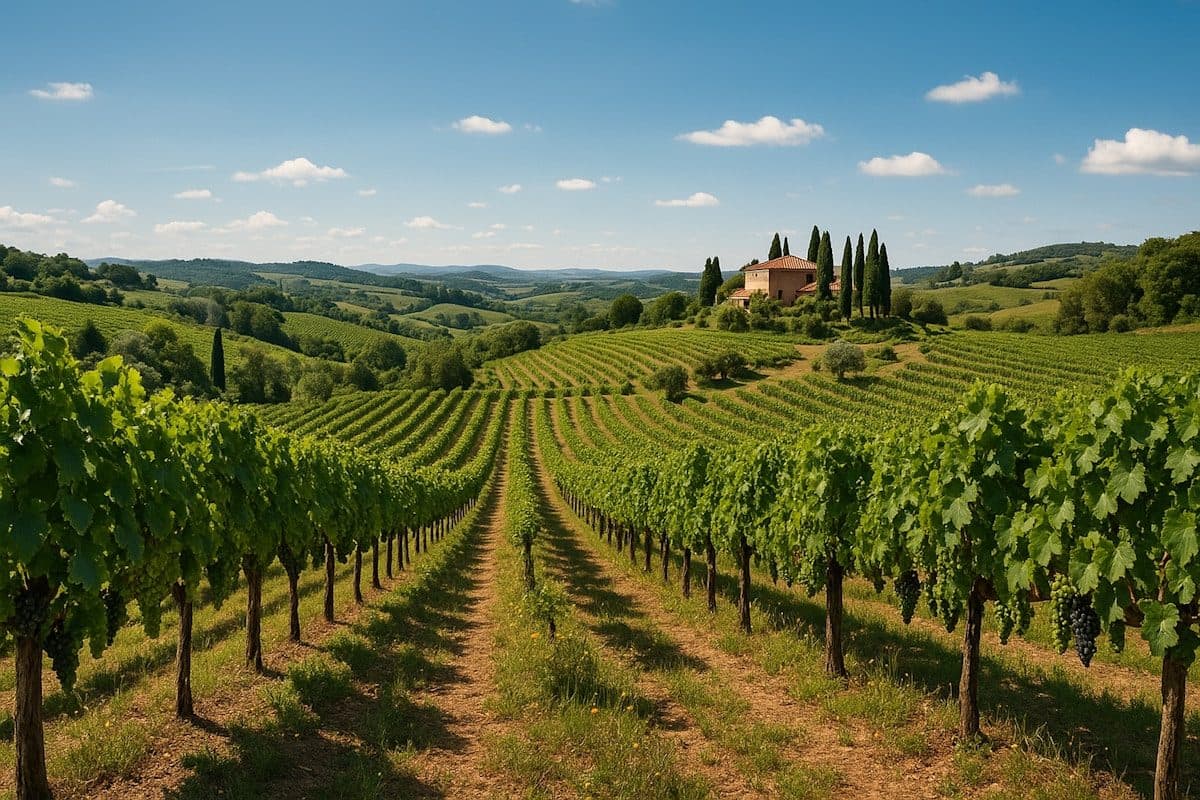
Search for a Tuscan villa and you will find a great many beautiful lists of Tuscan villas. They are made by the companies that rent them, which is fair enough, and it means the one question everybody actually has goes unanswered: what does this cost, really, once everything is added up.
Google knows it too. The questions it puts in its own People Also Ask box for this search are how much does it cost to stay in a villa in Tuscany, how much do Tuscan villas cost and is renting a villa cheaper than a hotel. Three out of six are about money.
We do not sell villas and we are not paid if you book one. So this page is the cost breakdown, the contract terms and the legal check, taken from the agencies’ own published documents and from the Italian Ministry of Tourism.
So how much is it, actually
The honest first answer is that the word villa carries no price information whatsoever, and that is not evasion, it is the single most useful thing to understand before you start looking.
Here is what the companies renting them published in August 2026, when we checked:
| Source | What it advertises | What it is really telling you |
|---|---|---|
| HomeToGo | Tuscan villas “starting from just $76”. The page does not say per night or per week | The cheapest week of the cheapest property in the lowest season. A marketing floor, not a price |
| Soprano Villas | 5.000 € to 8.000 € a week for a high-end villa in Chianti or Val d’Orcia in shoulder season. 15.000 € to over 50.000 € a week in peak season for a large estate | The top of the market, stated plainly by a company that sells it |
| Plum Guide | 1.084 homes in Tuscany, and no prices at all until you enter dates | The honest structure: the price is a function of your specific week |
Seventy-six dollars and fifty thousand euros are both being called a villa in Tuscany. That is a factor of several hundred, and it exists because the word describes the shape of a building rather than a category of product. A restored two-bedroom farmhouse an hour from anywhere and a fourteen-bedroom estate with a chef and a heated pool are the same word and not the same purchase.
So the useful question is not what a villa costs. It is these three:
- How many of us are there? The rate is per property, so it divides by heads. This matters more than anything else on the page.
- Which weeks? The same house in the second week of August and the second week of May are not close. Soprano’s own figures show shoulder season at a third of peak.
- Do we need staff, a heated pool and a view? Each of those is a multiplier, and a chef is the largest one.
One warning about the low numbers specifically. A from price is the cheapest night of the cheapest property in the emptiest week the platform has. HomeToGo does not even state whether its $76 is a night or a week, which tells you how much weight the figure is meant to carry. If you are budgeting a real trip, ignore from prices entirely and price your actual dates for your actual group.
And whatever number you land on, it is not the number you pay, because of everything in the next section.
What the advertised price does not include
A villa is quoted as a weekly rate for the whole property. That figure is the start of the calculation, not the end of it. Here is what commonly sits on top, taken from the published terms of two of the biggest agencies.
Heating, which is the one that surprises people
Tuscany Now & More states it plainly in its booking conditions: charges for heating are applied either according to consumption and paid locally at the end of the rental period, or as a set fee listed in the property description.
Read that again if you are travelling outside high summer. A large stone farmhouse in April is expensive to heat, you will not know what it cost until the end of the week, and you will be asked to settle it before you leave. This is the single most common unpleasant surprise in Tuscan villa rental, and it is not hidden: it is written down, and nobody reads it.
Linen and towels
Also from the same terms: some properties do not supply linen and towels at all, and where that is the case guests pay for them locally on arrival. Where they are included, the same document says they are changed weekly, which for a two-week stay is worth knowing in advance.
Tourist tax, which is never in the price
Italy’s imposta di soggiorno is set by each comune, not nationally, and it is collected on arrival or at the end of the stay, frequently in cash. We checked three Tuscan comuni that matter for villa country:
| Comune | Per person, per night | Cap |
|---|---|---|
| Greve in Chianti | 2,00 € | Maximum 7 nights per person. Flat rate all year since 1 June 2024 |
| Siena | 2,00 € | Maximum 4 nights per calendar month in the same property |
| Montepulciano | 2,00 € | Rate for holiday homes, apartments and other non-hotel accommodation |
It is not a large sum. It is a sum you usually meet standing in the kitchen with your suitcase, and the caps matter: in Greve a family of six on a ten night stay pays for seven nights each, not ten.
The security deposit
Nearly every villa asks for one, and here we have to be honest about the limits of what we could verify: neither of the two agencies whose contracts we read in August 2026 publishes a standard amount, because it varies by property. Assume there will be one, assume it may be asked for in cash, and ask what it is before you book rather than discovering it in a handover email.
Is a villa cheaper than a hotel?
This is in Google’s own list of questions, so it deserves a straight answer rather than a brochure one.
The two things are priced on different units, and that is the whole answer. A hotel charges per room per night. A villa charges per property per week, and it costs the same whether four people sleep in it or twelve. So:
- A couple renting a six-bedroom villa is making the most expensive accommodation decision available in Tuscany. Two people are paying for six bedrooms.
- Three or four couples, or two families is where the arithmetic turns, because the same total divides by ten or twelve.
- The comparison is not like for like anyway. Nobody makes your breakfast, nobody cleans daily, and dinner involves driving somewhere or cooking. Against that, you get a kitchen, a washing machine, a pool and nobody in the next room.
We are not going to give you a break-even figure, because it would be invented. What we can tell you is which way the maths runs: villas get cheaper per head with every person you add, hotels do not. If your group is small and you want somebody else to do the work, look at where to stay in Florence instead.
The cancellation terms nobody reads
This is the part of the page we would most like you to read, because it is where the real money is, and because it is genuinely much harsher than what people are used to from hotel bookings.
We read the published booking contracts of two of the biggest agencies in August 2026. Neither is hiding anything. Both are simply stricter than you expect.
| To Tuscany | Tuscany Now & More | |
|---|---|---|
| Deposit at booking | 25% of the total rental cost | 30% within two days. Booking inside 63 days: the full amount within two days |
| Balance due | No later than 65 days before arrival | Within 63 days of the first day of the rental |
| If you cancel early | More than 66 days out: you lose the deposit | Loss of all monies paid up to that point |
| If you cancel late | 65 days or fewer: 100% of the total rental cost | Same principle: what is paid is not returned |
Two practical consequences. First, the point of no return is roughly two months before you travel, not the week before. Second, if you book late, one of those agencies wants the entire amount within forty-eight hours, which is a very different cash-flow proposition from a hotel you can cancel on the day.
None of this is a reason not to rent a villa. It is a reason to read the clause before the deposit leaves your account, and to price proper travel insurance into the trip rather than treating it as optional.
Where your money actually goes
Here is a number that no page selling you a villa is ever going to print, and it comes from one of those pages: the section of its own site aimed at villa owners rather than at guests.
Tuscany Now & More states that its fee is a gross commission of 26 per cent plus VAT. That is what the agency takes out of what you pay, before the owner sees any of it.
We are not printing that to suggest anybody is being cheated. The commission buys real things, and the same page lists them: professional photography, the website, the advertising, a concierge, emergency support and legal guidance. If something goes wrong at eleven at night in a farmhouse forty minutes from anywhere, that is what you paid for.
But it tells you two useful things. It explains why the same house can appear at noticeably different prices in different places. And it tells you what the ceiling on a direct booking discount looks like, if you find the owner and the owner is willing.
The CIN: how to tell a legal listing from an illegal one
This is the most useful thing on this page and almost nobody writing about Tuscan villas mentions it.
Italy now runs a national register of tourist accommodation, the Banca Dati delle Strutture Ricettive, and every property rented to tourists has a Codice Identificativo Nazionale, a CIN. The Ministry of Tourism requires the owner or manager to state that code in every advertisement, published anywhere.
The details, from the Ministry’s own guidance:
- In force since 2 November 2024, with penalties applying from 2 January 2025.
- The fine for not displaying it is 500 to 5,000 euros per property, plus immediate removal of the offending listing.
- It applies to residential units rented to tourists, which means whole houses and villas, not only apartments.
What that means for you is a free two-second check. Look for a CIN on the listing. If a villa is being advertised without one, either the manager is not compliant or nobody is minding the paperwork, and neither is a comfortable thought when you are about to transfer a four-figure deposit to a foreign bank account.
We should be precise about one limit: the Ministry’s database exists so that owners can obtain the code, and its guidance does not describe a public lookup for travellers to verify one. So treat the presence of a CIN as a good sign and its absence as a question to ask, rather than as proof either way.
Villa, agriturismo or apartment
These three words get used as though they were interchangeable and they are not. The difference decides what your week actually feels like, and it is worth two minutes before you start filtering.
| What it actually is | Suits | |
|---|---|---|
| Villa | A whole private house rented to one group. Nobody else on the property, nobody in the next room, and everything is yours for the week | Groups and families who want the place to themselves |
| Agriturismo | A working farm that also takes guests, which in Italy is a legal category rather than a marketing word. Usually several apartments in one complex, often with a shared pool and a restaurant serving what the farm makes | Couples and small families who like other people around and eating on site |
| Apartment | One unit inside a larger building or estate, sometimes a converted wing of a villa. Shared outdoor space is the norm | Two to four people, shorter stays, and anyone who wants to be in a town |
The trap is that a listing can say villa and mean a wing of one. If the photographs show a large building and the description mentions the number of apartments, or the pool appears in several different listings, you are looking at a shared property. Neither is worse. They are different holidays, and the price difference between them is substantial.
An agriturismo is worth understanding properly because it is the option that gets dismissed by people who would have loved it. It is a farm first: the family lives there, dinner is what they grew, and the atmosphere is nothing like a hotel. In wine country a great many of them are attached to producers, which makes them the easiest way to stay somewhere that also makes the thing you came to drink. Our guide to Tuscan wine covers the regions.
The pool questions worth asking
The pool is why most people are renting a villa rather than booking a hotel, and it is the feature that generates the most disappointment, because photographs do not carry water temperature or opening dates.
Four questions, and all of them should be answered in writing before you pay:
- Is it private or shared? On an estate with several units, the pool is usually shared, and the listing may not say so in as many words.
- When does it open and close? Many Tuscan pools are seasonal and are not filled outside the warm months. If you are travelling in April or October, do not assume. This is the most common version of the complaint.
- Is it heated, and does heating it cost extra? These are two separate questions and the second one is frequently yes.
- Is it fenced? If you are travelling with small children, Tuscan country pools are often unfenced and set below the house on a slope.
We are deliberately not giving you dates or temperatures here, because they vary by property and we could not verify a general rule that would be true across Tuscany. What we can tell you is that these four questions are answerable by email in a day, and that asking them is what separates a good week from a photograph.
When to book
The honest answer is earlier than feels reasonable, and the reason is supply rather than price.
The number of villas in Tuscany with a pool, a view and enough bedrooms for a group is finite, and a large share of them are rebooked by the same families every year. You are not competing on price with other travellers, you are competing for a small number of specific houses.
- July and August: by January. This is also the most expensive and hottest window, and the period when many family-run restaurants close for their own holidays in mid-August.
- May, June and September: you have until roughly March before the good ones thin out. These are the months we would pick.
- April and October: quieter and cheaper, and the month where the heating bill becomes a real line item.
One detail that shows how early the serious demand moves: Tuscany Now & More operates a scheme for booking the following year, with a reduced initial deposit if you commit before mid-November and a second instalment in December. Agencies do not build payment schedules for demand that does not exist.
Month by month on weather, crowds and what closes is in the wider Tuscany guide.
Agency, platform or direct
Three routes, and they are genuinely different products rather than three prices for the same thing.
| Route | What you get | What you give up |
|---|---|---|
| Specialist agency | Vetted properties, somebody local to call, a written contract. The established ones have inventory nobody else lists | The commission, which one of them publishes as 26% plus VAT. And the strictest cancellation terms of the three |
| Booking platform | Scale, reviews, familiar cancellation policies, and a card payment rather than a bank transfer abroad | Far less curation. The villa nobody vetted is on there next to the one somebody did |
| Direct with the owner | The best price available, because there is no commission in it | No intermediary if anything goes wrong, and you carry the whole risk of the transfer yourself |
Our own view, for what it is worth: for a first villa trip with a group and a four-figure sum at stake, the agency commission is buying something real. For a repeat visit to a house you already know, direct is obviously better. And whichever route you take, the CIN check above costs you nothing.
What to ask before you pay
Everything above turns into one email. If you send this before the deposit rather than after, almost nothing on this page can go wrong for you.
| Ask | Why it matters |
|---|---|
| What is the CIN for this property? | A national code is required in every listing. Its absence is a question, not proof of anything, but a manager who cannot answer this is a manager who is not on top of the paperwork |
| How is heating charged, and when do I pay it? | By consumption at the end of the stay, or a fixed fee. The difference is unpredictable versus budgeted, and it only bites outside high summer |
| Are linen and towels included, and how often changed? | Some properties supply neither and charge on arrival. Where included, weekly changes are the norm, which matters on a fortnight |
| How much is the security deposit and how is it paid? | Neither agency whose contract we read in August 2026 publishes a standard amount. Cash on arrival is common and worth knowing before you land |
| Is the pool private, and is it open on my dates? | Shared pools are normal on estates, and seasonal pools are normal everywhere. Neither is always stated |
| What is the cancellation policy in days and percentages? | Get it as numbers, not as a link. One of the contracts we read in August 2026 charges the full rental from 65 days out |
| What is the last stretch of road like? | Unsurfaced final approaches are common. It decides whether you need a bigger hire car and whether you will enjoy driving back after dinner |
| How far is the nearest shop and restaurant, by car? | Ask for minutes, not for "close". Rural in Tuscany can mean twenty-five minutes each way, every day |
One more thing that is not a question but a habit: keep the answers. If the reply says the pool is heated and it is not, an email is worth something and a phone call is worth nothing.
Which part of Tuscany
The region is large and the difference between one valley and the next is the difference between a good week and a lot of driving.
- Chianti, between Florence and Siena, is the compromise most people want: forty minutes from the city, in wine country, with towns close enough to walk to from some properties. It is also the most rented and priced accordingly. Which estates are worth the drive is a separate guide.
- Val d’Orcia, further south around Montalcino and Montepulciano, is the landscape from the postcards. It is also further from everything, so it suits a group that wants to stay put. Montepulciano is the one town down there you can taste in without driving.
- Near Lucca and the north is greener, cooler and closer to the coast, and gets overlooked.
- Within reach of Siena works well if you want one proper city on the doorstep. Siena in detail.
The filter that matters more than the region: can you walk anywhere from the house. Most Tuscan villas are rural, the last stretch of road is often unsurfaced, and every dinner becomes a driving decision. If somebody in the group would rather not drive after a bottle of Chianti, filter for a house on the edge of a village and accept a smaller garden.
Frequently asked questions
How much does it cost to stay in a villa in Tuscany?
Anything from a budget hotel rate to fifty thousand euros a week, because the word villa describes a shape of building rather than a category of product. In August 2026, HomeToGo advertised Tuscan villas from $76 without stating whether that was a night or a week, while Soprano Villas published 5,000 to 8,000 euros a week for a high-end villa in Chianti in shoulder season and 15,000 to over 50,000 in peak season. The number that matters is not the weekly rate but the rate divided by the number of people sleeping there, plus the extras: heating is commonly billed by consumption and paid locally, linen is not always included, and tourist tax is two euros per person per night in the Tuscan comuni we checked.
Is renting a villa cheaper than a hotel?
It depends almost entirely on how many of you there are, because the two things are priced on different units. A hotel charges per room per night. A villa charges per property per week, whether four people or twelve are sleeping in it. So the villa gets cheaper per head with every extra person, and a couple renting a six-bedroom villa is making the most expensive choice available. The other half of the answer is that a villa is not a hotel: nobody makes breakfast, nobody cleans daily, and you will drive to dinner.
When should I book a villa in Tuscany?
By January for July and August, and by around March for May, June and September. The reason is supply rather than price: the number of villas in Tuscany with a pool, a view and space for a group is finite, and the same families rebook them year after year. One agency we checked runs a scheme specifically for booking the following year before mid-November, with a reduced initial deposit, which tells you how early the serious demand moves.
What is a CIN and why does it matter?
The Codice Identificativo Nazionale is Italy’s national identification code for tourist accommodation, and since 2 November 2024 it must appear in every advertisement for a short-term rental, published anywhere. The Ministry of Tourism sets the fine for not showing it at 500 to 5,000 euros per property, plus immediate removal of the listing. For you as a guest it is a free legitimacy check: a villa listing with no CIN is either not compliant or not being managed by somebody paying attention, and neither is reassuring when you are wiring a deposit abroad.
Can I get my money back if I cancel a Tuscan villa?
Usually not, and the terms are far harder than a hotel booking. We read the published booking conditions of two of the biggest agencies in August 2026. One states that cancelling forfeits all monies paid up to that point. The other keeps the deposit if you cancel more than 66 days out, and charges 100 per cent of the total rental cost from 65 days out. Read the cancellation clause before you pay the deposit, not after, and price travel insurance into the trip.
Do I need a car if I rent a villa in Tuscany?
Almost always yes, and this is the single thing people underestimate. The villas that look like the photographs are rural, which means the nearest shop is a drive, dinner is a drive, and the last stretch is often unsurfaced. If you want to be able to walk to a restaurant, you are looking for a house in or on the edge of a town, and you should filter for that explicitly rather than hoping.
Is the tourist tax included in the price?
No. It is set by each comune, collected by whoever manages the property and normally paid on arrival or at the end of the stay, in cash more often than not. In the Tuscan comuni we checked it is two euros per person per night. Greve in Chianti caps it at seven nights per person, and Siena at four nights per calendar month in the same property. For a family of six on a week’s stay it is a modest amount, but it is a modest amount nobody told you about.
Next: Siena, the best city base in wine country or the Tuscan wine guide.