Montalcino Wineries: Visiting Brunello Country
Updated August 2026 · Production rules quoted from the official disciplinare and the Consorzio’s own FAQ
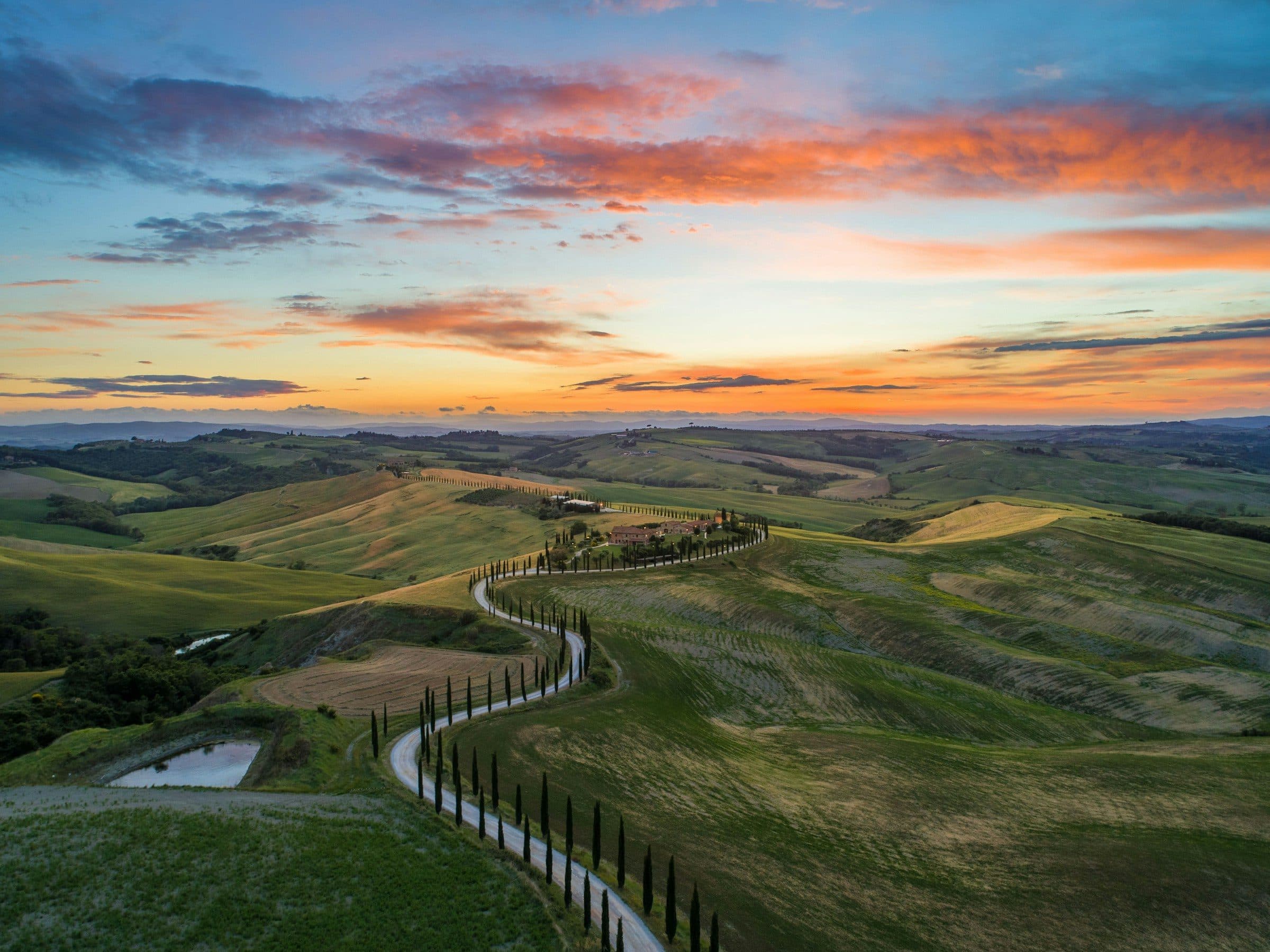
Google’s own People Also Ask box for Montalcino wineries contains the question how much does a bottle of Brunello di Montalcino cost, and nobody currently ranking answers it properly. The lists tell you which estates are beautiful. The forums, and there are a lot of forums in these results, tell you what somebody did in 2019.
The price is not a mystery and it is not a marketing decision. It is written into the production rules, which are public, and once you have read them the whole region makes sense: what to visit, what to buy, and why the bottle that is actually worth carrying home is usually not the one with Brunello on the label.
What a tasting costs, and who will tell you
Why Brunello is expensive is further down this page. None of them tells you what it costs to walk into one of these estates, which is the part you have to budget before you go. So we went and checked eight of them on their own websites.
| Estate | Cheapest published | What that buys | Notes |
|---|---|---|---|
| Camigliano | 25 € | Wine Tour, 60 to 75 minutes | Up to 125 € for the longer formats |
| Col d’Orcia | 35 € | Col d’Orcia Experience, one hour | Up to 100 € with lunch. Cheese board 10 € extra |
| Castello Banfi | Not published | Tours described in detail, no figure | Transport to the winery, 4 km, not included |
| Argiano | Not published | Private and by reservation only | |
| Biondi-Santi | Not published | No visitor section at all | The estate that invented Brunello |
| Ciacci Piccolomini | Not published | Has a Tours and Tastings page, no prices on it | |
| Altesino | Not published | A request form only: name, date, how many of you | |
| Il Poggione | Not published | Its Book Now button books a room | Goes to the agriturismo, not to a tasting |
Two of the eight publish a price. Six do not. That is the single most useful fact about visiting Montalcino and we have not seen it stated anywhere, so here is what follows from it.
The first thing is that the two that do publish are far cheaper than people expect. A bottle of Brunello runs to three figures easily, and visitors assume the tasting scales with it. It does not. Camigliano charges 25 euros for a 60 to 75 minute wine tour, and Col d’Orcia charges 35 for an hour. That is Chianti money at the most prestigious address in Tuscany.
Camigliano, the cheapest way in
| Experience | Duration | Price |
|---|---|---|
| Wine Tour | 60 to 75 min | 25 € |
| Wine Brunch | 2 h | 40 € |
| Cheese and Wine Tasting | 2 h | 45 € |
| Visit with the Winemaker, three wines including Brunello | 2 h | 100 €, min 2 |
| Winemaker for a Day | 2 h | 100 €, min 4, max 6 |
Col d’Orcia, and a number that is not what it looks like
| Experience | Duration | Price |
|---|---|---|
| Birra Driade Experience | 1 h | 15 €, min 2. This one is beer |
| Col d’Orcia Experience | 1 h | 35 € |
| White Wine Tasting, April to September | 1 h | 35 €, min 2 |
| Our Single Vineyards | 1.5 h | 50 € |
| Old Vintages, Brunello Cru | 1.5 h | 80 €, min 4 |
| VIP Tour with tasting and full lunch | 3 h | 100 €, min 4 |
About that 15 euro line, because it would be easy to report it as the cheapest tasting in Montalcino and it is not. The Birra Driade Experience is beer. Col d’Orcia brews it, it is a perfectly good hour, and it is not a Brunello tasting. Their cheapest wine tasting is the 35 euro one. We mention it because the number is sitting there on their price list and somebody is going to quote it at you.
Two practical details from the same page. Any of their tours that includes lunch has to be booked seven days in advance, which is longer than anywhere else we have checked in Tuscany. And a board of local cheese can be added to any tasting for 10 euros, which is the only add-on price published by any estate in this region.
The six that will not quote you
The other six are not being difficult, and some of them have good reasons, but the effect on your planning is the same: you cannot compare, and you cannot budget without sending emails.
Biondi-Santi is the striking one. The estate that invented Brunello di Montalcino has no visitor section on its website at all. The menu runs Brunello Riserva, Brunello, Rosso, La Voce, contacts. Not a word about coming to see it.
Castello Banfi describes its tours properly, an hour and a half, an eleven o’clock version with lunch and a four o’clock one with a tasting of four wines, and never states a figure. It does state something more useful: the meeting point is the Enoteca and transport to the winery, four kilometres away, is not provided. Argiano says everything is private and by reservation. Ciacci Piccolomini has a Tours and Tastings page with no prices on it. Altesino gives you a form: name, date, how many of you, and wait.
And one that will actively catch you out. The Book Now button on Il Poggione’s site does not book a tasting. It books a room. It sends you to a third party reservation system for their agriturismo, with arrival and departure dates and a number of adults. If you are clicking it expecting to reserve a visit, you will get halfway through booking a holiday.
The honest summary: in Montalcino, plan on emailing. Write to two or three a week ahead, ask for the price in the same message, and treat Camigliano and Col d’Orcia as your fallback, because they are the two you can book without a conversation.
Or pay somebody to make the problem disappear, and here the arithmetic is worth doing out loud. A tasting booked direct at Camigliano is 25 euros. The private option below is 58.90, so roughly double the direct price is what it costs not to send any emails, and it includes somebody choosing the estate for you. Whether that is worth it depends entirely on how much of your holiday you want to spend on correspondence.

Montalcino: Brunello Wine Tasting & Lunch in a Tuscan Castle
Ninety minutes rather than nine hours: a tasting and Tuscan lunch in a medieval castle, with no transport included. The pick if you are already driving yourself and want one properly organised stop rather than a whole day arranged for you.
Ten that will quote you, from 20 euros
Everything above is about the names you already know, and the answer there is mostly that they will not tell you a price until you have written to them. So here is the other half of Montalcino, and it is the half nobody writes about: smaller producers who publish a price, take a booking online and start at 20 euros.
None of these ten is one of the eight above. That is the point. They are not Biondi-Santi and they do not pretend to be, and what you get in exchange is a price before you commit and a slot you can book tonight.
| Winery | Per adult | Length | Worth knowing |
|---|---|---|---|
| Sassodisole | 20 € | 1 h | The cheapest Brunello tasting in the catalogue |
| Atrivm | 25 € | 2 h 30 | Top ranked of Winedering’s thirty Tuscan tastings |
| Sesta di Sopra | 30 € | 1 h 15 | Classic tasting, no food |
| Padelletti | 35 € | 1 h 30 | Historic cellar inside the town walls |
| Cordella | 40 € | 2 h | Premium tasting with a cheese and salumi board |
| Casanuova delle Cerbaie | 45 € | 1 h 30 | Premium tasting |
| Poggio San Polo | 50 € | 1 h 30 | Sangiovese, start to finish |
| Roberto Cipresso | 70 € | 1 h 30 | Vertical of Brunello and Rosso |
| Santa Giulia | 69 € | 2 h 30 | Includes a zero-kilometre lunch |
| Tenute Nardi | 75 € | 1 h 30 | Private, and a tasting of single-vineyard Brunello |
Two of them are worth pulling out. Sassodisole at 20 euros is the cheapest Brunello tasting we have found anywhere, and Atrivm at 25 carries the highest internal ranking of the thirty Tuscan tastings in that catalogue, which is their own quality metric rather than ours. One of them, Sassodisole, will also take a booking for a single person, which is rarer than it sounds in Montalcino. Both show a 97 percent booking confirmation rate, a number the big platforms do not publish and which tells you how often a request actually turns into a reservation.

Brunello Wine Tasting at Sassodisole
One hour, 20 € a head, and a 97 percent confirmation rate. Against the 25 € that Camigliano charges and the silence from the other six, this is the shortest distance between wanting to taste Brunello and having a time booked.

Sips of Val d'Orcia: Wine Tasting and Local Produce at Atrivm
Two and a half hours with food, 25 € a head, and the highest internal ranking of any Tuscan tasting in the catalogue, on 87 reviews rather than a handful. Also 97 percent confirmation. It costs the same as Camigliano and lasts twice as long.
Why Brunello costs what it costs
Five rules, all from the official disciplinare, and together they are the answer to the question everybody is actually asking.
| Rule | What the disciplinare says | What it costs the producer |
|---|---|---|
| The grape | Esclusivamente dal vitigno Sangiovese. 100 per cent, with nothing else permitted | No blending to smooth over a difficult year. A bad vintage is a bad vintage |
| The place | The entire administrative territory of the comune of Montalcino, and nowhere else | The land is finite in a way that Chianti Classico’s is not |
| The yield | Maximum 8 tonnes of grapes per hectare. Grapes to finished wine capped at 68 per cent | Deliberately less wine per hectare than the vines could give |
| The oak | Two years in oak containers, then at least four months in bottle, six for the Riserva | Barrels, space, and wine you cannot sell |
| The wait | Cannot be released before 1 January five years after the harvest. Six years for the Riserva | Five years of capital sitting in a cellar |
The Consorzio gives its own worked example, which is clearer than any explanation: a wine from the 2000 harvest could not be sold before 1 January 2005.
Think about what that means for a small producer. The grapes are picked, the money is spent, and then nothing comes back for half a decade. Multiply that by every vintage sitting in the cellar at once and you have a business that requires a great deal of capital before it earns anything. That, far more than prestige, is what is in the price.
One more rule that gets skipped and matters: vinification, ageing, bottling and bottle-ageing all have to happen inside the zone. Nothing is trucked off to be bottled somewhere cheaper. The disciplinare says it is to protect the reputation of the name and make the controls enforceable.
We are not going to print a bottle price. It moves by producer and by vintage, and any figure we gave you would be out of date and probably wrong. What we can tell you is exactly why the number is what it is when you see it.
Rosso di Montalcino, and the loophole
This is the most useful paragraph on the page if you are buying rather than collecting.
Rosso di Montalcino is the same grape, from the same comune, very often from the same estates and the same vineyards. The difference is that it can be sold from the first of September of the year following the harvest, which is roughly four years earlier than Brunello, and its yield cap is a little higher at 90 quintals per hectare.
And here is the part that changes the sums. Article 5.11 of the Brunello disciplinare explicitly allows a wine to be reclassified as Rosso di Montalcino. Producers use this: in a difficult year, or when a particular lot is not going to make the grade, or simply to keep cash flowing, wine that was destined to be Brunello is declassified and sold as Rosso.
So the Rosso in your glass is not a lesser wine made from lesser fruit. It can literally be Brunello that took a different exit. It will be younger and more immediate, and it is the bottle to drink on the trip while the Brunello you bought goes in a cupboard for a decade.
Practical version: ask at the tasting whether their Rosso is declassified Brunello or a separate selection. It is a question that shows you know what you are asking, and the answer tells you a lot about the estate.
Four denominations, not one
Montalcino is treated as a one-wine town and it is not. The Consorzio protects four denominations from the same small territory:
- Brunello di Montalcino DOCG, the one everybody comes for.
- Rosso di Montalcino DOC, covered above and the one to drink.
- Moscadello di Montalcino DOC, a Muscat dessert wine made still, sparkling and late harvest. It is historically the older wine of the town and is now a curiosity, which makes it exactly the thing to ask for.
- Sant’Antimo DOC, the broad category, red and white, from other authorised Tuscan varieties. It is where producers put what does not fit the rules above.
If you want the tasting room to take you seriously, ask about the Moscadello. Most visitors do not know it exists.
How to read a vintage
Search for a Brunello vintage chart and you will find pages of star ratings. They are out of date, and the reason is worth knowing before you spend money on a bottle.
The Consorzio abandoned the star system in 2021. For decades each vintage was declared with a number of stars, that figure was reproduced everywhere, and most of the charts still circulating online are built on it.
What replaced it is genuinely unusual:
- An evaluation model combining meteorological data, laboratory analysis and sensory assessment, rather than a single headline score.
- A blind tasting by an international panel of eight Masters of Wine. For the 2020 vintage the panel came from Sweden, the United Kingdom, France, Germany and the United States, with two Italian MWs guiding the process.
- The tasting happens in October and the result is announced in November at Benvenuto Brunello, the annual presentation of the new vintage in Montalcino.
- The Consorzio describes it as the first time a wine consortium has handed vintage assessment to an external panel that can change every year, which is the point: nobody grading the wine has an interest in the answer.
The practical consequence for you is simple. If a shop or a website is selling you a vintage on the strength of a star rating, that rating predates 2021 and the people who invented it stopped using it. Ask what the producer thinks of the year instead. In a region where the wine sits five years before release, the vintage is the single variable that moves quality most, and the people pouring it will tell you.
Getting there, and when
Montalcino is roughly two hours from Florence and around an hour from Siena, which makes Siena much the better base if Brunello is the priority. There is no useful train: this is a car or a tour, with no third option worth considering.
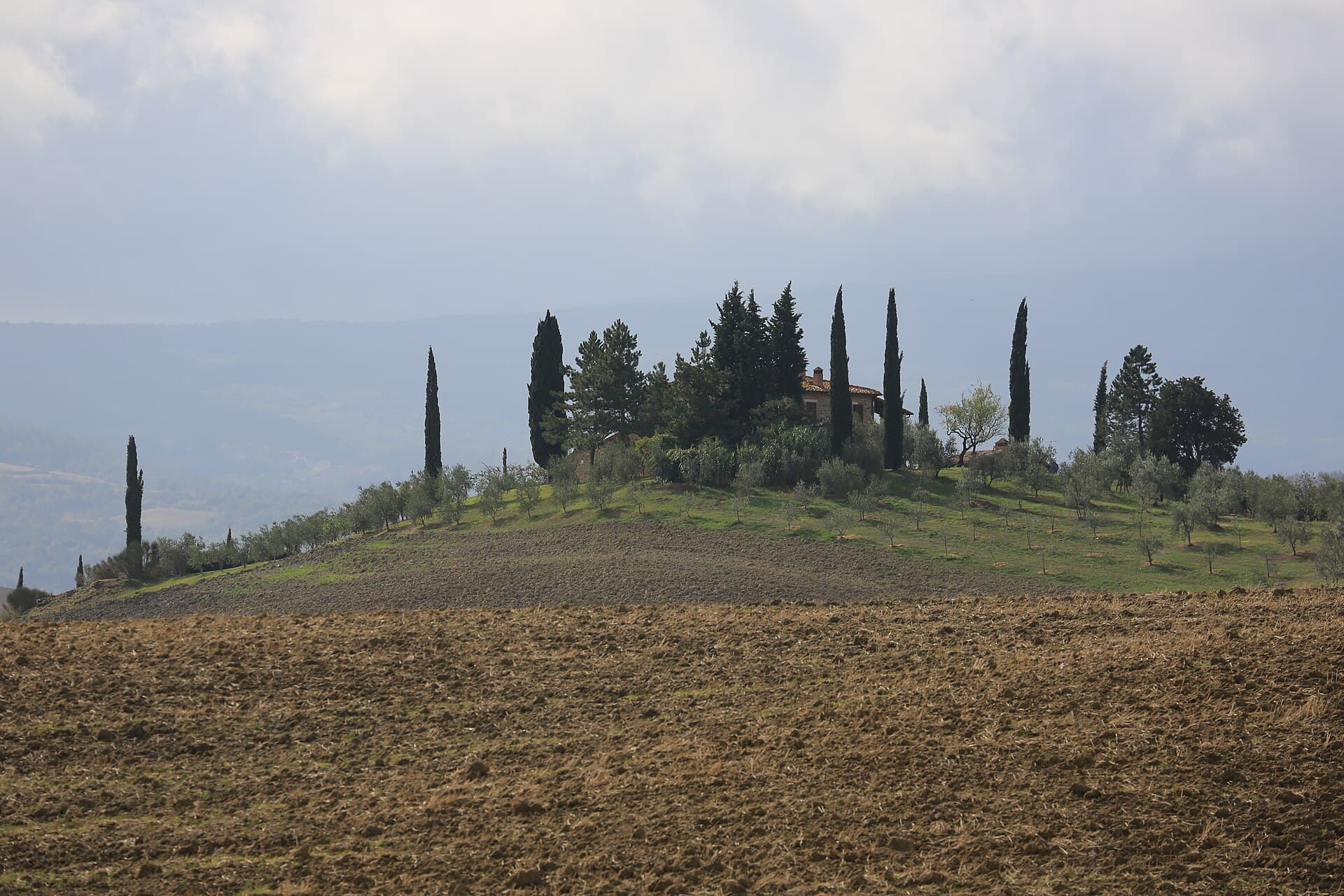
And since that sentence rules out the train entirely, here is the option that follows from it before we get to the seasons.

Small-Group Brunello di Montalcino Wine-Tasting Trip from Siena
Nine hours, small group, three estates, departing Siena rather than Florence. That last detail is the whole point of the paragraph above: from Siena this is an hour, from Florence it is a very long day. The highest rated wine tour we have compared, with over a thousand reviews.
- May, June and September are the months. Warm enough, quiet enough, and the estates are not yet working eighteen-hour days.
- Harvest, late September into October, is atmospheric and the worst time to expect anybody’s full attention. Tastings get short.
- August is hot, busy and expensive, and a number of family-run places close in the middle of the month for their own holidays.
- November to March: many smaller producers simply do not open. If you are travelling then, confirm before you drive two hours.
The obvious pairing for the rest of the day is the abbey of Sant’Antimo, a few minutes south of the town, or Pienza if you are heading towards Montepulciano.
What visiting is actually like
Here is the honest comparison with the town we covered last week, because the two get recommended interchangeably and they are not interchangeable at all.
In Montepulciano, the historic cellars are dug into the rock underneath the town. You walk between them. Nobody needs to stay sober.
Montalcino does not work like that. The estates are spread across the comune, they are working farms rather than visitor attractions, and they run visits by appointment. The town itself is small: a fortress, a handful of streets, a view over the Val d’Orcia that justifies the drive on its own.
What that means in practice:
- Book everything in advance. Turning up at an estate gate in Montalcino is not a plan.
- Two estates is a day. Three if they are close and you are efficient about lunch. The driving between them is not trivial.
- You can drink in the town without any of that. There is an enoteca inside the fortress, covered below. If your plans fall through, the town is the fallback.
- Somebody has to drive. There is no train and the estates are rural. This is the argument for a tour, and we come back to it at the end.
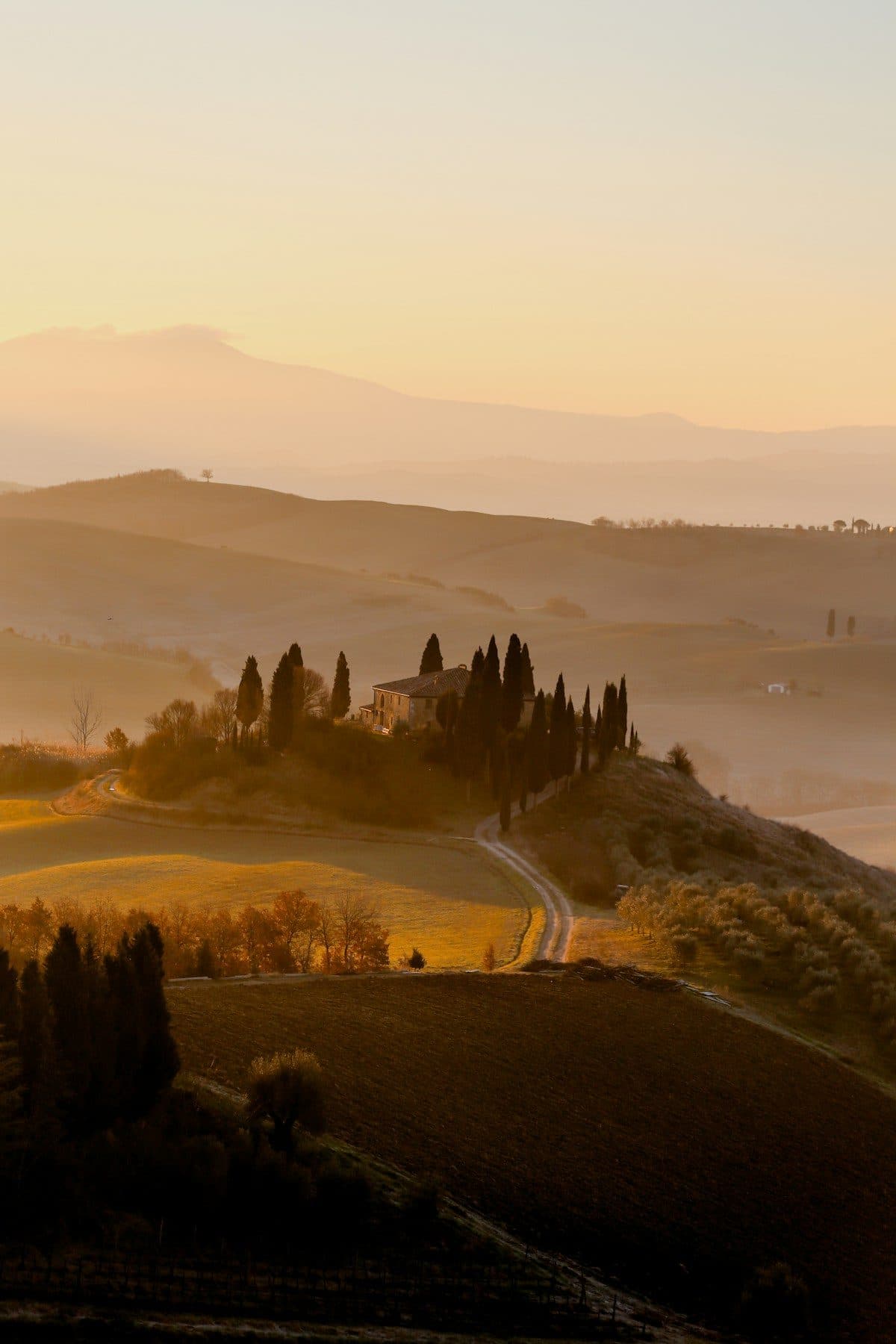
The town, where you need no appointment
Everything above says book ahead, so here is the counterweight: there is a version of a Montalcino day that requires no arrangements at all, and it happens inside the walls.
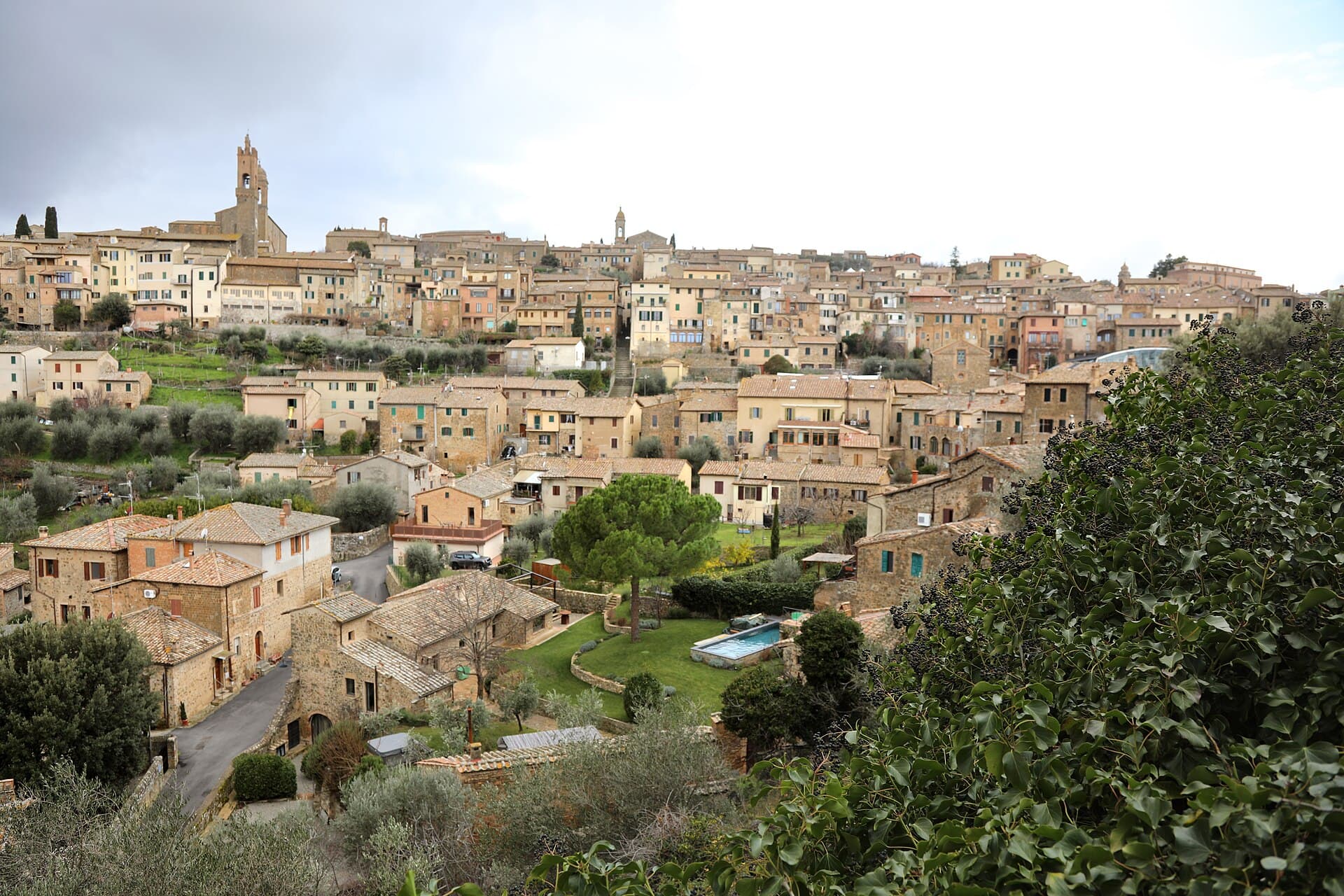
The town is built around a fourteenth century fortress, and the fortress is not a museum you walk round in silence. Inside it is Enoteca la Fortezza, founded in 1980 and one of the first wine shops in the town, which pours tastings alongside light lunches of Tuscan and Italian cheeses and cured meats. You can walk in.
Two more things in the same building:
- The camminamenti, the walkways that run along the tops of the walls and towers. This is where the view over the Val d’Orcia comes from, and it is the photograph you have already seen of Montalcino without knowing it.
- The Tempio del Brunello, an immersive exhibition about the wine itself, which is the thing to do with anybody in the group who has run out of patience for cellars.
The familiar caveat applies: the enoteca does not publish opening hours or tasting prices, so if you are building a day around it, send an email to info@enotecalafortezza.com first rather than assuming.
This is the honest fallback for a trip where the estate appointments did not come together, and it is also the right answer for anybody without a car. Arrive in the town, taste in the fortress, walk the walls, eat, and you have had a real day in Brunello country without a single booking.
Castello Banfi, the one built for visitors
If you want a visit that is straightforward to organise, Banfi is the answer, and it is the only estate on this page for which we can give you verified detail.
It runs tours and tastings that take in the vineyards and cellars, and it is not only a winery. On the property there is a hotel in a historic castle, two restaurants, one of which holds a Michelin star, and a museum of historic bottles and glassware. It is the closest thing in Montalcino to a place you could spend a whole day without anybody being bored.
The honest caveat, and it is the same one we keep running into in Tuscany: Banfi does not publish opening hours or tasting prices on its site. There is a booking link, which strongly suggests appointments, but you will find out the cost when you enquire.
How to book: Castello di Poggio alle Mura, 53024 Montalcino, province of Siena. Telephone +39 0577 840111, or banfi@banfi.it. Bookings are taken through a reservation system linked from banfi.it. Hours and prices are not published, so treat an email as step one.
How to find the rest
You will find a great many articles ranking the wineries of Montalcino. We are not going to add one, because we have not visited them and a ranking assembled from other people’s blog posts is worth nothing to you.
What is worth something is the tool the trade actually uses. The Consorzio del Vino Brunello di Montalcino publishes a directory of its member producers with a filter for wineries that accept visits, and a downloadable map of producers. It is the authoritative list, it is maintained by the body that certifies the wine, and it is free.
That map matters more here than in other Tuscan regions. Montalcino’s estates are scattered around the comune rather than strung along one road, so two names that sound equally convenient can be twenty-five minutes apart on small roads. Plan the day geographically before you plan it by reputation.
Names you will meet repeatedly in the region, and which we mention as a starting point for your own research rather than as recommendations we can stand behind: Biondi-Santi, Altesino, Canalicchio di Sopra, Argiano, Il Poggione, Casanova di Neri and Fuligni. We have not verified visiting arrangements, hours or prices for any of them, and you should assume all of them need an appointment.
What to actually buy
You will be offered three things at every tasting and the differences are decided by the rulebook rather than by taste, so here is how to choose without relying on whoever is pouring.
| What the rules require | When to buy it | |
|---|---|---|
| Rosso di Montalcino | Sangiovese, on sale from 1 September of the year after the harvest. Yield capped at 90 quintals per hectare. Can be declassified Brunello | The bottle to drink on the trip, and the best value here |
| Brunello di Montalcino | 100% Sangiovese, two years in oak, four months in bottle, not sold until five years after the harvest | The bottle to carry home and forget about for a decade |
| Brunello Riserva | Same, but six years before release and six months in bottle | Only if a specific vintage matters to you. It is not simply a better Brunello |
Two things worth knowing before you hand over a card.
Everything in the bottle was bottled inside the zone. The rules require vinification, ageing, bottling and bottle-ageing to happen within the comune, explicitly to protect the name and keep the controls enforceable. So there is no meaningful distinction here between an estate-bottled wine and anything else, which is not true everywhere in Italy.
Riserva is not a quality tier in the way people assume. It is a longer wait, six years instead of five. Some producers make a Riserva only in years they consider worth it, others make one every year. Ask which kind you are looking at, because the word on its own tells you nothing about whether it is better than the standard bottling from the same estate.
Montalcino, Montepulciano or Chianti
All three are Sangiovese country within an hour or two of each other, and the choice between them is not about quality. It is about what kind of day you want.
| Brunello | Vino Nobile | Chianti Classico | |
|---|---|---|---|
| Sangiovese | 100% | Minimum 70% | Blend permitted |
| Wait before sale | 5 years | 2 years | Varies by tier |
| Walk to the cellars? | No, they are rural | Yes, under the town | No, it is farmland |
| From Florence | About 2 hours | About 1.5 hours | About 40 minutes |
| Best for | Wine being the point | Wine without a driver | A first trip |
Put bluntly: if somebody in your group is lukewarm about wine, go to Montepulciano, where the town carries the day. If wine is the reason you came to Tuscany, Montalcino is the serious one. And if you have a single afternoon and no car, Chianti is forty minutes away. The four regions side by side, including Bolgheri and the Super Tuscans, are in our comparison of the best Tuscan wineries.
Tours, if you would rather not drive
The case for a tour is stronger in Montalcino than anywhere else we have written about, for one reason: the estates are rural, the appointments are compulsory, and somebody has to drive back. In Montepulciano you can sidestep all three by walking. Here you cannot.
The private tasting option is further up this page, next to the arithmetic of what it costs to avoid the emailing.
From Florence the maths is worse, because you are adding four hours of driving to the day. Two options, and they are not equivalent.

Brunello di Montalcino Wine Tour with 2 Wineries & Lunch at Farm
Two family-run estates, a multi-course lunch, and both Brunello DOCG and Rosso di Montalcino poured, which is the comparison this page argues you should make. Rated 5.0 but only on fifteen reviews, so treat the score as promising rather than proven.

Signature Brunello di Montalcino Wine Tour from Siena
Five and a half hours from Siena at well under half the price of the small-group day. It is also the lowest rated wine tour we list anywhere on this site, so this is the budget option with the trade-off stated rather than buried.
Ratings and lowest advertised prices checked in August 2026. Booking two appointments yourself and driving will cost less than any of these, and buys you longer at each estate. What you are paying a tour operator for is the arrangements and the driving.
Frequently asked questions
How much does a bottle of Brunello di Montalcino cost?
More than its neighbours, and the production rules explain why better than any price list. Brunello must be 100 per cent Sangiovese, it can only be grown in one comune, the yield is capped at eight tonnes of grapes per hectare, it spends two years in oak and at least four months in bottle, and it cannot be sold until the first of January five years after the harvest. The Consorzio gives its own example: a 2000 harvest could not be sold before 1 January 2005. You are paying for five years of a producer’s money sitting in a cellar. We do not quote bottle prices here because they vary by producer and vintage and we could not verify a figure worth printing.
What are the best wineries in Montalcino to visit?
Castello Banfi is the one with a proper visitor operation: tours and tastings bookable online, a hotel, two restaurants including a Michelin-starred one, and a museum of historic bottles. Beyond that, the honest answer is that the estates are scattered across the comune and most need an appointment, and we are not going to rank producers we have not visited. The Consorzio publishes a member directory with a filter for wineries that accept visits, plus a downloadable map of producers, and that is the best starting point there is.
What is the difference between Brunello and Rosso di Montalcino?
Time, mostly. Both are Sangiovese from the same comune and frequently from the same estates. Brunello cannot be sold until five years after the harvest. Rosso di Montalcino can be sold from the first of September of the year following the harvest, so roughly four years earlier. The detail worth knowing is that the Brunello rules explicitly allow a wine to be reclassified as Rosso di Montalcino, which means the Rosso in your glass can be declassified Brunello from the same vineyard.
Where is Brunello di Montalcino made?
In the comune of Montalcino, in the province of Siena, and nowhere else. The production rules define the zone as the entire administrative territory of that one municipality. That is unusually tight: Chianti Classico spans a large area between Florence and Siena across many comuni. Everything about Brunello, including vinification, ageing, bottling and bottle-ageing, has to happen inside that zone.
Can you visit wineries in Montalcino without booking?
Not reliably, and this is the main practical difference from Montepulciano. In Montepulciano the historic cellars are under the town and you can often walk in. Montalcino’s estates are out in the countryside, they are working farms, and visits run by appointment. What you can do on foot is drink inside the town: Enoteca la Fortezza, in the fourteenth century fortress, has poured since 1980 and takes walk-ins, and the same building holds the walkways along the walls and an exhibition about the wine.
How long does Brunello age in oak?
Two years, according to the Consorzio, in oak containers of any size. The disciplinare puts it as at least twenty-four months. After that comes a minimum of four months in bottle for the normal version and six months for the Riserva, and none of it counts against the rule that the wine cannot leave until five years after the harvest.
Is Montalcino worth visiting if I do not drink much wine?
Less so than Montepulciano or Siena, if we are honest. Montalcino is a small hill town with a fortress and a view over the Val d’Orcia, and it is genuinely lovely, but the reason to make the drive is what is in the bottles. If half your group does not care, pair it with Pienza or the abbey of Sant’Antimo so there is something else in the day.
Some links on this page are affiliate links. If you book through them we earn a commission at no extra cost to you. It does not change what we recommend: we rank on what you get for the money, and we say so when something is not worth booking. Full disclosure.
Next: Montepulciano, where you can taste without a car or the wider Tuscan wine guide.