Super Tuscan Wineries: Which Bolgheri Estates Let You In
Updated August 2026 · Visiting details taken from each producer’s own website, not from tour operators
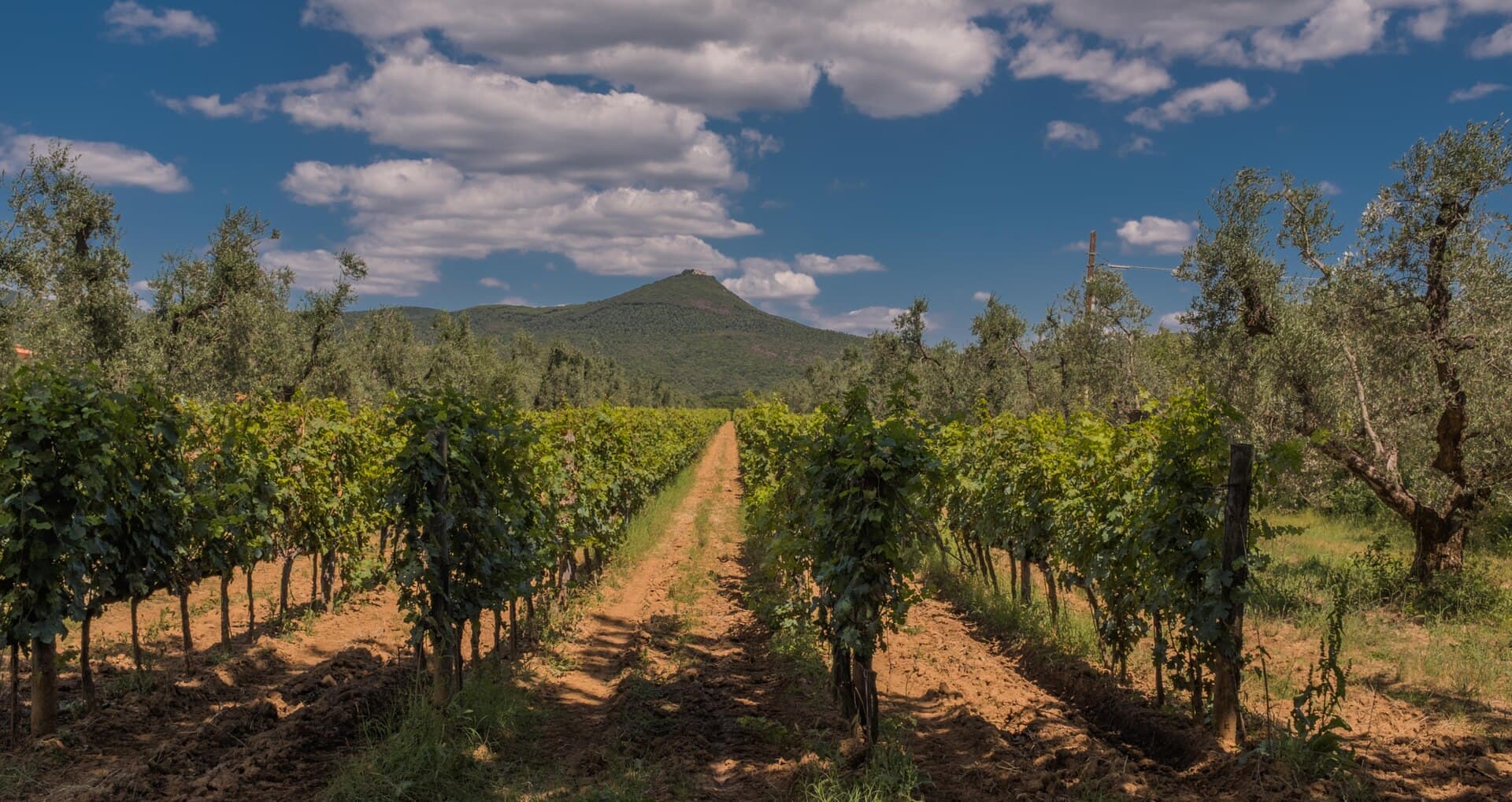
Search for Super Tuscan wineries and Google returns, in its first ten results, five companies selling you a private tour with a driver, a TripAdvisor page, a wine forum and a Facebook group. The forum and the Facebook group are the tell: people are asking strangers because nobody has answered the question properly.
The question is simple. Which of these estates can you actually visit, and what does it cost? So we went to each producer’s own website and looked, rather than to the people selling the tours. Some of what we found is not what the tour pages imply.
Who lets you in, in one table
Everything here comes from the producers’ own sites, read in August 2026. Where a column says “not published”, it means exactly that: the estate runs visits but does not put a price on them anywhere we could find.
| Estate | Visits? | Booking | Price | Note |
|---|---|---|---|---|
| Sassicaia | No published way in | n/a | n/a | No visits page at all |
| Ornellaia | Yes, 5 formats | Required | Not published | Dinner, picnic, vertical |
| Michele Satta | Yes, 3 formats | One needs none | 20 / 40 / 90 € | The only public prices |
| Guado al Tasso | Yes, made to measure | Required | Not published | Has a shop and osteria |
| Le Macchiole | Site lists cellar visits | Not stated | Not published | We could not verify more |
The pattern is worth naming. The more famous the wine, the less the estate tells you. Sassicaia says nothing. Ornellaia and Guado al Tasso welcome you but keep prices private. The one estate that publishes everything, times and prices and what is in the glass, is the smallest name on the list.
The Sassicaia question
This is what most people are really searching for, so let us be precise about it.
Sassicaia is made by Tenuta San Guido. We went through its website in full. There is no visits page, no booking form, no opening hours and no tasting room. The navigation runs: history, wines, the Razza Dormello Olgiata racehorse stud, a wildlife refuge, a section called Genius Loci, stories, Instagram and contacts. That is the entire site.
What we can say, verifiably, is that Tenuta San Guido publishes no way to arrange a visit. What we are not going to say is that it is impossible, because we have not written to them and we do not know what happens if a serious collector asks. But if a tour is selling you access to Sassicaia, that is the question to put to them before you pay, in writing.
There is a lovely detail buried in that navigation, though. The estate runs a wildlife refuge, the Padule di Bolgheri, one of the oldest private nature reserves in Italy. You cannot see where Sassicaia is made, but the family opens a marsh full of birds instead. That tells you something about the place.
Getting there, and the train that does it
This region is usually written up as car-only, or with a driver. So here is something none of them mention: Bolgheri has its own railway station, and we checked the fares in Trenitalia’s booking system rather than guessing.
| From Florence to | Best time | Fare | Direct trains |
|---|---|---|---|
| Bolgheri | 1h 52 | 15.10 € | 2 |
| Castagneto Carducci-Donoratico | 1h 58 | 15.90 € | 1 |
| Cecina | 1h 46 | 14.30 € | 2 |
Note the trap we described in our guide to day trips from Florence: the Regionale Veloce does Bolgheri in 1h 52 and the ordinary Regionale takes 2h 30, and they cost exactly the same 15.10 euros. Book the wrong one and you lose over an hour of your day for nothing.
But be clear about what the train solves and what it does not. It gets you to Bolgheri. It does not get you between the estates, which are spread along the Via Bolgherese rather than gathered in a walkable centre: Guado al Tasso sits at kilometre 3,9 of that road and Le Macchiole at number 189/A. This is the opposite of Montepulciano, where the cellars run underneath the town and you need no transport at all.
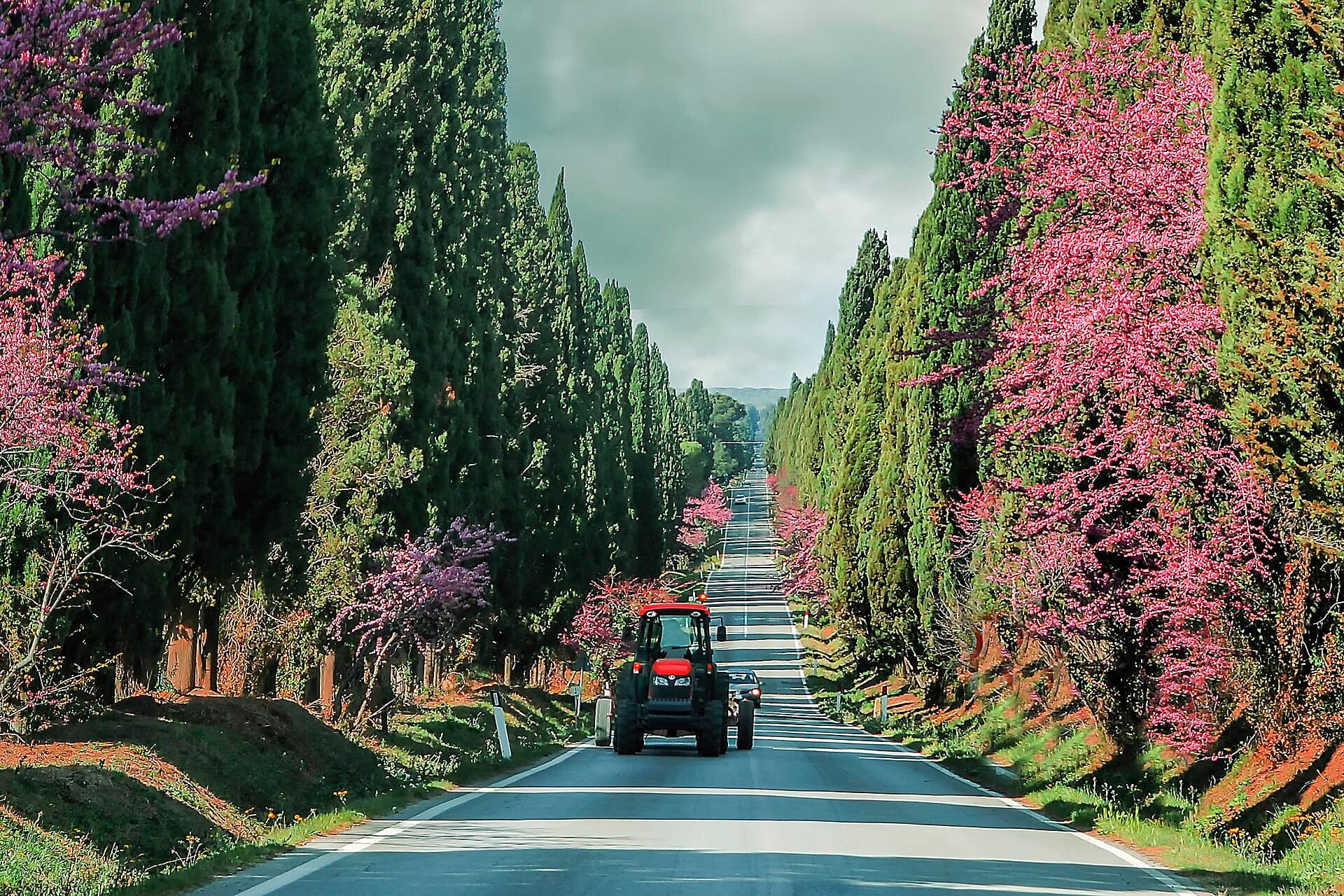
That single fact explains why everything on offer in this region is a private tour. It is not a conspiracy, it is geography.
Which leaves an honest question: if you have no car and one day, is Bolgheri the right place to spend it? Often the answer is no, and the nearer region is the better use of the day.

Half-Day Chianti Wine Tasting from Florence with Two Wineries
If the point is tasting serious Tuscan wine without a three hour round trip and a hire car, Chianti is the pragmatic answer. Two cellars, back for dinner. Bolgheri rewards the effort, but it is a full day minimum and it really wants a car.
What a Super Tuscan actually is
Worth clearing up, because the term is used as though it were a classification and it is not one.
There is no Super Tuscan appellation. No consortium, no minimum percentage of anything, no rules. The name was coined by the wine trade for Tuscan reds that ignored the denomination rules, typically by planting Cabernet Sauvignon, Merlot and Syrah where the law expected Sangiovese. Because they broke the rules, they could only be sold under the humblest legal label available, while commanding higher prices than the classified wines beside them. The category was, in effect, an accusation that stuck and then became a compliment.
This matters practically. Since Super Tuscan is not a legal term, anyone can put it on anything, and plenty of estates far from Bolgheri do. When it means something specific, it means these coastal Cabernet and Merlot blends. We go into how the region compares with the rest in our guide to Tuscan wine regions.
The rules, and the one made for a single wine
The production rules here are public, they are short, and they explain the region better than any tasting note. They also contain one of the strangest facts in Italian wine. All of what follows comes from the Consorzio that governs the denomination.
Start with the history, because it is not what anyone expects. When Bolgheri was granted its denomination in 1983, it covered only whites and rosés. The decree was signed by Sandro Pertini, then President of the Republic. The red wines that made this coastline famous worldwide were not in it, because officially they did not exist.
It took until 1994 for the reds to be recognised, creating Bolgheri Rosso and Bolgheri Superiore, and defining Bolgheri Sassicaia as a sub-zone within them. In 2011 came a quieter but important change: until then a Bolgheri red had to be a blend, and from that point producers could bottle single-variety Cabernet Sauvignon, Merlot or Cabernet Franc.
| Denomination | Grapes allowed | Max yield | Ageing |
|---|---|---|---|
| Bolgheri Rosso | Cabernet Sauvignon, Merlot and Cabernet Franc each 0 to 100%, Syrah and Sangiovese up to 50% | 90 q/ha | 1 year, on sale from 1 September after harvest |
| Bolgheri Superiore | Same as above | 80 q/ha | 2 years, at least 1 in wood |
| Bolgheri Sassicaia | Minimum 80% Cabernet Sauvignon | 70 q/ha | 2 years, at least 18 months in 225 litre barriques |
Look at that first row again. A Bolgheri Rosso can be anywhere from nought to a hundred per cent of three different grapes. That is close to total freedom, and it is the precise opposite of Brunello di Montalcino, where the rules demand one hundred per cent Sangiovese and five years before a bottle may be sold. Two denominations, two hours apart, built on opposite philosophies. That is the real difference between coastal and inland Tuscany, and it is written in the paperwork.
Now the strange part. In 2013, Bolgheri Sassicaia was separated out of the Bolgheri rules and made a denomination in its own right. Read the row again and note what it describes: a minimum of 80% Cabernet Sauvignon, a yield of 70 quintals per hectare, eighteen months in small barrels. It is a denomination that exists for one wine, made by one estate, on one property. There is no other arrangement quite like it in Italy.
Which brings the day full circle. The Consorzio that protects both denominations has its registered address at Località San Guido 45, which is to say at the same spot that gives Tenuta San Guido its name. The estate you cannot visit is the one with a denomination written around its single wine.
One last rule worth knowing, because it is unusual and it constrains everything: the entire process, from growing the grapes to ageing the bottle, has to happen within the boundaries of the comune. Nothing gets trucked elsewhere to be finished. When you drive the Via Bolgherese you are looking at the whole supply chain.
Ornellaia: five ways in
Ornellaia is the most open of the famous names, and it is not close. Its site lists five distinct experiences, each with its own booking:
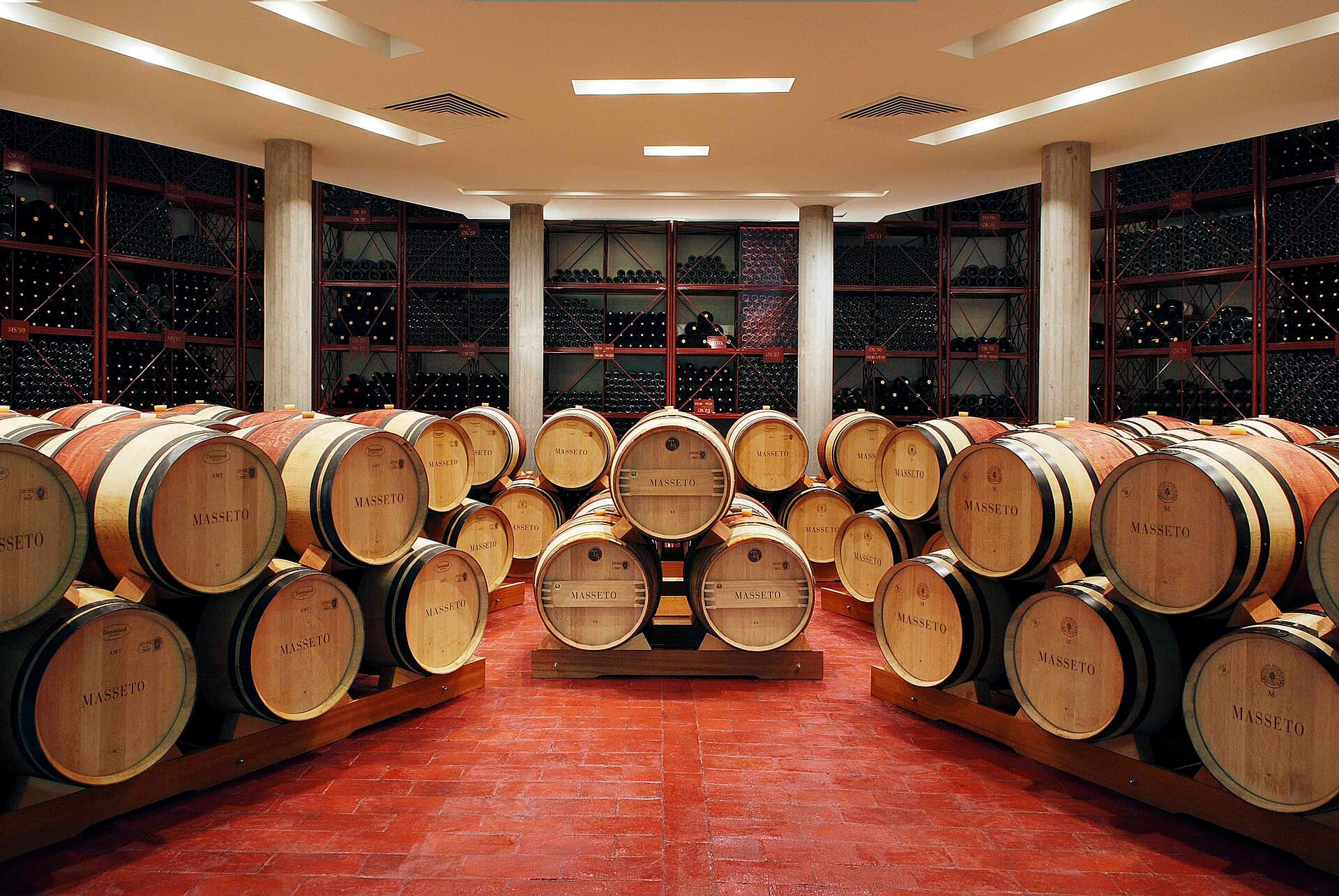
- Visit to the winery. A guided walk through the historic vineyards and the cellar, past the contemporary artworks of the Vendemmia d’Artista project, into the barrique cellar and finally the Archivio Storico, the estate’s historical archive.
- Vendemmia d’Artista Experience. Built around the site-specific artworks commissioned from international artists, one per vintage.
- Ornellaia Wine Dinner. Begins at sunset, welcome drinks at twilight, then dinner with the estate wines.
- Ornellaia Picnic. Under the centuries-old Bellaria oak, surrounded by vines, with a tasting of Poggio alle Gazze dell’Ornellaia.
- Ornellaia Vintage Experience. A vertical tasting across several vintages to show how the wine has evolved.
All five say “Reserve”, and all five can be bought as a gift. None of them shows a price. That is a deliberate choice by an estate at this level and you should read it as such: if the number mattered to you, you are probably not the customer they are pricing for. Write and ask before you plan a day around it.
Michele Satta: the honest one
If you want to know what visiting Bolgheri actually involves, this is the page to read, because it is the only one that answers every question up front.
Michele Satta opens Tuesday to Saturday, at 11:00 and 15:00, by reservation. The cellar is carved into the rock and holds amphorae, concrete tanks and French oak side by side. Tastings finish on a panoramic terrace with local bread and the estate’s own olive oil. Three options:
| Experience | Length | Price | Booking | What you taste |
|---|---|---|---|---|
| Classics | 90 min | 40 € | Required | Costa di Giulia, Bolgheri Rosso, Piastraia |
| Selections | 120 min | 90 € | Required | Barrel samples, two old vintages, the Superiori |
| Simple tasting | 30 min | 20 € | None needed | Three glasses, 17:00 to 18:30 |
That bottom row is the single most useful fact on this page. It is the only walk-in tasting we found published by any Bolgheri estate. Three glasses, twenty euros, no reservation, during shop hours. If you drive out here and a booking falls through, or you simply did not plan, that is your afternoon saved.
One caveat in their own words: they are a small producer and wine availability may vary. If there is a specific bottle you want to taste, ask before you go.
Guado al Tasso: the easy one
Guado al Tasso is the Antinori estate in Bolgheri, and it is the most straightforward place to turn up at, because there is somewhere to turn up to.
Alongside the estate sits the Osteria del Tasso, a restaurant set among the vines on the Via Bolgherese, and next to it a wine shop where you can buy the wines including older vintages and large formats, book personalised tastings, and pick up the estate’s own extra virgin olive oil and salami made from their Cinta Senese pigs. The estate visits themselves are described as personalised and made to measure, which in practice means you email and they build something.
Address is Via Bolgherese km 3,9, Località San Walfredo, and contact runs through info@guadoaltasso.com. No prices published for the visits, as with Ornellaia.
Worth noting for planning: this is the same family whose Chianti Classico estate runs a far more industrialised visitor operation with published tour prices. In Bolgheri they do not. If you want the polished, bookable, price-on-the-website Antinori experience, that one is in Chianti.
The wines nobody orders here
Everyone arrives in Bolgheri for the reds and every tasting is built around them. But remember what the 1983 decree actually covered: whites and rosés, and nothing else. Those are the historic wines of this coast, and they have been quietly pushed to the end of the list by the fame of the Cabernet.
The white grape here is Vermentino, very often bottled on its own, sometimes blended with Sauvignon Blanc or Viognier. The tradition is no oak at all: the aim is fruit and freshness rather than weight, though the Consorzio notes that more structured whites have been appearing in recent years. Michele Satta’s Costa di Giulia, which opens both of its guided tastings, is a Bolgheri Bianco, so you will probably meet one whether you plan to or not.
The rosés have quietly changed identity. They used to be made from Sangiovese; today they are made from the same grapes as the reds, which in this region means rosé of Cabernet and Merlot. Given that you are sitting minutes from the Tyrrhenian in a place where lunch is frequently fish, ordering one is less eccentric than the wine lists suggest.
One more thing worth filing away if you are wondering whether to come now or in a few years. The Consorzio puts the average age of the Bolgheri vineyard at around fifteen years, which means a large share of the vines are only now reaching full productive maturity. By the standards of European wine regions this is a young place still growing into itself.
What it costs, and when to book
Pulling the verified numbers together, since nobody else does:
- 20 € is the cheapest published tasting in Bolgheri, and the only one that needs no booking.
- 40 € is a realistic floor for a proper guided visit with a cellar tour.
- 90 € buys barrel samples and library vintages at the one estate that prices it openly.
- The famous names publish nothing, which is itself the answer about where they sit.
On timing: harvest runs roughly through September and October, which is the most atmospheric time to be here and also the time when small estates have least capacity for visitors, because everyone is working. Book further ahead than you think for those weeks, and remember that Michele Satta closes on Sundays and Mondays.
One last option for anyone who wants a full day of Tuscan wine from Florence with the driving and the appointments handled. It is not Bolgheri, and we say that plainly: we could not find a well reviewed Bolgheri day trip from Florence, and could not find one at all.
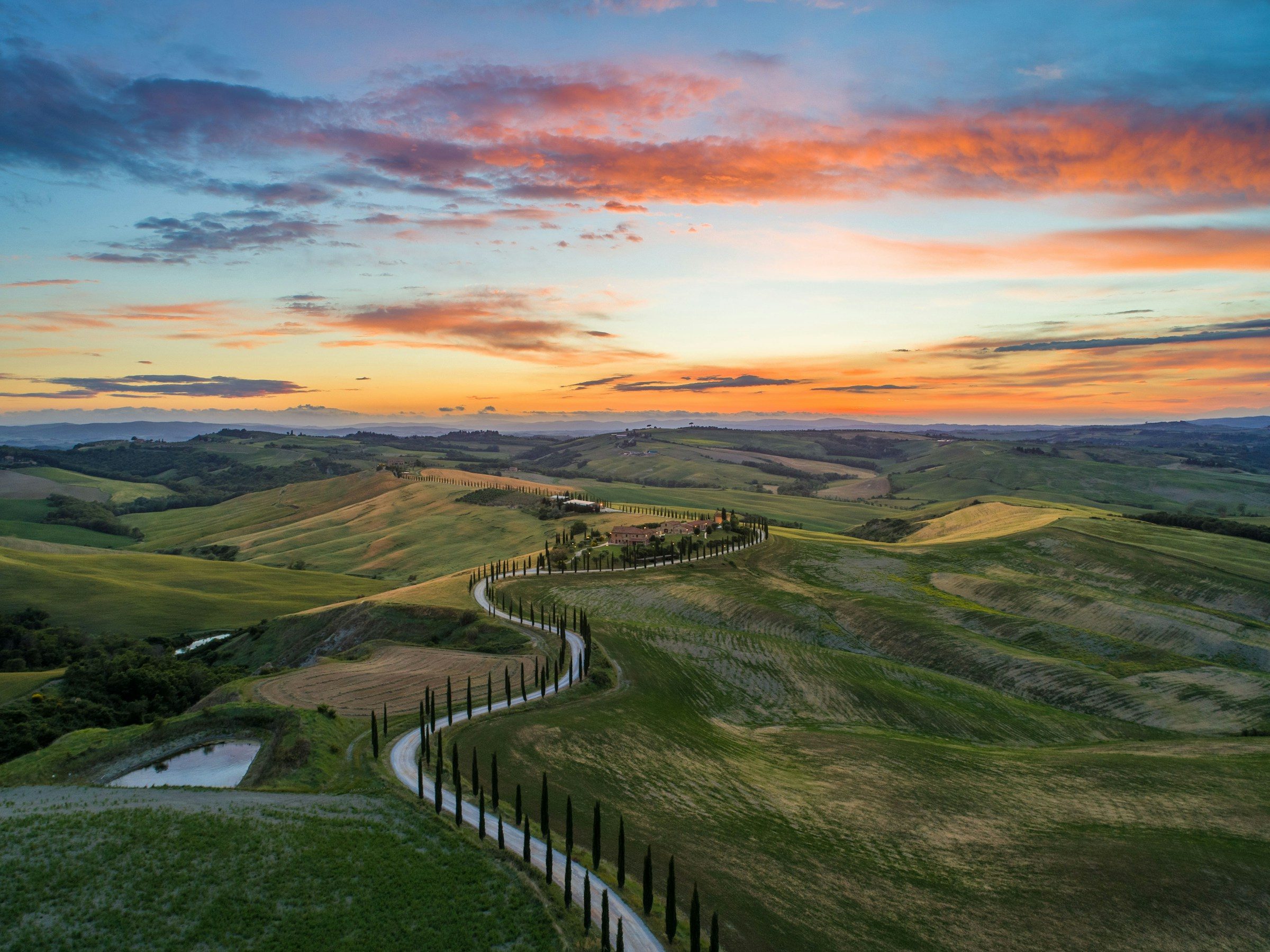
Val d'Orcia Tour with Montalcino, Pienza and Montepulciano
Ten and a half hours and three towns, covering the inland denominations rather than the coast. Choose it for the landscape and for having nothing to organise. The ratings and review counts here are Viator's own and we have not taken it.
Questions
Can you visit the Sassicaia winery?
Not through its website. Tenuta San Guido, which produces Sassicaia, has no visits page, no booking form and no opening hours anywhere on its site: the menu covers history, wines, its racehorse stud and a wildlife refuge, and nothing else. That is the verifiable fact. We are not going to tell you it is impossible, because we have not asked them, but there is no published way in and any tour selling you "Sassicaia access" is worth questioning closely.
What is considered a Super Tuscan wine?
A Tuscan red that broke the old denomination rules, usually by using Cabernet Sauvignon, Merlot or Syrah instead of the required Sangiovese. It is not a legal category and never has been: there is no Super Tuscan appellation, no minimum percentage and no consortium. The name was invented by the wine trade for wines that had to be sold as humble table wine despite costing more than the classified wines around them.
Where is Super Tuscan wine made?
The heartland is Bolgheri, on the Tuscan coast in the province of Livorno, roughly between Livorno and Grosseto. That is where Sassicaia, Ornellaia, Guado al Tasso, Le Macchiole, Grattamacco and Michele Satta all sit, most of them strung along a single road called the Via Bolgherese. Some Super Tuscans are made elsewhere in Tuscany, but Bolgheri is the address that matters.
How much does a Bolgheri wine tasting cost?
The only estate we found publishing its prices is Michele Satta: 20 euros for a 30 minute tasting of three wines with no booking needed, 40 euros for a 90 minute tour and tasting of four wines, and 90 euros for a two hour version with barrel samples and older vintages. Ornellaia and Guado al Tasso both run visits but publish no prices at all, so you have to ask. Treat 40 euros as the realistic floor for a proper guided visit here.
Can you visit Bolgheri wineries without a car?
You can get there: Bolgheri has its own railway station and a direct Regionale Veloce from Florence takes 1h 52 for 15.10 euros. The problem is what happens after you arrive, because the estates are spread out along the Via Bolgherese rather than clustered in a walkable town. This is the opposite of Montepulciano, where the cellars are under the streets. It is also why almost every search result for Bolgheri is a private tour with a driver.
Do I need to book a Bolgheri winery visit in advance?
Yes, with one exception we found. Ornellaia, Guado al Tasso and Michele Satta all require reservations for their guided visits. The exception is Michele Satta’s simple tasting: three glasses for 20 euros during shop hours, 17:00 to 18:30, explicitly with no booking required. As far as we can tell that is the only walk-in tasting published by a Bolgheri estate, which makes it useful to know if a plan falls through.
What grapes are allowed in Bolgheri wine?
Far more freedom than the rest of Tuscany. A Bolgheri Rosso or Superiore can be anywhere from nought to one hundred per cent Cabernet Sauvignon, Merlot or Cabernet Franc, with up to 50% Syrah or Sangiovese and under 30% of complementary varieties such as Petit Verdot. Bolgheri Sassicaia is the strict one: a minimum of 80% Cabernet Sauvignon and eighteen months in 225 litre barriques. Compare that with Brunello, which must be 100% Sangiovese.
Why is Sassicaia its own denomination?
Because it was made one. Bolgheri Sassicaia began in 1994 as a sub-zone inside the Bolgheri rules, and in 2013 it was split off into a denomination in its own right, largely to give it stronger legal protection. The result is a denomination that covers one wine from one estate on one property, which has almost no parallel in Italy. A curiosity worth knowing: the Consorzio protecting it is registered at Località San Guido, the same address that gives Tenuta San Guido its name.
Is Bolgheri worth visiting compared to Chianti or Montalcino?
Only if the wines are the reason. Bolgheri is further from Florence than Chianti, harder to do without a car than Montepulciano, and its most famous producer does not appear to take visitors. What it offers is Cabernet and Merlot of a quality made nowhere else in Italy, the sea nearby, and far fewer coaches than Chianti. For a first trip to Tuscany, Chianti makes more sense. For a second, this is the interesting one.
Some links on this page are affiliate links. If you book through them we earn a commission at no extra cost to you. It does not change what we recommend: we rank on what you get for the money, and we say so when something is not worth booking. Full disclosure.