Siena or San Gimignano: Choosing, and What It Costs
Updated 17 September 2026 · Ticket prices read from the museums’ own site
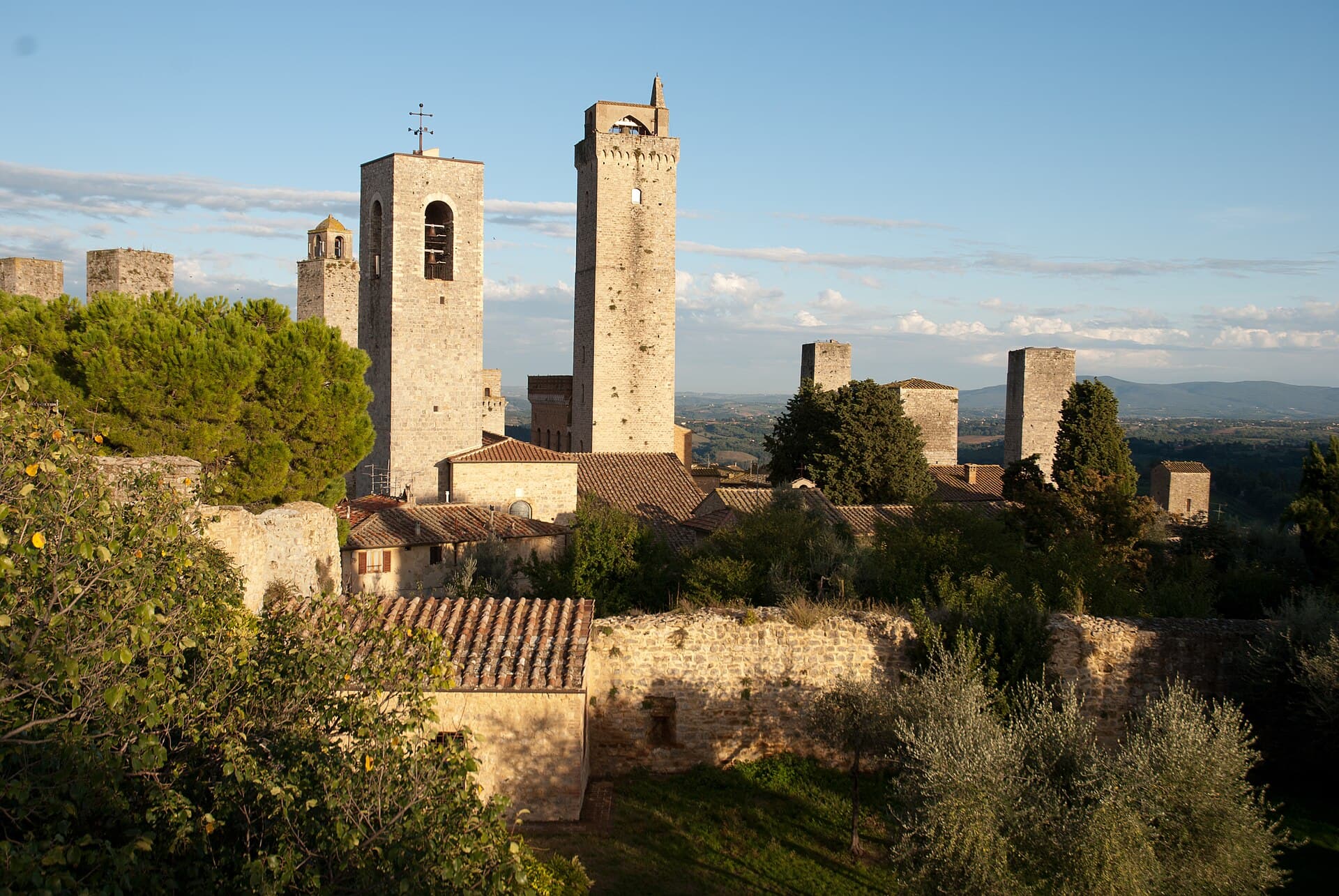
Google gets asked “which is better to visit, Siena or San Gimignano” often enough that it puts the question on the results page, and in the forums people ask it with a caveat attached: this is an either/or situation, not a both situation.
So that is where this starts, because it is the decision you are actually making. And then there is the thing about San Gimignano that gets left out of every list of towers and gelato: Italy’s first DOC wine came from here, and it is a white.
Siena or San Gimignano, since you are probably choosing
The two towns are not rivals in the way the question implies. They are different sizes, and that is most of the answer.
Siena is a city. San Gimignano is a walled town you can walk across in the time it takes to find parking in Siena. Our guide to Siena is built around the question whether four hours there is enough, which tells you the scale of it. Nobody asks that about San Gimignano.
So the honest split: if you have one full day and no car, Siena gives you more for it. The bus from Florence runs direct, the Campo and the cathedral will take your morning and the afternoon fills itself.
If you have half a day, or a day that is really about wine, San Gimignano is the better shape. You can see the town properly and still be sitting in a cellar by three, which is harder to arrange from Siena.
What we would push back on is doing both in one day. It is sold as a day trip constantly and the arithmetic is unkind: two coach transfers and about forty minutes on the ground in each. If that is the plan, our guide to day trips from Florence compares what each one actually costs in hours.
Italy’s first DOC wine came from here, and it is white
Tuscany means red wine to most visitors. Chianti, Brunello, the Super Tuscans. So this tends to land as a surprise, and it comes straight from the Consorzio that governs the wine:
In 1966, Vernaccia di San Gimignano became the first Italian wine to obtain a Denominazione di Origine Controllata.
Not the first Tuscan wine. Not the first white. The first, full stop. Before Barolo, before Chianti Classico, the country’s brand-new appellation system was tried out on a white from a hill town best known for its skyline. The Consorzio itself was founded six years later, on 3 July 1972, and the wine was promoted to DOCG in 1993.
One thing to keep straight, because the labels look alike. Vernaccia di San Gimignano DOCG and San Gimignano DOC are two different denominations. The first is the historic white. The second covers other wines made in the same commune. A bottle saying San Gimignano is not necessarily Vernaccia.
We are not going to tell you how it tastes, because we have not sat down with a glass of it and this site does not review wine it has not drunk. What we can say is that a town this visited having the oldest appellation in Italy, and almost nobody mentioning it, is the most interesting fact on offer here. How the Tuscan wine regions compare on price puts it next to the reds.
Three cellars that will take a single visitor
Which brings us to the practical question, because you can taste that wine where it is made and San Gimignano does one thing better than the famous denominations. We only noticed it from having checked the others first.
All three bookable cellars here accept a booking for one person. In Montalcino and Montepulciano most estates want a minimum of two, so a solo traveller either pays double or does not go. Here that problem does not arise.
Two of the three are Palagetto, which is the same estate selling a tasting and a lunch, so the real choice is between it and Pietraserena.

San Gimignano Wine Tasting at Palagetto
Thirty euros a head, and it takes one person. Fifty-two ratings is the most evidence behind any cellar in this town, and more than most of the Chianti estates we looked at carry. If you want to taste Vernaccia where it comes from, this is the straightforward way.

Vineyard and Cellar Tour with Three Wines at Pietraserena
The same 30 € as Palagetto, and the higher rating of the two, but on seventeen reviews against fifty-two, so treat the 4.9 as promising rather than proven. It adds the vineyard walk that the tasting above does not.
The third is Palagetto’s “Tosca” light lunch at 42 euros, on 43 reviews at 4.6. It is the same estate as the first card with food added, so the twelve euro difference buys you the meal rather than a different cellar. We have left it off the cards for that reason rather than because there is anything wrong with it.
What the tickets cost, and the over-65 trap
| Ticket | Full | Reduced | What it covers |
|---|---|---|---|
| Musei Civici | 10 € | 8 € | Palazzo Comunale, Pinacoteca and the Torre Grossa climb |
| San Gimignano Pass | 15 € | 12 € | Adds the Collegiata, Santa Chiara and San Lorenzo in Ponte |
| Who gets the reduced price | Musei Civici | Pass | Groups of 20, school groups, ages 6 to 17 and over-65s. The Pass drops the over-65s |
The headline is simple enough. Ten euros buys the Palazzo Comunale, the Pinacoteca and the climb up the Torre Grossa. Five more buys three additional monuments, and for most people that is a fair upgrade.
Then there is the row that took reading both pages of the official site to notice.
The Musei Civici ticket gives a reduced rate to over-65s. The San Gimignano Pass does not. Its reduced category is ages 6 to 17 and nothing else. So a visitor over 65 chooses between 8 euros and 15, which makes the upgrade cost them seven rather than five, on the same three extra monuments.
That is not a scandal. It is the kind of detail that decides what a couple in their seventies buys at the window, and it is not stated anywhere that we can find, including by the museums.
What the official site does not tell you
We went looking for opening times and could not find them, which turned out to be the finding rather than a failure of searching.
The museums’ own website carries an “Orari di apertura” heading with nothing underneath it, on the Palazzo Comunale page and again on the page called Plan your visit. The only opening times published anywhere on that site belong to its booking telephone line, Monday to Friday, 8.30 to 17.00.
So here is the honest instruction. Do not trust a third-party page that states San Gimignano’s museum hours with confidence, because the museums are not publishing them. Ring 0577 286300, or ask at the ticket office when you buy. Tickets themselves are sold through the Opera Laboratori system, the same operator that runs Florence’s state museum bookings.
We would rather leave a gap on this page than fill it with times we cannot stand behind. Everything else here comes from a source we can name.
Questions
Is Siena or San Gimignano better to visit?
If you have one day and no car, take Siena. It is a city rather than a town, the bus from Florence is direct, and there is enough in it to fill the day without hurrying. San Gimignano is smaller and the walk across it takes minutes, which is exactly why some people prefer it: you can see the whole place properly in an afternoon and spend the rest of the day at a cellar. The one answer we would push back on is doing both in a day, which is how people end up with two hours of coach and forty minutes in each.
How much are San Gimignano museum tickets?
Ten euros for the Musei Civici, which is the Palazzo Comunale, the Pinacoteca and the climb up the Torre Grossa. Fifteen for the San Gimignano Pass, which adds the Collegiata, Santa Chiara and San Lorenzo in Ponte. Both are valid three days and both add a one euro booking fee. Checked on the museums’ own site on 17 September 2026.
Is the San Gimignano Pass worth it?
For most people it is five euros for three more monuments, which is fair. For anyone over 65 it is worse than it looks, and this is buried in the small print: the Musei Civici ticket gives over-65s a reduced rate of 8 euros, and the Pass does not give them anything. So a pensioner pays 8 or 15 rather than 10 or 15, and the upgrade costs seven euros instead of five. Nobody publishes that comparison, including the museums themselves.
What wine is San Gimignano famous for?
Vernaccia di San Gimignano, and the surprise is that it is white, in a region everyone associates with red. It is also more historically important than almost any Tuscan red: according to its own Consorzio, in 1966 Vernaccia di San Gimignano became the first Italian wine of any kind to be granted a Denominazione di Origine Controllata. It went on to DOCG in 1993. There is a separate San Gimignano DOC covering other wines from the same commune, which is easy to confuse with it.
What time do the San Gimignano museums open?
We cannot tell you, and that is worth saying plainly rather than guessing. The museums’ own website has an "Opening hours" heading on both the Palazzo Comunale page and the plan-your-visit page, and there is nothing underneath either of them. The only opening times published anywhere on that site are for its booking phone line, Monday to Friday 8.30 to 17.00. Ring 0577 286300 or check at the ticket office rather than trusting a third-party page that has invented them.
Can you visit a San Gimignano winery on your own?
Yes, and more easily than in the famous denominations. All three bookable cellars we checked in San Gimignano take a booking for one person, which is unusual: in Montalcino and Montepulciano most estates ask for a minimum of two. Palagetto and Pietraserena both start at 30 euros a head. Prices read from the booking platform on 17 September 2026.
Some links on this page are affiliate links. If you book through them we earn a commission at no extra cost to you. It does not change what we recommend: we rank on what you get for the money, and we say so when something is not worth booking. Full disclosure.