Where to Stay in Florence: The Areas Compared
Updated August 2026 · Written from the streets, not from a hotel list
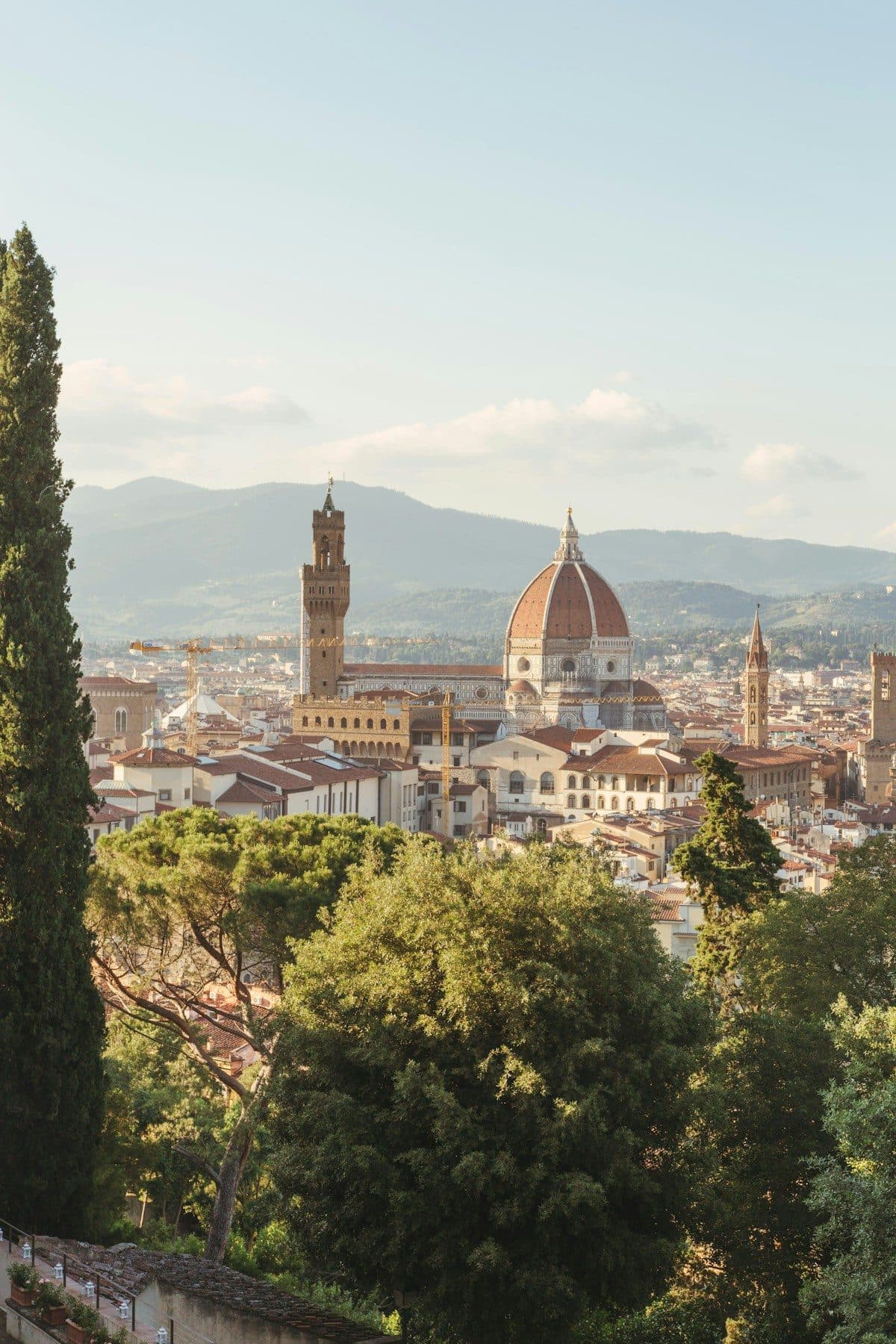
Here is the thing almost nobody says out loud about choosing where to stay in Florence: the historic centre is small enough to walk across in about half an hour, so no sensible choice is going to ruin your trip. What the neighbourhood actually decides is how much noise you sleep through, how much you pay for the same room, and how much of the city you see when you are not sightseeing.
This guide compares the areas on the things that actually differ between them, and it names the ones we would not book. It does not rank hotels, because the right hotel depends on your budget and the right area does not.
The geography, in two minutes
Florence is organised by two things: a river and a cathedral. Get those straight and every neighbourhood name makes sense.
The Arno runs east to west and splits the city in two. Almost every famous sight sits on the north bank: the Duomo, the Uffizi, the Accademia, the markets. The south bank is the Oltrarno, which literally means “beyond the Arno”, and it is where the workshops, the quieter squares and a good deal of the city’s remaining ordinary life are.
On the north bank, the districts are named after their churches. San Giovanni is the cathedral itself and the streets around it. Santa Maria Novella is the western end, where the main station is. San Lorenzo and San Marco run north, towards the Accademia. Santa Croce is the eastern end, around its own enormous church.
The whole thing is roughly two kilometres across. When a listing says it is fifteen minutes from the Duomo, that can still be inside the historic centre. When it says twenty-five, it usually is not.
The areas compared
None of the guides that rank for this question use a table, which is odd, because this is a comparison problem. Here is the same information in the form the question actually has.
| Area | Book it if | The trade-off | Evening noise |
|---|---|---|---|
| Duomo / San Giovanni | You want to walk out of the door into the postcard | Highest prices, thickest crowds, least local life | High, and it starts early |
| Santa Croce | You want central but with actual restaurants and bars | Some streets are loud until late | Medium to high |
| San Marco / San Lorenzo | You are here for the art and want the Accademia nearby | Quieter, but the market streets are dense by day | Medium |
| Oltrarno / Santo Spirito | You want a neighbourhood, not an attraction | A bridge between you and every museum | Medium, concentrated on one square |
| Santa Maria Novella | You arrive late or leave at dawn by train | Convenient for one hour of your trip, mediocre for the rest | Medium, scruffier after dark |
| San Niccolò | It is a repeat visit and you want quiet with a view | Uphill, and further from everything | Low |
| Fiesole | You want the hills and do not mind a bus | You are not in Florence any more | Low |
Area by area
Duomo and San Giovanni: the postcard, at postcard prices
Staying next to the cathedral is the choice that sounds best and delivers least. You are in the middle of everything, which also means you are in the middle of everyone: this is the densest tourist concentration in the city, the prices are the highest per square metre, and the streets around the square have almost nothing on them that a Florentine would use.
It is not a bad decision if your trip is short and your priority is walking distance over atmosphere. It is a bad decision if you were hoping to feel like you were living somewhere for three days.
Santa Croce: the one we would book
East of the centre, built around a church that holds the tombs of Michelangelo, Galileo and Machiavelli, and far enough from the Duomo that the streets thin out. Santa Croce has the best balance of the lot: still walkable to everything in ten or fifteen minutes, but with a working population, proper restaurants and bars that stay open.
The trade-off is exactly that last point. Some streets here are lively until late, and in summer with the windows open you will hear it. Ask for a room facing a courtyard.
San Marco and San Lorenzo: for the art
North of the cathedral, running up towards the Galleria dell’Accademia. This is the quieter half of the north bank in the evening, and it puts you within a few minutes of the two things most likely to have a fixed time slot on your ticket.
By day the streets around the Mercato Centrale and the San Lorenzo market are as busy as anywhere in the city, but that traffic disappears when the stalls close, which is precisely the pattern you want from a place you are sleeping in.
Oltrarno and Santo Spirito: the other side of the river
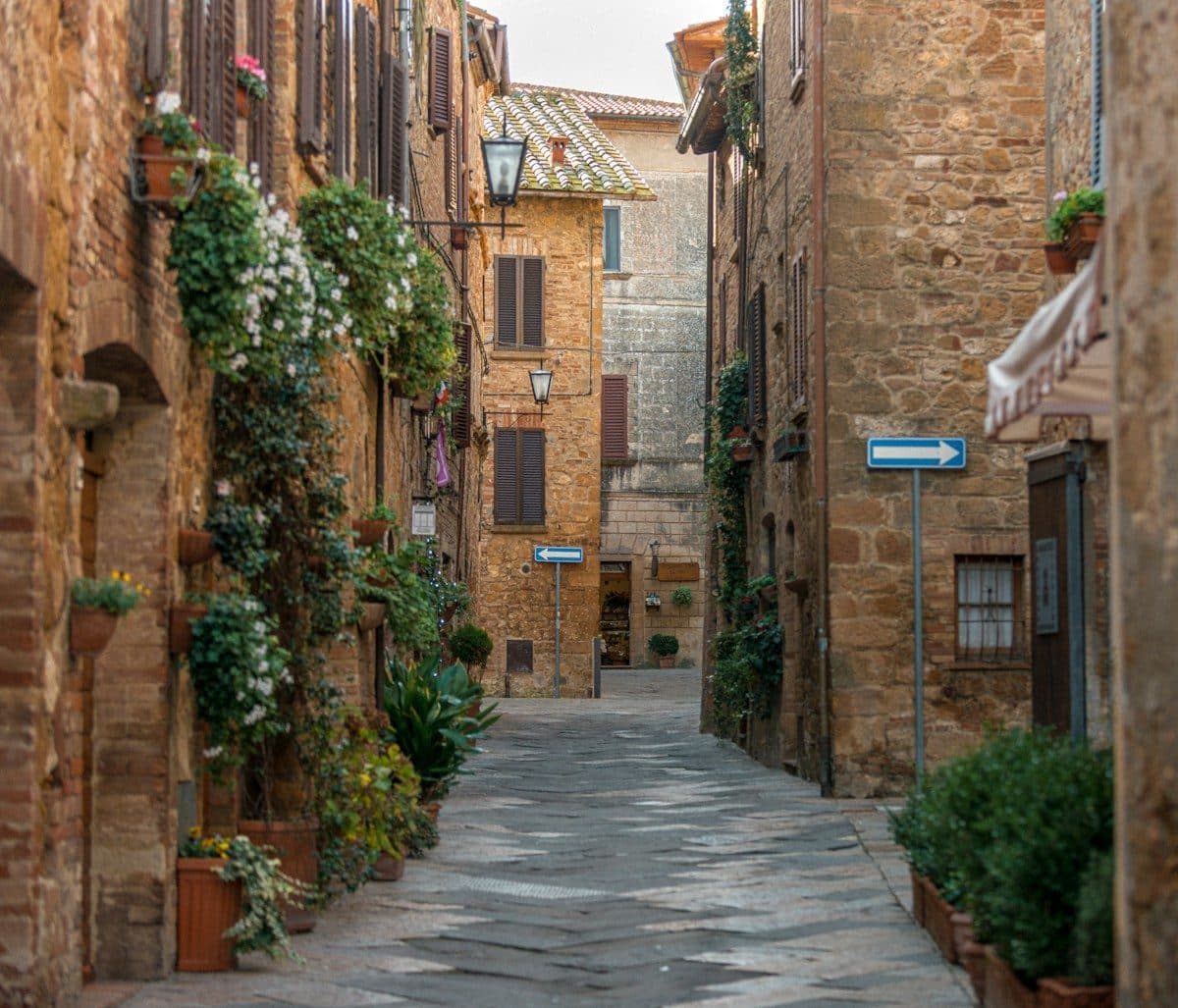
Cross any bridge south and the temperature of the city drops. The Oltrarno is where the leather workshops, the furniture restorers and the gold beaters still are, and Piazza Santo Spirito is the closest thing central Florence has to a square that belongs to the people who live around it.
The cost is a river crossing every time you want a museum, which is five to ten minutes and genuinely not a hardship. The other cost is that Santo Spirito itself is a nightlife square: a room on it is a different proposition from a room three streets away.
This is the area we would send anyone on a second visit, and anyone on a first visit who already knows they dislike tourist centres.
Santa Maria Novella: convenient for one hour
The main station sits here, which is why so many hotels do too, and why the area gets recommended more than it deserves. It is genuinely useful if you are arriving late at night or catching an early train, and it is a perfectly walkable ten minutes from the Duomo.
But you sleep somewhere for three nights and arrive once. The immediate station surroundings are the least charming part of the historic centre and noticeably scruffier after dark. Book here for logistics, not for the stay.
San Niccolò and Fiesole: quiet, and further
San Niccolò is the strip below Piazzale Michelangelo on the south bank: quiet, pretty, slightly uphill, and a real walk from the centre. Fiesole is a separate hill town above the city with a bus connection and a view over the whole valley.
Both are lovely and neither belongs on a first three-day trip. You would spend a meaningful slice of a short stay getting in and out.
Where not to stay
This question appears twice in Google’s own People Also Ask box for this search, and the guides that rank tend to answer it in a sentence. It deserves more, because avoiding one bad booking is worth more than optimising a good one.
- Directly on Piazza del Duomo. Maximum price, maximum noise, minimum neighbourhood. One street back costs less and sounds better.
- The blocks immediately around the station. Fine for a night before a 6am train. Not where you want to spend three evenings.
- Anything sold as “close to the centre” that is Novoli, Rifredi or Campo di Marte. These are ordinary residential districts. They are not dangerous and they are not interesting, and they put a tram or bus ride between you and every single thing on your itinerary.
- A place with no lift, if you have real luggage. Florence is full of beautiful buildings whose top floor is four flights up a stone staircase, and the streets outside are cobbled. This is the single most common unpleasant surprise.
- Anywhere you have not checked for a hen or stag scene. Not a district-wide problem, but a specific-street one, and reviews will tell you.
If you are arriving by car, read this first
Neither of the two most successful guides for this search mentions this, and it is the most expensive mistake available to someone choosing accommodation in Florence.
Much of the historic centre is a limited traffic zone, the ZTL, and access is controlled by cameras that read number plates automatically. Driving through an entry point without an authorised plate produces a fine, generated without anyone stopping you, which typically reaches the driver months later through the rental company, with an administration fee on top. Because it is automatic, you can collect several from a single confused loop looking for the hotel door.
The practical version, if you are booking a hotel inside the centre and arriving by car:
- Ask the property directly, before you book, how they handle ZTL access and parking. Hotels inside the zone deal with this daily and can usually register a guest vehicle. That registration is the thing that keeps you out of trouble, and it is not automatic.
- Give them the exact plate and arrival window they ask for. A booking confirmation is not a permit.
- Consider not having the car at all for the city portion. The centre is walkable end to end, so the common approach is to collect a rental on the morning you leave for the countryside rather than driving it into Florence on arrival.
Rules, hours and boundaries change, so confirm the current position with your accommodation and the rental company rather than with a travel article, including this one.
Should you stay outside Florence instead?
This comes up constantly, and the honest answer depends on what your trip is rather than on which option is better.
Stay in the city if Florence is the destination. Everything you have come to see is within walking distance of everything else, and the evenings, when the day visitors have gone, are one of the best parts of being there.
Stay in the countryside if Tuscany is the destination and Florence is one day of it. A villa or an agriturismo gives you the thing the city cannot, which is landscape and silence. It also has a cost structure that works nothing like a hotel: heating billed by consumption, linen sometimes extra and cancellation terms that are considerably harsher. We went through what a Tuscan villa actually costs once those are added, and how to spot a listing that is not legally registered.
What does not work well is the middle: basing yourself outside and commuting in every day. You inherit the parking problem, the driving restrictions above, and a return journey at exactly the hour the city becomes pleasant. If you want both, split the nights rather than splitting each day.
Hotel, apartment or agriturismo
The area is the first decision. The second is what kind of place, and in Florence that choice has consequences it does not have in a purpose-built resort town, because almost everything in the centre is inside a building that was standing centuries before anyone thought about lifts or insulation.
| Type | Works well for | What tends to go wrong |
|---|---|---|
| Hotel in the centre | Short stays, first visits, anyone arriving late | You pay a central premium for a room you will only sleep in |
| Apartment | Stays of four nights or more, families, anyone who wants breakfast at home | Self check-in with a key box, no reception when something breaks, and stairs |
| B&B or guesthouse | Two to four nights, travellers who want advice from a human | Often a floor of a larger building, so ask about the stairs and the front door |
| Agriturismo or villa outside | Tuscany trips where Florence is one day | A car, the driving restrictions below, and evenings spent commuting |
The apartment question is worth thinking about properly rather than by price. An apartment in Florence is usually cheaper per night and better for a longer stay, and it is also where the practical problems concentrate: no reception means nobody to tell you how the ZTL works, nobody to take a delivery, and nobody to fix the air conditioning at nine at night in August. For two or three nights, a small hotel usually removes more friction than the saving is worth. For a week, the balance flips.
What to check before you book
Once you have picked an area, these are the things that decide whether the specific place works. They are all findable in the listing or the reviews, and all of them come up repeatedly in complaints afterwards.
| Check | Why it matters here | Where to look |
|---|---|---|
| Lift, or which floor | Historic buildings, stone stairs, and no obligation to have one | Listing amenities. If it does not say, assume there is none |
| Which way the room faces | Street-facing rooms in the centre are loud until late in summer | Ask for courtyard or internal facing when you book |
| Air conditioning, and whether it runs at night | July and August are genuinely hot and shutters are the alternative | Reviews from June to August, not the amenities list |
| Distance to the nearest bridge | Only relevant in the Oltrarno, and it changes the walk more than the map suggests | Map view, not the stated distance to the centre |
| ZTL and parking | Only if you are driving, and then it is the most important line here | Ask the property directly, in writing |
| Check-in hours | Many small properties have no 24 hour desk and a late arrival needs arranging | Booking conditions, then confirm by message |
One last thing worth saying plainly: how long you stay changes which of these matters. For two nights, walking distance wins over everything. For five, you will care far more about the noise and the neighbourhood than about the four minutes you saved. If you have not settled the length yet, that is the other half of this decision.
Frequently asked questions
What is the best part of Florence to stay in?
For a first visit, the band between the Duomo and Santa Croce is the safe answer: central enough to walk everywhere, without sitting directly on the square where the crowds and the prices peak. If you would rather feel like you are in a city than in an attraction, cross the river to the Oltrarno and accept a five to ten minute walk back over a bridge each time you want a museum.
Where should you avoid staying in Florence?
Three kinds of places. Directly on Piazza del Duomo, where you pay the most for the most noise and the least local life. Immediately around Santa Maria Novella station, which is convenient for one arrival and mediocre for the other three days. And anywhere described as "just outside the centre" that turns out to be Novoli, Campo di Marte or Rifredi, which are ordinary residential districts with a bus ride between you and everything you came for.
Is Florence safe to walk around at night?
Florence is a safe city by the standards of European tourist centres, and the historic core is busy well into the evening. The realistic concerns are pickpocketing in crowds around the Duomo, the station and the Ponte Vecchio, and the area immediately around Santa Maria Novella station feeling scruffier after dark than it does at noon. Neither is a reason to avoid a neighbourhood, but they are reasons to look at a specific street rather than a general reputation.
Is it better to stay in Florence or outside the city?
Stay in Florence if the city is your trip. Stay outside if Tuscany is your trip and Florence is one day of it. The mistake is the middle option: basing yourself in the countryside and commuting into Florence daily, which means parking problems, driving restrictions and the best hours of the evening spent on a road. If you want both, split the nights instead: a few in the city, the rest in the hills.
Do I need a car in Florence?
No, and it is closer to a liability than a convenience. The historic centre is small enough to cross on foot in about half an hour, and much of it is a limited traffic zone enforced by camera, so an unregistered car passing a gate generates a fine automatically. If you are renting a car for the countryside, the usual approach is to pick it up on the day you leave Florence rather than on arrival.
How many nights should I book in Florence?
Three is the usual answer for a first visit, but count usable days rather than nights, because an afternoon arrival and a morning departure turn three nights into about two working days. We go through that arithmetic, and the Monday closures that can wreck a short stay, in our guide to how many days you need in Florence.
Some links on this page are affiliate links. If you book through them we earn a commission at no extra cost to you. It does not change what we recommend: we rank on what you get for the money, and we say so when something is not worth booking. Full disclosure.
Next: how many days you need in Florence or what is worth your time once you are there.