The Best Wineries in Tuscany: The Regions Compared
Updated August 2026 · Denominations checked against the producers’ own consortia
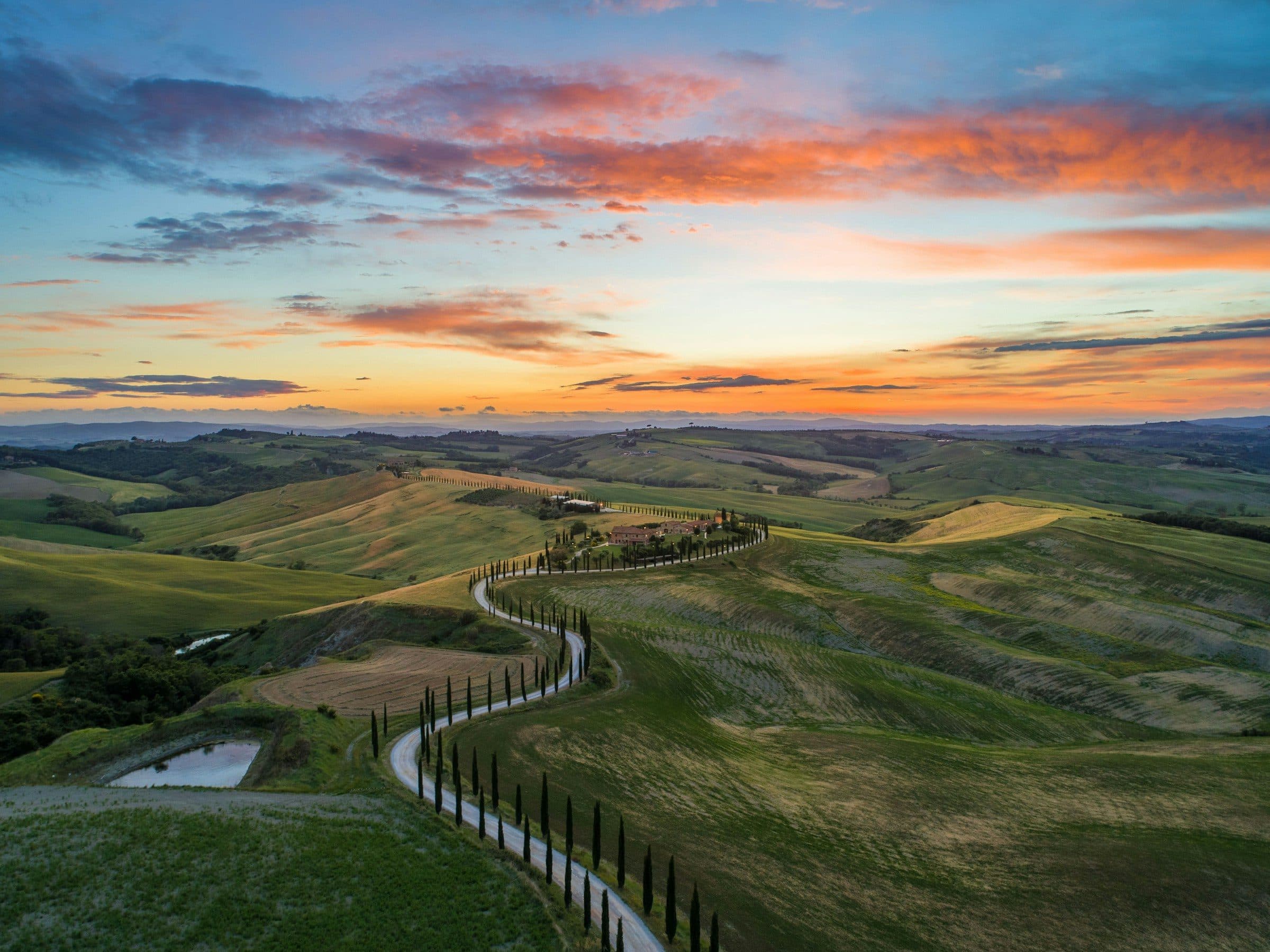
Every list of the best Tuscan wineries has the same problem: it hands you five or thirty estate names without telling you the thing that actually decides your trip, which is that they are in four different regions, hours apart, making quite different wine. Pick the region first and the estate almost picks itself.
This page compares the regions rather than ranking individual estates, and then tells you what a tasting costs and how to arrange one. For Chianti specifically, where most first-time visitors end up, we go estate by estate in our guide to Chianti wineries.
Is Montepulciano better than Chianti?
Google gets asked this constantly, and it is worth answering first because the confusion behind it runs deeper than the question suggests.
Neither is better. They are different wines from different places, both built on Sangiovese. What separates them for a visitor is distance and crowds: Chianti Classico is an hour from Florence and Montepulciano is a good deal further, and Vino Nobile is less famous abroad, which usually shows up in the price of the bottle rather than in the glass.
There is also a genuine trap in the name. Montepulciano is both a Tuscan town and a completely unrelated grape. The wine from the town is Vino Nobile di Montepulciano, from the province of Siena. The grape called Montepulciano is grown mainly in Abruzzo, hundreds of kilometres away, and makes Montepulciano d’Abruzzo, which is a different wine entirely and generally much cheaper. If you have had a supermarket Montepulciano, it was almost certainly the Abruzzo one.
The four regions compared
| Region | The wine | From Florence | Go if |
|---|---|---|---|
| Chianti Classico | Sangiovese-based, the name most visitors know. Black rooster on the label | Closest, under an hour to the north end | It is your only wine day, or you are based in Florence |
| Montalcino | Brunello di Montalcino, Sangiovese, the most prestigious red in Tuscany | About two hours | You follow wine seriously, or you want the Val d’Orcia landscape |
| Montepulciano | Vino Nobile di Montepulciano, in the province of Siena | Comparable to Montalcino | You want value and a proper hill town in the same trip |
| Bolgheri and the coast | The Super Tuscans: Sassicaia, Ornellaia and company | Different direction entirely, towards the sea | Price is not the constraint and the names are why you came |
Where to go for what you want
| What you want | Go to | Why |
|---|---|---|
| One wine day from Florence | Chianti Classico | The only region that fits comfortably in a half day out and back |
| The best red Tuscany makes | Montalcino | Brunello, and a landscape that justifies the drive on its own |
| Value, and fewer tour buses | Montepulciano | Less famous abroad, a walkable hill town, and the Pievi are new |
| Big names and deep pockets | Bolgheri | Sassicaia, Ornellaia and the coast. A separate trip, not a detour |
| To taste widely without booking | Any hill town enoteca | Greve, Radda, Montalcino and Montepulciano all pour by the glass |
| A cellar visit and lunch in one | Chianti or Montalcino | Both have estates with proper restaurants attached |
Two of those rows point south, to Montalcino and the Val d’Orcia, and that is the corner of Tuscany that is genuinely awkward without a car. If that is the row you landed on, this is what it costs to have it arranged.

Small-Group Brunello di Montalcino Wine-Tasting Trip from Siena
Nine hours from Siena rather than Florence, which is the smart way to do Montalcino if you can get yourself to Siena first. The highest rating of any wine tour we have looked at, with over a thousand reviews behind it.
What a tasting costs, region by region
We went and checked twenty estates across the four regions on their own websites, and the answer is not the one this page used to give. It said estates rarely publish a price. Twelve of the twenty publish one, and where they do not turns out to be the most interesting part of the answer.
| Region | Publish a price | Published range | Cheapest way in |
|---|---|---|---|
| Chianti Classico | Six of six | 7.50 to 279 € | Castello di Brolio grounds, 7.50 € |
| Montepulciano | Three of five | 10 to 75 € | Contucci, 10 €, no booking |
| Bolgheri | One publishes openly | 20 to 90 € | Michele Satta, 20 €, no booking |
| Montalcino | Two of eight | 25 to 125 € | Camigliano, 25 €. The other six will not quote you |
The pattern runs opposite to what you would guess. The more prestigious the denomination, the less likely it is to tell you the price. Chianti Classico, the most exported and most visited of the four, publishes every one. Montalcino, the most expensive and most admired, is the tightest of the four: only two of the eight we checked publish anything at all.
In Montalcino, Castello Banfi describes its tours in detail, an hour and a half, an eleven o’clock version with lunch and a four o’clock one with a tasting of four wines, and never states a figure. Argiano says only that everything is private and by reservation. Biondi-Santi, which made the first Brunello, has no visitor section on its website at all: the menu runs Riserva, Brunello, Rosso, and contacts.
One booking detail from Banfi is worth more than a price, because it is the kind of thing that ruins an afternoon: the meeting point is the Enoteca wine shop, and its own page says plainly that transport to the winery itself, four kilometres away, is not provided.
The cheapest real tasting in Tuscany, as far as we can find
It is in Montepulciano. Cantina Contucci charges 10 euros for three wines, one Rosso di Montepulciano and two Vino Nobile, in the cellars under Palazzo Contucci, and its own site says the cellars and the tasting are open every day including holidays, 11:00 to 18:00. No appointment. That is close to unheard of at an estate with a name, and it is the answer to the question this page exists to answer.
Their longer Contucci Experience runs about two hours at 40 euros, or 25 if you skip the plate of salumi and pecorino, and takes in the palazzo Antonio da Sangallo built in 1517 and the cellars inside the eleventh century walls. The catch is on their own site and nobody else repeats it: it has to be booked at least fifteen days in advance.
The other two Montepulciano publishers are straightforward. De’ Ricci lists a 75 minute cellar visit with three or six wines at 20 or 30 euros, four pure Sangiovese at 50, and a three course lunch in the vineyard with four wines at 75. Avignonesi runs its own booking system, with a two hour tour and four wines from 55.
The Consorzio’s Enoliteca inside the Fortezza publishes no tasting price, but for an honest reason rather than a coy one: it works by self-service dispenser and a rechargeable card, over a hundred labels available on any given day, so you pay for what you actually pour and there is no set price to publish.
Buying at the estate is not dramatically cheaper than a good wine shop in Florence, so buy what you cannot get at home rather than what looks like a bargain, and check your airline’s baggage limits before committing to a case.
What it costs when you can actually book it
Everything above is about what estates will tell you on their own websites. There is a second question hiding behind it, and it is the one that decides your afternoon: of the estates you can simply book online, what do the four regions charge?
We took the same sample from the same booking platform for each region on the same morning, and the answer lines up with the pattern above in a way we did not expect.
| Region | Cheapest | Median | Dearest |
|---|---|---|---|
| Chianti | 15 € | 36 € | 85 € |
| Montepulciano | 30 € | 36 € | 130 € |
| Montalcino | 20 € | 45 € | 529 € |
| Bolgheri | 25 € | 57.50 € | 629 € |
The order of prestige turns out to be the order of price, exactly. Chianti and Montepulciano, the two everyday denominations, sit together at 36 euros. Montalcino, where Brunello comes from, is a quarter dearer again at 45. And Bolgheri, the stretch of coast that produces Sassicaia, is the dearest of the four at 57.50, roughly sixty percent above Chianti.
The tails say the same thing more loudly. Chianti tops out at 85 euros and Montepulciano at 130. Montalcino reaches 529 and Bolgheri 629. The two prestige denominations are not simply dearer on average, they have a luxury end the other two do not attempt.
So the finding of the section above, that the grander the name the less likely it is to quote you, has a companion: where the grand names do quote you, they quote you more. Neither of those is a reason to avoid Montalcino or Bolgheri. Both are a reason to know which afternoon you are buying before you buy it.
Below is the cheapest entry point we would actually recommend in each of the four, which is not the same as the cheapest listing in each. Review counts are small across this whole category, so they are on the cards: treat anything under about twenty ratings as encouraging rather than proven.

Wine and Olive Oil Tasting at Castello Monterinaldi
Forty-five minutes for 15 €, wine and olive oil, and it takes a single visitor. The lowest price in this whole comparison. Eight reviews, so the rating is the thinnest of the four cards here.

Brunello Wine Tasting at Sassodisole
One hour for 20 € in the region whose median is 45 and whose top end is 529. Twenty-nine reviews, and it takes one person. If Brunello is why you came, this is the cheap door into it.

Visit and Classic Tasting at Terre del Marchesato
Bolgheri is the dearest of the four regions with a median of 57.50 €, and this is 25. It also carries 46 ratings and a 97 percent booking confirmation rate, which makes it the best evidenced card on this page, and it takes a single visitor.

Classic Wine Tour at Poderi Boscarelli
An hour for 26 € at one of the names a Vino Nobile drinker would pick, in the region with the highest floor of the four. Worth saying plainly: Contucci in Montepulciano is 10 € with no booking at all, and nothing here beats that on price.
The most famous wine in Tuscany
Another question Google asks on this search, and the honest answer has two halves that point in different directions.
By name recognition, Chianti wins comfortably, and largely for reasons the producers now regret: it was exported cheaply for decades in the straw-covered flask, which put the word in front of millions of people who never drank anything good wearing that label.
By reputation among people who follow wine, Brunello di Montalcino is the most respected Tuscan red, and the release of each new vintage is enough of an event that the consortium built an annual presentation around it, Benvenuto Brunello.
By price, the Super Tuscans of the coast leave both behind. As we covered in the guide to wine tours, Super Tuscan is not a legal category at all: it is the name given to wines that broke the old denomination rules by using international grapes, and then turned out to be worth more than the wines that followed them.
Visiting them is a separate problem from drinking them, and a harder one. We went to each producer’s own website to find out which Bolgheri estates actually let you in, and the short version is that the most famous name of all publishes no way to visit it whatsoever.
So fame, respect and price sit on three different axes here. That is precisely why Tuscany confuses people who arrive expecting a single hierarchy.
The second wines nobody tells you about
This is the most useful thing on the page if you are going to buy anything, and it is missing from every guide we compared.
The famous denominations have less famous siblings made by the same producers, released earlier and sold for a fraction of the price. The Montalcino consortium recognises four denominations in its zone alone: Brunello di Montalcino, Rosso di Montalcino, Sant’Antimo and Moscadello. Montepulciano has Vino Nobile and, alongside it, Rosso di Montepulciano.
At a tasting, the Rosso is frequently the bottle that offers the most for the money, and it is what a lot of people in these towns actually drink on a Tuesday. Ask for it by name and you will get a better conversation than if you only ask about the flagship.
Montepulciano has also added a newer top tier called Pieve, which its consortium describes as a third type of Vino Nobile and is notably insistent that it not be dismissed as merely an additional geographical unit. It is recent enough that most travel guides have not caught up with it, so mentioning it at a tasting marks you as somebody who has done more than read a listicle.
Getting to the southern regions
Chianti is a straightforward half day from Florence. Montalcino and Montepulciano are not, and pretending otherwise is how people end up spending a beautiful day in a minibus.
Both sit roughly two hours south of Florence, closer to Siena than to the city, and neither has a useful train service. The realistic options are a car, a full day tour, or, much better if you can arrange it, a night or two in the area so the drive is not doubled. If Tuscany rather than Florence is your trip, basing yourself down there for a couple of nights changes the whole experience.
If you are going as a day trip anyway, these are the two formats that work. Both are long days, and that is the point: the driving is the price of the wine.
Val d’Orcia Brunello Wine Tour with Montalcino and Montepulciano
Ten and a half hours covering both southern denominations plus Pienza, leaving from Florence. It is a long day and an expensive one, and it is the only realistic way to see both without staying overnight down there.
Ratings and lowest advertised prices checked in August 2026. If Chianti is enough for you, the half day options from Florence cost a third of these and are compared in our guide to wine tours.
Frequently asked questions
Is Montepulciano better than Chianti?
Neither is better, they are different wines from different places, and the question usually comes from confusion about the name. Vino Nobile di Montepulciano is a Tuscan red from the hills around the town of Montepulciano, in the province of Siena. Chianti Classico comes from the zone between Florence and Siena. Both are Sangiovese-based. In practice, Montepulciano tends to be better value because it is less famous abroad, and Chianti Classico is far easier to reach from Florence. Confusingly, there is also a grape called Montepulciano grown in Abruzzo, which has nothing to do with the Tuscan town.
What is the most famous wine in Tuscany?
Chianti is the most widely known name, mostly because it was exported cheaply for decades. But among people who follow wine, Brunello di Montalcino carries the most prestige, and the Super Tuscans of the coast, wines like Sassicaia and Ornellaia, command the highest prices. Fame and quality are not the same axis here: the most famous name is not the most respected one, which is why the region confuses people.
Which winery in Tuscany is the best to visit?
For a first visit from Florence, an estate in Chianti Classico, because it is the closest and the wine is the one most visitors came to try. For someone who follows wine seriously, Montalcino, because Brunello is the region’s most respected red and the landscape of the Val d’Orcia is the postcard. For value and fewer coaches, Montepulciano. There is no single best, and any guide that gives you one without asking what you want is guessing.
What is Rosso di Montalcino?
It is the other red of the same zone, made by many of the same producers as Brunello di Montalcino, released earlier and sold for considerably less. The Montalcino consortium recognises four denominations in its area: Brunello, Rosso di Montalcino, Sant’Antimo and Moscadello. For a visitor this matters because at a tasting the Rosso is often the bottle that offers the most for the money, and it is what a lot of local people actually drink.
Can you visit Tuscan wineries without an appointment?
Usually not. Most estates are working farms rather than tasting rooms, and visits run by appointment, often arranged days ahead. The exceptions are the larger visitor-oriented properties and the wine shops in the hill towns, which pour by the glass with no booking at all. If you want to improvise, base yourself in a town like Greve, Montalcino or Montepulciano and use the enoteche.
How many wineries can you visit in a day?
Two, comfortably, or three if they are close together and you are not lingering over lunch. A proper visit runs about ninety minutes between the vineyard, the cellar and the tasting, and the driving between estates on small roads takes longer than the map suggests. Tours that promise four are counting stops rather than visits.
Some links on this page are affiliate links. If you book through them we earn a commission at no extra cost to you. It does not change what we recommend: we rank on what you get for the money, and we say so when something is not worth booking. Full disclosure.
Next: Chianti estate by estate or wine tours from Florence compared.